What are the best hedge plants for UK gardens?
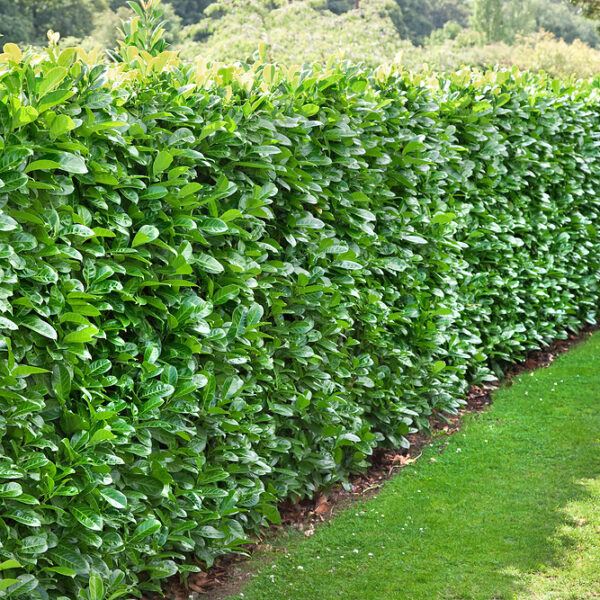
For a tall evergreen screen, cherry laurel produces large, glossy leaves and grows relatively quickly. English yew is a better choice for a closely clipped formal hedge, while green beech retains much of its copper-brown foliage through winter when regularly trimmed. Privet is useful where a tidy, adaptable boundary matters. Your soil, available width and preferred trimming routine will determine which of these hedge plants suits your garden.
There is no single best hedge for every situation. A plant that thrives on a sunny, well-drained slope may struggle on heavy clay in partial shade. Start by thinking about the height you need, how much time you can give to trimming each year, and whether you want leaves all winter or a seasonal change. Once you know those answers, you can narrow the choice to a handful of species that will grow well in your soil and light.
Check how much sun reaches the planting line in winter as well as summer, particularly beside buildings and mature trees. A hedge that suits the light and drainage will be easier to establish and maintain. The comparisons also give typical spacing and growth figures to help you estimate planting quantities and plan your first year of care.
| Hedge plant | Evergreen or deciduous | Typical growth per year | Sensible hedge height | Key benefit |
|---|---|---|---|---|
| Cherry laurel | Evergreen | 30 to 60cm | 1.5 to 5m | Broad glossy leaves, quick screen |
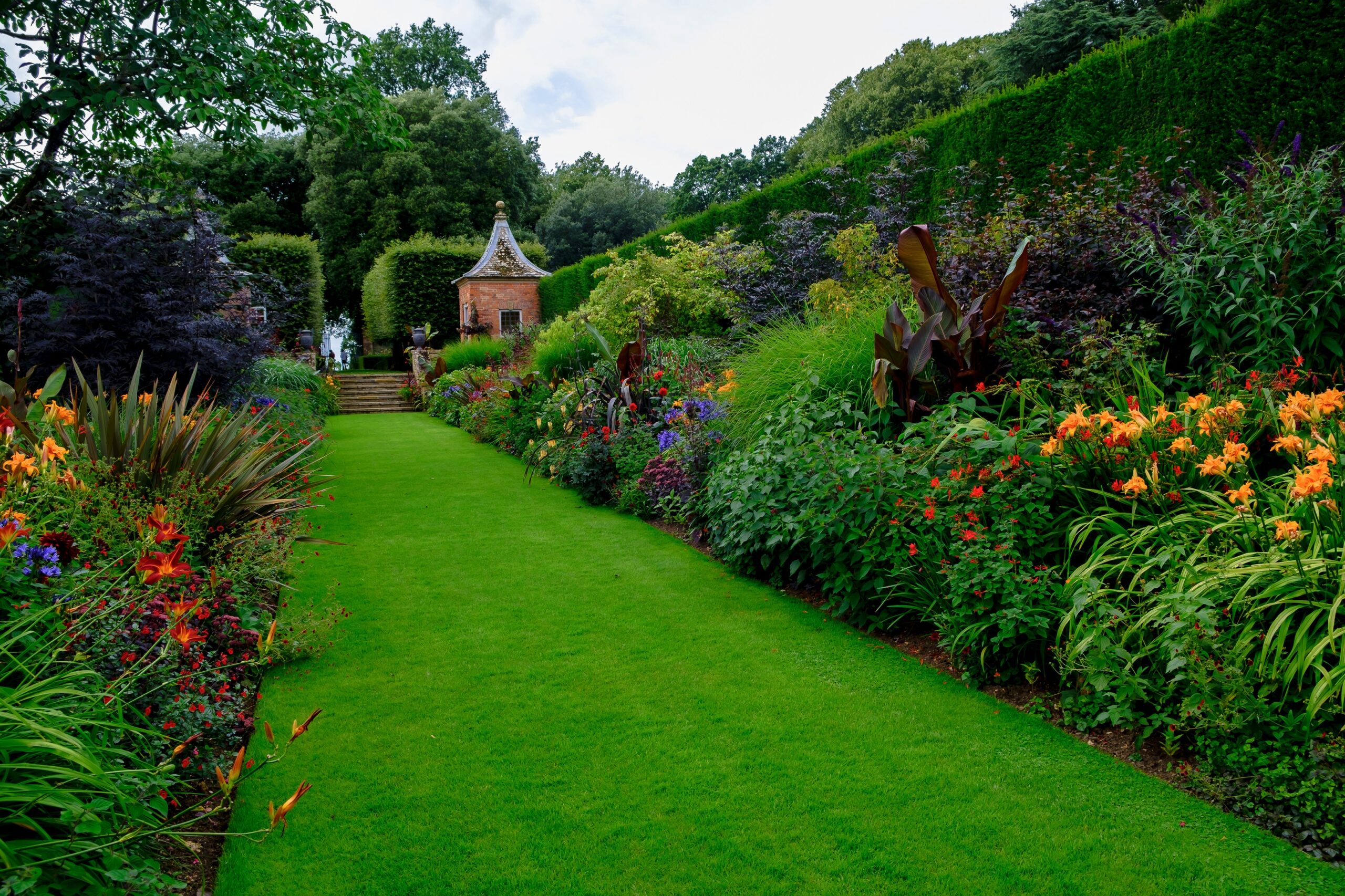
| English yew | Evergreen | 20 to 30cm | 1 to 4m | Dense formal finish, long-lived |
| Green beech | Deciduous (holds brown leaves in winter) | 30 to 60cm | 1.2 to 5m | Native look, good on most soils |
| Privet | Semi-evergreen | 30 to 60cm | 1 to 3m | Tough, easy to clip, urban-tolerant |
| Green Leylandii | Evergreen | 60 to 90cm | 2 to 8m | Fastest screen, needs regular trimming |
| Common hawthorn | Deciduous | 30 to 45cm | 1.5 to 5m | Wildlife-friendly, thorny boundary |
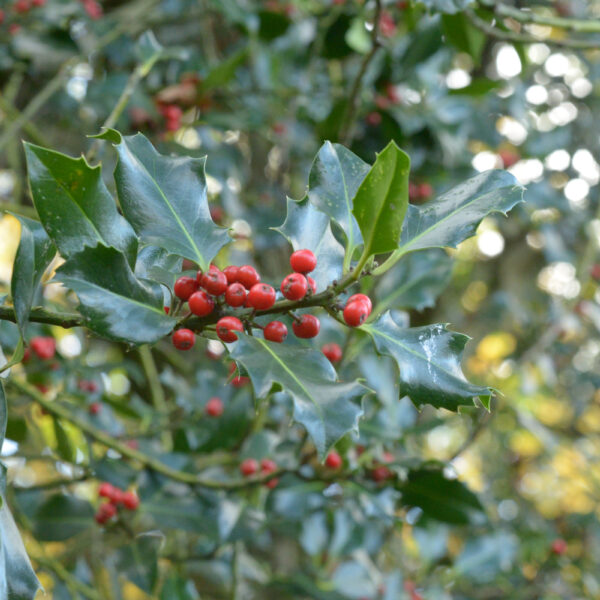
| English holly | Evergreen | 10 to 30cm | 1 to 4m | Spiny leaves, traditional character |
| Portuguese laurel | Evergreen | 30 to 45cm | 1.5 to 5m | Neater leaf than cherry laurel |
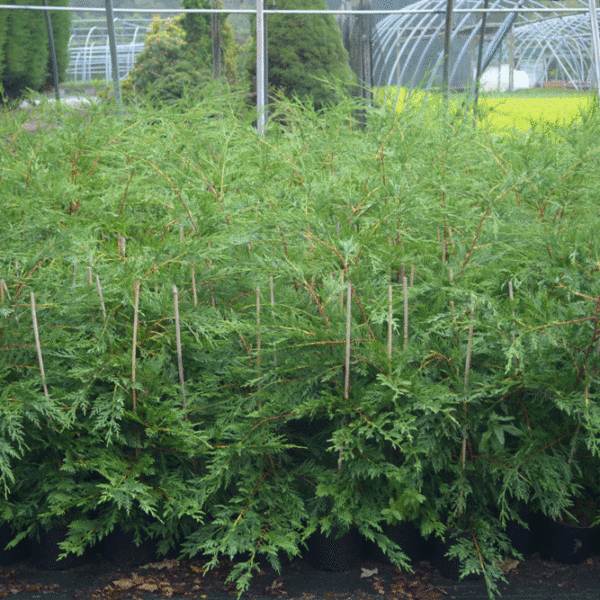
| Castlewellan Gold | Evergreen | 30 to 60cm | 2 to 6m | Golden conifer foliage |
| Box (Buxus) | Evergreen | 5 to 15cm | 0.3 to 1.5m | Classic low formal edging |
What is the easiest hedge to maintain?
An easy hedge is one that grows at a steady, predictable pace and does not demand constant clipping to look tidy. For most gardeners, the easiest hedges are those that need trimming only once or twice a year and stay healthy without special feeding or watering once established.
English yew is often called the easiest formal hedge because it grows slowly, responds well to a single annual trim in late summer, and can live for decades. Privet is another low-maintenance choice: it tolerates a wide range of soils and urban pollution, and a trim in early summer and again in autumn keeps it neat. Green beech needs similar attention and holds its brown winter leaves for extra screening.
Fast-growing conifers like Leylandii can become high-maintenance if planted without enough space. They need two or three trims a year to stay at the desired height, and they cannot be cut back hard into old wood. Choosing a slower species from the start often saves work over the life of the hedge.
- Yew: one trim a year, dense and long-lived
- Privet: two trims a year, tough and adaptable
- Green beech: two trims a year, holds winter leaf colour
- Holly: one trim a year, spiny but slow-growing
- Portuguese laurel: one or two trims, neater than cherry laurel
Good low-maintenance hedges for the UK
A low-maintenance hedge does not have to be slow-growing. The key is choosing a plant whose natural size and shape fit the space, so you are not constantly fighting its growth habit. The following hedge plants generally need only one or two trims a year once established, although exposed positions, heavy shade and poorly drained soil can make ongoing care more demanding.
All the plants listed will grow in typical British conditions, but always check your soil drainage and light before ordering. Heavy clay or deep shade can turn an easy hedge into a struggle, so match the plant to the plot.
| Hedge plant | Trims per year | Soil preference | Light requirement | Notes |
|---|---|---|---|---|
| English yew | 1 | Well-drained, not waterlogged | Sun to full shade | Toxic if eaten; extremely long-lived |
| Privet | 2 | Most soils, including clay | Sun to partial shade | Semi-evergreen in mild winters |
| Green beech | 2 | Well-drained, not heavy clay | Sun to partial shade | Holds brown leaves through winter |
| Holly | 1 | Most well-drained soils | Sun to partial shade | Spiny; good for security |
| Portuguese laurel | 1 to 2 | Most soils, including chalk | Sun to partial shade | Glossier, smaller leaf than cherry laurel |
| Box (Buxus) | 1 to 2 | Well-drained, alkaline tolerated | Sun to partial shade | Watch for box blight and caterpillar |
Best shrubs for hedges in the UK
Many shrubs make excellent hedges when planted closely in a row. Cherry laurel and Portuguese laurel are large evergreen shrubs with broad leaves that create a solid screen. Privet is a classic semi-evergreen shrub hedge, while holly brings spiny texture and red winter berries on female plants.
For a lower, more ornamental hedge, consider dwarf evergreen azaleas, hebes, or Euonymus Emerald 'n' Gold and Emerald Gaiety. These are shrubs first, but planted at close spacing they form colourful low hedges or edging. Mixed hebes are available as 9cm potted plants in packs of 4, 6, 12 or 18, or as four plants in 2 litre pots. Their differing foliage colours and flowering habits suit informal low edging rather than a perfectly even hedge. Hebe Red Edge, supplied in 9cm pots in packs of 2, 3, 4 or 6, has grey-green leaves with reddish margins and makes a compact edging plant in a sheltered position.
If you want a hedge that doubles as a flowering shrub border, French lavender Bandera Purple is a neat choice for sunny, well-drained spots. Planted at 30cm spacing, it makes a fragrant low hedge around 40 to 60cm tall. Pieris Forest Flame and Mountain Fire are shrubs with striking red new growth; they suit an informal hedge in acidic soil and partial shade.
Remember that shrub hedges may need different pruning times to flowering shrubs grown as specimens. A lavender hedge is trimmed after flowering, while a laurel hedge is cut in late spring or early summer. Check the care notes for each species before you plant.
- Cherry laurel: broad evergreen, quick screen
- Portuguese laurel: neater leaf, good on chalk
- Privet: tough semi-evergreen, urban-tolerant
- Holly: spiny evergreen, berries on female plants
- Dwarf evergreen azalea: low, colourful spring flowers
- Hebes: compact, varied foliage and flowers
- Euonymus Emerald 'n' Gold and Emerald Gaiety: bright variegated leaves
- French lavender Bandera Purple: fragrant, sun-loving low hedge
Top 10 hedge plants for UK gardens
These ten hedging plants cover different garden needs, from low box edging to tall Leylandii screens. Hawthorn provides thorny branches and flowers for wildlife, while Portuguese laurel has smaller leaves than cherry laurel and can be clipped into a neater outline. Compare their expected height and annual trimming requirements alongside soil drainage before choosing plants for your boundary.
The table shows supplied sizes available from our range, typical spacing for a single row, and the number of plants you would need for a 5-metre run. Double rows require a separate quantity calculation based on the spacing along each row and the distance between rows. A staggered double row can use substantially more plants than a single row. Check the listed supplied sizes and root types before ordering, especially where different sizes of the same species are available.
| Hedge plant | Supplied sizes available | Spacing per metre (single row) | Plants for 5m run |
|---|---|---|---|
| Cherry laurel | 40-60cm 9cm pot, 60-90cm 2L pot, 90-120cm 2L pot | 2 to 3 per metre | 10 to 15 |
| English yew | 20-40cm potted, 40-60cm bare root, 60-80cm rootball, 80-100cm rootball | 3 to 4 per metre | 15 to 20 |
| Green beech | 90-120cm (root type not specified) | 3 to 5 per metre | 15 to 25 |
| Privet | 40-60cm bare root, 60-90cm bare root | 4 to 5 per metre | 20 to 25 |
| Green Leylandii | 40-60cm bare root or 9cm pot, 60-90cm bare root or 2L pot, 90-120cm 2L pot, 120-150cm 5L pot, 150cm 5L pot | 2 to 3 per metre | 10 to 15 |
| Common hawthorn | 40/60 bare root, 60/90 bare root | 4 to 5 per metre | 20 to 25 |
| English holly | 30-40cm 9cm pot, 40-60cm 9cm pot, 60-80cm 9cm pot | 3 to 4 per metre | 15 to 20 |
| Portuguese laurel | 40-60cm 9cm pot, 60-90cm 2L pot | 2 to 3 per metre | 10 to 15 |
| Castlewellan Gold | 30-60cm 9cm pot, 60-90cm 2L pot, 90-120cm 2L pot | 2 to 3 per metre | 10 to 15 |
| Box (Buxus) | 20-40cm bare root | 4 to 6 per metre | 20 to 30 |
Month-by-month hedge care calendar
Timing your planting, feeding and trimming helps a hedge establish quickly and stay healthy. The calendar below covers the main tasks for most UK hedge plants. Adjust timings for your local climate and the specific species you grow.
Bare root plants are only available and planted during the dormant season, roughly November to March. Potted and rootball plants can go in at any time the ground is workable, but avoid frozen or waterlogged soil.
| Month | Main tasks |
|---|---|
| January | Plant bare root hedges if ground not frozen. Check for wind rock on newly planted evergreens. |
| February | Finish bare root planting. Lightly trim winter-damaged shoots on evergreens. |
| March | Mulch around the base of hedges. Feed with a general-purpose fertiliser as growth starts. |
| April | Plant potted hedges. Water new plants in dry spells. Check for aphids on new growth. |
| May | First trim of fast-growing hedges like Leylandii and privet. Keep new plantings well watered. |
| June | Trim laurel and beech if needed. Shape formal hedges. Check ties on young plants. |
| July | Lightly trim Leylandii again if growth is strong. Water during prolonged dry weather. |
| August | Main trim for yew and most conifers. Trim privet for the second time. |
| September | Final trim for Leylandii. Plant potted evergreens while soil is warm. Prepare ground for bare root orders. |
| October | Order bare root plants for delivery from November. Clear fallen leaves from the base of hedges. |
| November | Start planting bare root hedges. Lightly trim beech if needed. Check drainage around roots. |
| December | Plant bare root hedges in mild spells. Brush snow off evergreens to prevent splaying. |
Choosing the right root type and size
Hedge plants come as bare root, potted or rootball stock. The right choice depends on the time of year, your budget and how quickly you want a screen.
Bare root plants are lifted during the dormant season, roughly November to March, and supplied without soil around their roots. They are generally an economical choice for longer hedges. Privet is available at 40-60cm and 60-90cm, hawthorn at 40/60 and 60/90, box at 20-40cm, and Green Leylandii in several bare root sizes. Green beech is listed at 90-120cm, but its root type is not specified in the supplied catalogue. Plant them promptly after delivery and keep the roots covered until they go in the ground.
Potted plants are grown in containers and can be planted year-round. They establish reliably because the root system is undisturbed at planting time. Cherry laurel, Portuguese laurel, holly, yew (smaller sizes), Castlewellan Gold and Leylandii are all offered as potted plants. Larger pots generally contain taller plants, but check the supplied height as well as the pot size.
Rootball plants are lifted with soil retained around their roots, usually held together with a protective wrapping. English yew is available in 60-80cm and 80-100cm rootball sizes, giving more initial height than the smaller 20-40cm potted option. Plant rootball stock during the cooler months, while conditions favour root establishment and the ground is neither frozen nor waterlogged.
Use RHS Rootgrow mycorrhizal fungi at planting time to help roots establish faster. It is available in 60g packs for smaller orders and 360g packs with gel for larger projects.
How many plants do I need?
Spacing depends on the species, the supplied size and how quickly you want the hedge to fill in. As a general rule, smaller plants are set closer together. The table below gives typical spacings for a single row. For a thicker hedge, plant a staggered double row with the same within-row spacing and 30 to 45cm between rows.
Measure the length of your boundary in metres and multiply by the plants-per-metre figure for your chosen species and size. Round your calculated quantity to whole plants, then consider a few spares for awkward ends or future gaps. For a staggered double row, calculate the plants needed for each row separately using its actual length and spacing. Simply adding half again may leave you short if both rows run the full length of the boundary.
| Hedge plant | Typical spacing (single row) | Plants per metre | Plants for 10m | Plants for 20m |
|---|---|---|---|---|
| Cherry laurel (40-60cm) | 2 to 3 per metre | 2 to 3 | 20 to 30 | 40 to 60 |
| English yew (40-60cm bare root) | 3 to 4 per metre | 3 to 4 | 30 to 40 | 60 to 80 |
| Green beech (90-120cm) | 3 to 5 per metre | 3 to 5 | 30 to 50 | 60 to 100 |
| Privet (40-60cm bare root) | 4 to 5 per metre | 4 to 5 | 40 to 50 | 80 to 100 |
| Green Leylandii (40-60cm) | 2 to 3 per metre | 2 to 3 | 20 to 30 | 40 to 60 |
| Common hawthorn (40/60 bare root) | 4 to 5 per metre | 4 to 5 | 40 to 50 | 80 to 100 |
| English holly (30-40cm) | 3 to 4 per metre | 3 to 4 | 30 to 40 | 60 to 80 |
Common questions
What is the best plant for hedges?
The best plant depends on your soil, light, desired height and how much trimming you can do. Cherry laurel, English yew and green beech are strong all-round choices for UK gardens. Cherry laurel gives quick evergreen cover, yew makes a dense formal hedge with one trim a year, and beech offers a native look with winter leaf retention.
What are the top 10 hedge plants?
A useful top 10 for UK gardens includes cherry laurel, English yew, green beech, privet, green Leylandii, common hawthorn, English holly, Portuguese laurel, Castlewellan Gold and box. Each suits different situations: Leylandii for fast screens, hawthorn for wildlife, box for low formal edging. Check the spacing table above for quantities.
What is the easiest hedge to maintain?
English yew is often the easiest formal hedge because it needs only one trim a year and grows slowly. Privet and green beech are also straightforward, needing two trims annually and tolerating a range of soils. The key to low maintenance is choosing a hedge whose natural size fits the space, so you are not constantly cutting it back.
What are the best shrubs for hedges in the UK?
Shrubs that make good hedges include cherry laurel, Portuguese laurel, privet and holly for taller screens. For lower hedges, try dwarf evergreen azaleas, hebes, Euonymus Emerald 'n' Gold or French lavender Bandera Purple. These shrubs bring flower colour and varied foliage while still forming a defined boundary when planted closely.
What are some good low-maintenance hedges for the UK?
Good low-maintenance hedges include yew (one trim a year), holly (one trim, slow growth), Portuguese laurel (one or two trims, neater habit) and privet (two trims, very tough). Beech is also low-maintenance on well-drained soil. Avoid very fast growers like Leylandii unless you have the time for two or three cuts each year.
When is the best time to plant a hedge?
Bare root hedges are planted during the dormant season, roughly November to March, when the plants are not in active growth. Potted and rootball plants can be planted at any time of year as long as the ground is not frozen or waterlogged. Autumn and spring are ideal because the soil is moist and temperatures are moderate.
How many hedge plants do I need per metre?
Spacing varies by species and plant size. As a guide, use 2 to 3 plants per metre for cherry laurel and Leylandii, 3 to 4 for yew and holly, 4 to 5 for privet and hawthorn, and 4 to 6 for box. Smaller plants are set closer together. Double rows need roughly 50 per cent more plants.
Can I plant a mixed hedge?
You can plant a mixed hedge using several species, but it is harder to keep a uniform appearance. For a formal look, stick to one species. For an informal, wildlife-friendly hedge, mix hawthorn, holly and beech. Mixed shrub collections like hebes or dwarf conifers are intended for variety rather than a matching hedge line.