Beech Hedge Plants & Green Beech Hedging UK Delivered
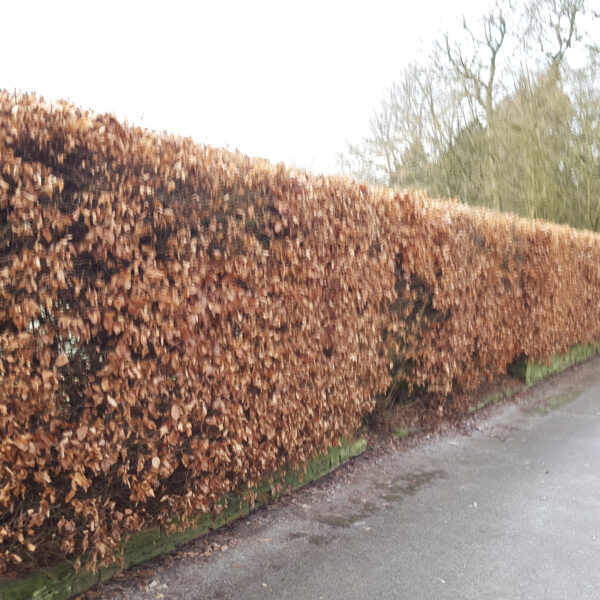
Green beech hedging changes from fresh, bright green spring leaves to copper and russet shades in autumn. A regularly clipped hedge often keeps much of its dry brown foliage through winter, giving useful screening until the new buds open in spring. Green beech hedging creates a formal boundary that doubles as a wildlife corridor, and its smooth grey bark adds interest even when the hedge is bare. Our green beech hedging is supplied as individual 90 to 120cm plants. This starting height gives you useful structure from planting, although the hedge still needs time to establish its roots and develop a dense network of branches. Beech thrives on most well-drained soils except heavy, waterlogged clay, and suits full sun or partial shade. Once established, a beech hedge needs trimming just once or twice a year and lives for decades. The catalogue lists green beech as individual 90 to 120cm plants but does not specify a pot or root type, so confirm the supplied format before choosing your planting date. Give the plants well-drained soil, keep grass and weeds away from their roots, and water during dry spells while the hedge establishes.
Green beech: why it keeps its brown leaves in winter
Green beech (Fagus sylvatica) is deciduous, but regularly trimmed hedges often hold dry leaves well into winter. This leaf retention, known as marcescence, gives some screening after the growing season has ended. The amount retained varies with the age of the hedge, its exposure and the severity of winter; hornbeam can also retain dry leaves when regularly clipped. The leaves turn a rich copper-brown that catches low winter light. The effect is strongest on young, regularly clipped growth, which is why a formal beech hedge keeps its winter coat so reliably. Leave unpruned, a beech tree would still show some retained leaves on lower branches, but the dense, twiggy framework of a hedge holds far more.
list
Spacing and planting bare root beech
We supply green beech hedging plants at 90 to 120cm tall, sold individually. The catalogue does not identify their root type, so check this before planting. Bare root stock needs planting during dormancy, while container-grown beech can be planted whenever the ground is workable, provided the roots receive suitable aftercare. If you are planting a new beech hedge, follow the spacing guide below to get a dense screen without overcrowding.
A single row is the most common choice for a garden hedge. For a thicker, stock-proof barrier or a really solid visual block, use a double staggered row. The table shows how many plants you need for common hedge lengths, based on the recommended spacing.
| Planting style | Spacing per plant | Plants for 5 metres | Plants for 10 metres | Plants for 20 metres |
|---|---|---|---|---|
| Single row | 33cm apart (3 per metre) | 15 | 30 | 60 |
| Double staggered row | 40cm apart in the row, 40cm between rows (5 per metre) | 25 | 50 | 100 |
Growth rate and height
Green beech is moderately vigorous, putting on 30 to 60cm of new growth each year once established. In the first year after planting, expect less top growth while the roots settle in. A beech hedge can be maintained at any height from 1.2 metres upward. Left untrimmed, it will eventually reach 5 metres or more, but it is easily kept at 1.5 to 2.5 metres for a typical garden screen. Regular clipping from the start encourages the dense, twiggy structure that makes beech such an effective hedge. Starting with 90 to 120cm plants reduces the amount of height needed to reach a 1.5-metre screen. Depending on soil, weather and establishment, reaching that height may take two to three growing seasons, although a dense screen can take longer to develop.
Best time to plant a beech hedge
The best planting time depends on the root type supplied. Bare root beech is planted while dormant, usually from November to March, whereas potted beech can be planted throughout the year when the soil is workable. Early autumn (September to October) and early spring (March to April) are useful planting windows because the ground is generally moist and temperatures are moderate. Autumn planting gives roots several months to establish before the following summer’s heat. Spring planting avoids the worst winter wet. If you plant in summer, water thoroughly every few days during dry spells for the first growing season. Bare root beech is planted in the dormant season (roughly November to March). Our catalogue specifies the current beech height as 90 to 120cm but does not confirm a root type, so check the supplied format before arranging planting.
list
Feeding a beech hedge
Beech is not a hungry hedge, but a light annual feed keeps the foliage a deep, healthy green. In early spring, scatter a handful of general-purpose granular fertiliser (such as Growmore or fish, blood and bone) along the base of the hedge and water it in. A mulch of well-rotted compost or leaf mould applied after feeding helps retain moisture and suppress weeds. Keep the mulch a few centimetres away from the stems to avoid rot. On very sandy soils, a second light feed in early summer can be useful. Avoid high-nitrogen feeds late in the season, as soft late growth can be caught by frost.
list
When to trim a beech hedge
Trim a beech hedge once in late summer (August) for a tidy winter silhouette, or twice for a really crisp formal line: once in early June after the first flush of growth, and again in late August or early September. The second trim should be light, just neatening the outline. Always check for nesting birds before cutting between March and August. Use sharp shears or a hedge trimmer, and cut back to just beyond the previous year’s growth. Shaping the hedge slightly narrower at the top than the bottom (a batter) lets light reach the lower branches and stops the base thinning out. For a full guide, see our article on trimming a beech hedge.
list
Common problems with beech hedges
Beech is generally robust, but a few issues can show up. Beech leaf disease, caused by a nematode, is currently rare in the UK but worth watching for: symptoms include dark bands between the veins and a leathery texture. More common are aphids, which secrete sticky honeydew and can cause sooty mould. Usually a strong jet of water or natural predators will control them. Beech bark disease, from a scale insect and a fungus, can cause bleeding cankers on stressed trees. Keep your hedge well-watered in drought and avoid wounding the bark with strimmers. Yellowing leaves often point to waterlogging or very alkaline soil; improve drainage or apply an ericaceous mulch. Frost can scorch new spring growth on exposed sites, but the hedge recovers quickly. None of these problems usually threaten a well-sited, well-cared-for beech hedge.
list
Expert tip
For the densest winter screen, plant your beech hedge in a double staggered row from the start. The extra plants cost more initially, but the hedge fills in faster and you get a thicker barrier that holds more dead leaves. On a windy site, install a temporary windbreak net on the windward side for the first two winters to reduce desiccation while the roots establish.
Questions before you order
Does a beech hedge keep its leaves all year?
Yes, a regularly trimmed green beech hedge holds its dead brown leaves through autumn and winter, dropping them only when new green growth appears in spring. This marcescence gives excellent year-round privacy. Untrimmed beech trees lose more leaves, so formal clipping is the key to a dense winter screen.
How many beech hedging plants do I need per metre?
For a single row, plant three beech hedging plants per metre (33cm spacing). For a thicker double staggered row, use five plants per metre, spacing them 40cm apart within the row and 40cm between the two rows. A 10-metre single row needs 30 plants; a double row needs 50.
When is the best time to plant a beech hedge?
Our green beech plants are listed at 90 to 120cm, with no root type specified. For potted plants, early autumn (September to October) and early spring (March to April) are good planting times, although planting is possible whenever the ground is workable. Bare root beech must be planted during dormancy, roughly November to March. Confirm the root type before choosing your planting date.
How fast does a beech hedge grow?
Green beech grows at a moderate rate of 30 to 60cm per year once established. In the first year after planting, top growth is slower as the roots settle. With good care, the 90 to 120cm plants we supply typically reach a 1.5-metre screen within two to three growing seasons.
How tall will a beech hedge grow?
A beech hedge can be kept at any height from about 1.2 metres upward by regular trimming. Left unclipped, it will eventually reach 5 metres or more. Most gardeners maintain it between 1.5 and 2.5 metres for a manageable garden boundary.
Can I plant a beech hedge on clay soil?
Beech does not like heavy, waterlogged clay. If your soil is clay, improve drainage by digging in plenty of organic matter and consider planting on a slight raised mound. On very wet sites, hornbeam is a better choice. Beech thrives on most other well-drained soils, including chalk.
Is beech hedging safe for livestock and pets?
Beech is not generally regarded as posing the same severe poisoning risk as yew or cherry laurel, but its mast (nuts) should not be treated as harmless food for pets or livestock. Eating substantial quantities may cause digestive problems, and horses or other grazing animals should not be encouraged to consume fallen mast. For gardens with animals, prevent access to large quantities of nuts and seek veterinary advice if ingestion causes concern.