Check the view from where you sit
Sit on the patio or stand in the part of the garden where you want more privacy. Identify the view you need to screen and its height. A boundary beside a footpath is a different problem from an upstairs window overlooking a sloping garden.
Mark the required height where the hedge will grow, then check it from the house and garden. You may need a taller section in one place rather than extra height along the entire boundary. Keeping the hedge lower elsewhere can preserve light and reduce trimming work.
Look at spread as well as height
A stated plant height tells you little about the width of its branches or the gaps beside it. The amount of screening depends on species, branching, supplied size and spacing, followed by training as the plants grow together.
If you need immediate privacy, ask about the height and density of the stock available for your project. Smaller potted plants give you a starting point for a hedge that develops over time. Their lower initial cost may suit a long boundary where waiting for growth is practical.
Will you want the same cover in winter?
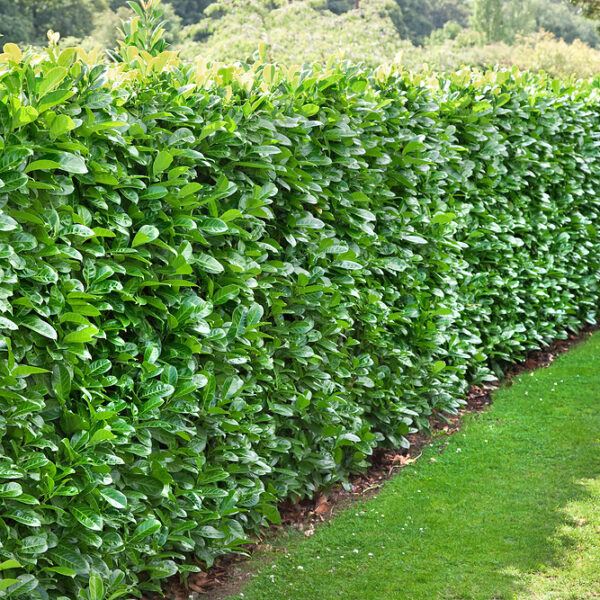
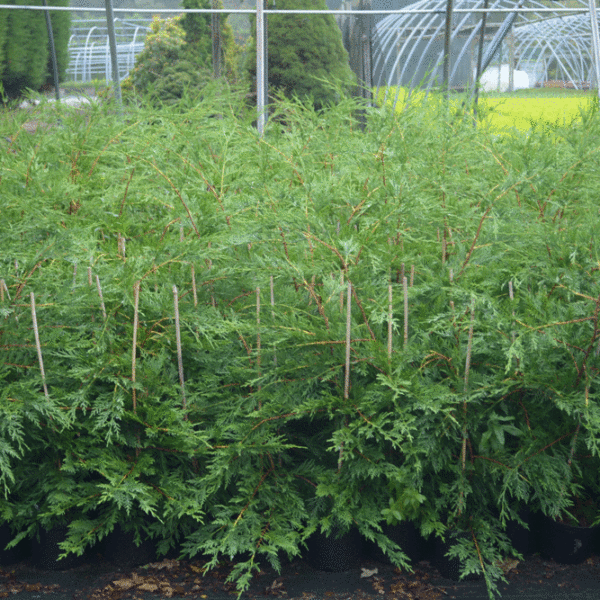
Evergreen garden hedges are useful for views you want to screen all year. Laurel offers broad leaves, Leylandii has finer sprays, and holly and yew bring their own foliage and growth habits. Check their growing conditions and maintenance needs before deciding.
For privacy mainly around a summer sitting area, a deciduous hedge may also be worth considering. It can let more light reach nearby windows in winter. Think through the seasons and how the boundary will affect both the garden and the house.
Reserve enough width and maintenance access
A living hedge needs room for branches as well as a line of stems. Set it back enough from paths and boundaries to allow the intended width without continually cutting against a fence. Keep access for maintaining both sides, and think about where clippings and equipment will go.
Very narrow planting strips can limit the options, particularly beside mature trees or dry walls. The strongest-growing plant is not automatically the answer. It may outgrow the strip more quickly while still struggling to establish its roots in restricted soil.
Match growth to the space and upkeep
Cherry laurel makes a broad-leaved evergreen boundary and needs enough room for its width. Green Leylandii grows vigorously in suitable conditions, but needs regular cutting while the branches remain green. Holly has spiny foliage, which needs thought beside paths or seating.
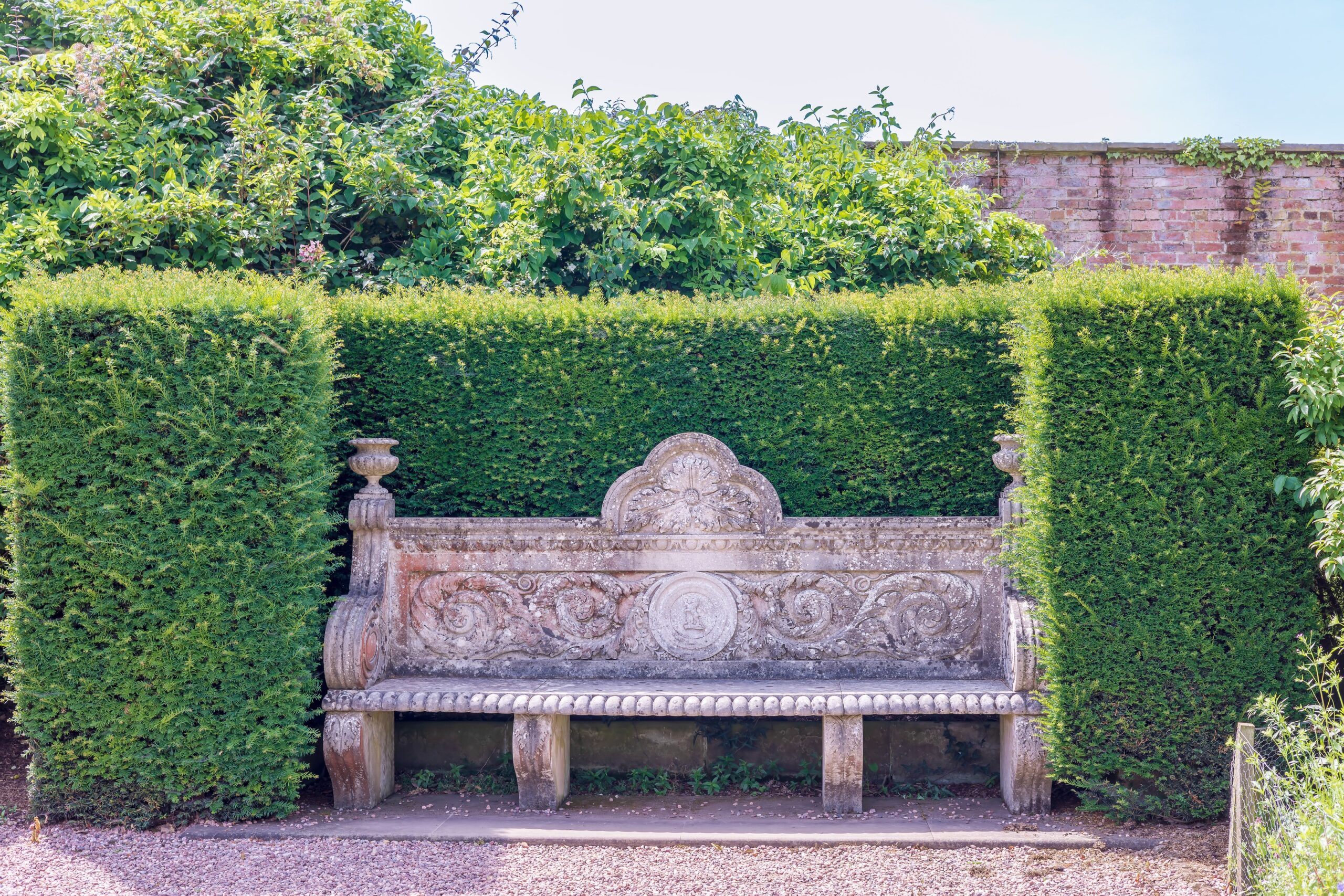
Yew clips into a dark, formal surface on well-drained soil and has more scope for later renovation. Small plants still need time to become a dense screen. Compare the future trimming work alongside the initial size and cost, particularly for a long boundary.
Compare laurel plants Compare conifer plants Compare yew plants
Allow for wind and local growing conditions
On an exposed boundary, young plants may need protection while their roots establish. Screening a view and filtering wind involve different considerations: a very solid barrier can create turbulence. If wind is a major part of the project, ask about the planting design as well as the species.
Check moisture along the whole row. Ground beside a fence may be dry even when it looks sheltered, while a low corner can stay wet through winter. Plan for those differences when choosing the plants and arranging aftercare.
Set the spacing and quantity
When you have chosen the species and maintained outline, compare the available heights and root types. Confirm spacing for that specification and calculate the required quantity. Extra plants placed too closely together can compete for water and space without giving the result you want.
Arrange watering and think through access for trimming before planting. For advice on your boundary, send the run length, required height, photographs and a description of soil, light and access. These details help us suggest options that fit the garden.
Understand plant sizes and quantities Ask about your privacy hedge
Common questions
Which hedge gives the fastest privacy?
That depends on the supplied size, density and site as well as the species. Vigorous plants still need establishment and will require continuing maintenance.
Does a taller plant always screen more?
It provides more initial height, but branching and width determine how much of the view it covers. Check the whole specification rather than height alone.
Can a hedge block out traffic noise?
Do not choose a hedge on a promise of soundproofing. It can provide a visual boundary, but useful noise reduction depends on the wider site and barrier design.