Foliage in every season
Evergreen garden hedges provide a leafy boundary through winter as well as summer. They shed and replace older leaves as they grow, rather than losing all their foliage each autumn. This makes them useful around patios, beside paths and wherever winter privacy matters.
Laurel, holly, yew and Leylandii give very different results. Their leaf size, colour and growth habits affect the character of the garden throughout the year. Supplied size matters too: small plants retain their leaves, but need time to fill the gaps between them.
Laurel, holly, yew or conifers?
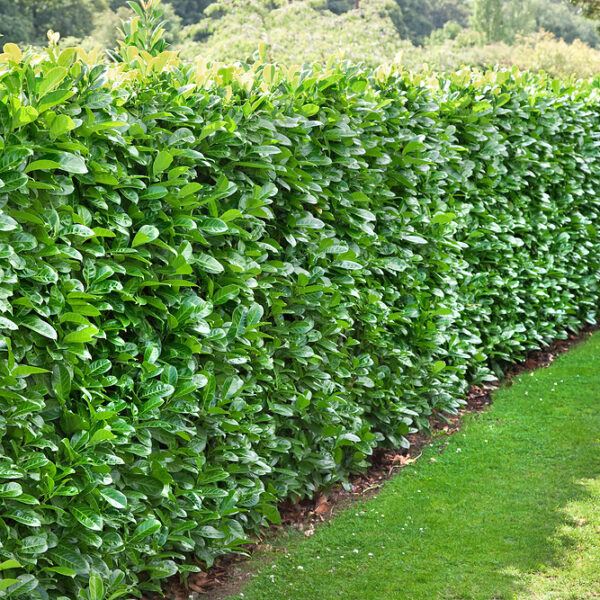
Cherry laurel gives a broad, glossy backdrop. Portuguese laurel has smaller, pointed leaves and red-toned young stems, giving a finer clipped finish. Both can form garden hedges; allow enough room for the outline you intend to keep.
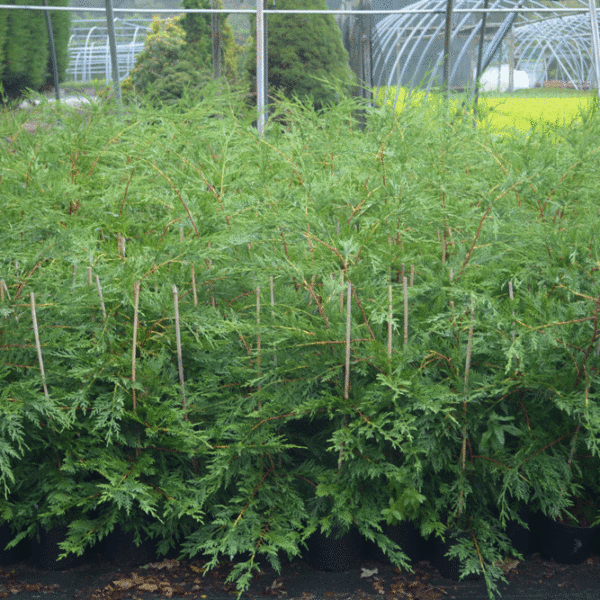
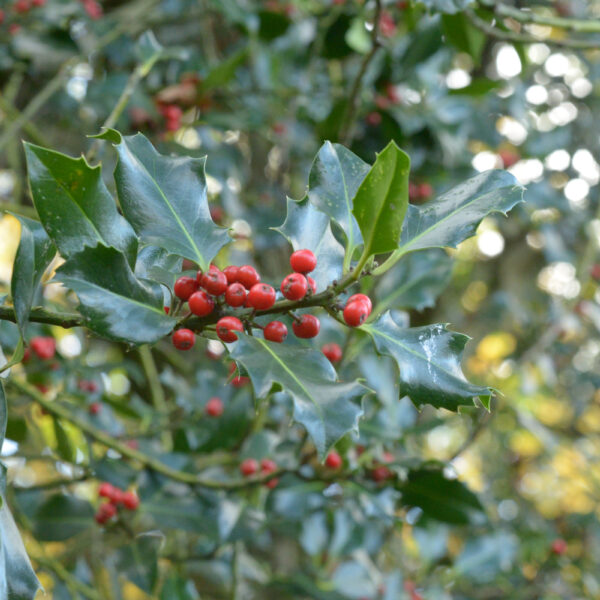
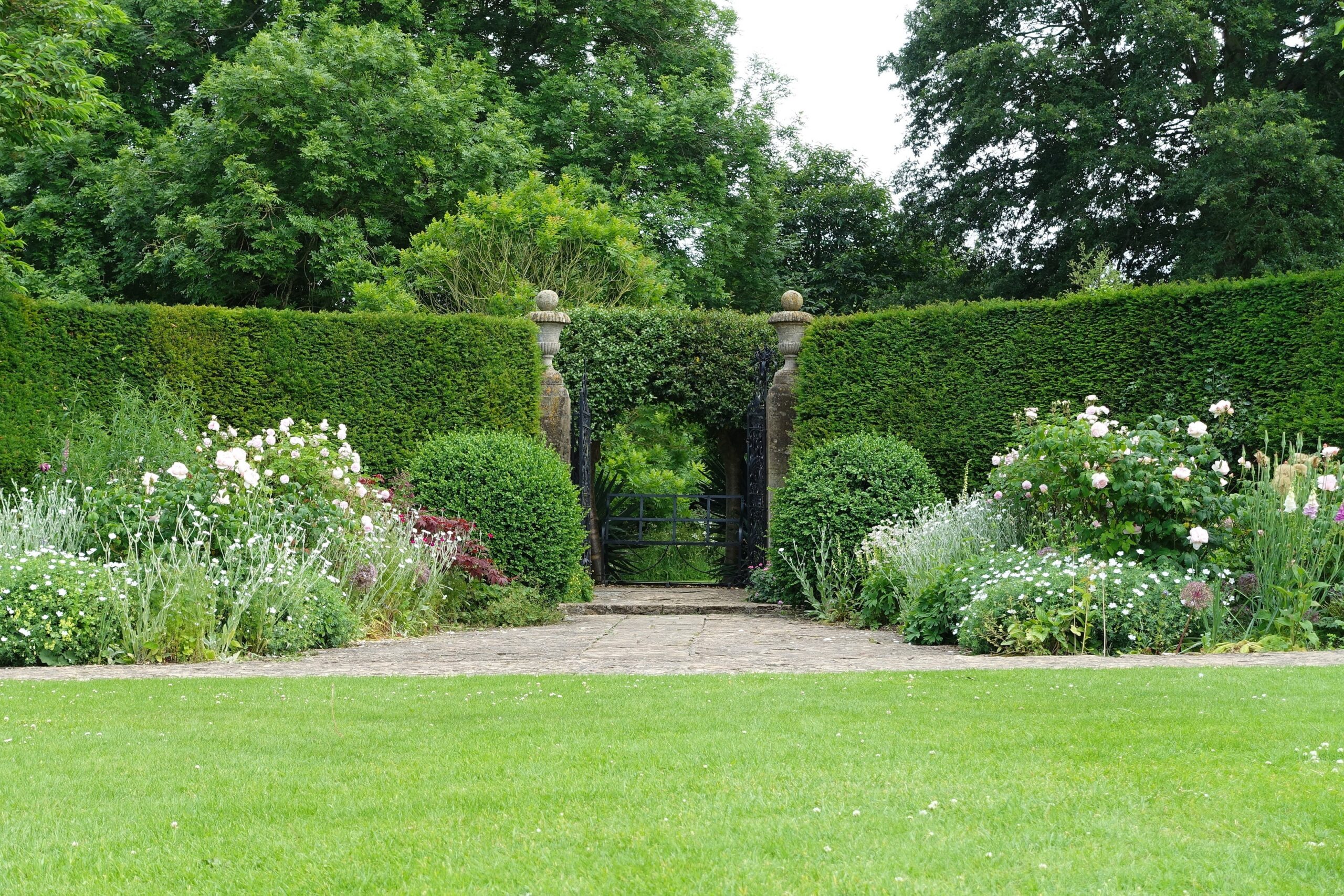
Holly brings spiny foliage, while yew clips into a fine, dark surface. Green Leylandii and golden conifers have scale-like sprays. Look at close views of the foliage alongside photographs of complete hedges, and consider how the colour will sit against the house and other planting.
Find a hedge that suits the ground
Drainage, light and exposure help determine which evergreen will grow well. Yew needs well-drained soil, and holly and laurel also struggle where water stands around the roots. Check the planting line after heavy rain as well as in dry weather.
A fence can shelter the soil from rain, while established trees compete for moisture beneath it. Describe these conditions when asking for a recommendation. It is easier to choose a suitable hedge now than to correct poor growth along a difficult boundary later.
How much cover do you need at planting?
Stand where you use the garden and check the height at which you need privacy. A tall, narrow plant may still leave gaps around its branches. Spread, branching and spacing all affect how much of the view a row of young plants will cover.
If you need screening straight away, ask about the width and density of the available stock. Smaller potted plants are a practical option when you can allow time for establishment and training, particularly across a long boundary.
Keep growth within a practical outline
Vigorous growth can be useful while a new hedge develops, but it also creates regular cutting work. Leylandii needs its width managed within green growth because old bare wood does not normally resprout. Do not let it spread into a path and assume you can remove the excess later.
A formal hedge needs a clearer clipping routine than a loose garden screen. Keep the base slightly wider than the top so light reaches lower growth, and maintain access to both sides. The useful question is how often you are willing to cut the hedge after it reaches the intended size.
Watering through establishment
Check new evergreen hedges for moisture through their first growing seasons, including dry spells outside summer. Foliage can lose water in windy weather while the roots still occupy a small area of soil.
Keep grass and weeds away from the row and mulch moist ground, leaving the stems clear. Some old leaf loss is normal. Persistent wilting or spreading dieback calls for a closer look at watering, drainage and planting depth. Our aftercare guide explains what to check.
Compare sizes within your chosen species
Once the species is settled, compare supplied height, pot or root type and minimum quantity. Confirm spacing for that starting size, then work out the total number and order cost. This gives a more useful comparison than the lowest price per plant.
The evergreen category and individual plant families let you compare the options. For help narrowing the choice first, use our garden hedge guide to work through the soil, available space and trimming routine.
Browse laurel hedging Browse Leylandii and conifers Browse holly hedging Browse yew hedging
Common questions
Will an evergreen hedge give immediate privacy?
Only if the supplied plants and their spacing already give the required coverage. Small potted plants need time to grow together even though they retain their leaves.
Do evergreen hedges shed leaves?
Yes. They replace old foliage gradually rather than losing all their leaves as a normal seasonal event.
Is evergreen hedging maintenance free?
No. A maintained garden hedge needs suitable aftercare and species-appropriate trimming. Faster-growing choices usually require more frequent attention.