Which conifer suits your boundary?
Green Leylandii, Castlewellan Gold and English yew all provide evergreen foliage, but they make different garden hedges. Growth rate, colour and response to trimming are worth comparing before you choose. Mixed dwarf conifers serve a different purpose, bringing a range of shapes to borders and containers.
Decide how high and wide you want the hedge to stay, then consider how often you can trim it. A vigorous conifer needs regular attention once it reaches that outline. Soil, light and drainage should help narrow the choice before you compare plant sizes and prices.
Green Leylandii: vigorous evergreen screening
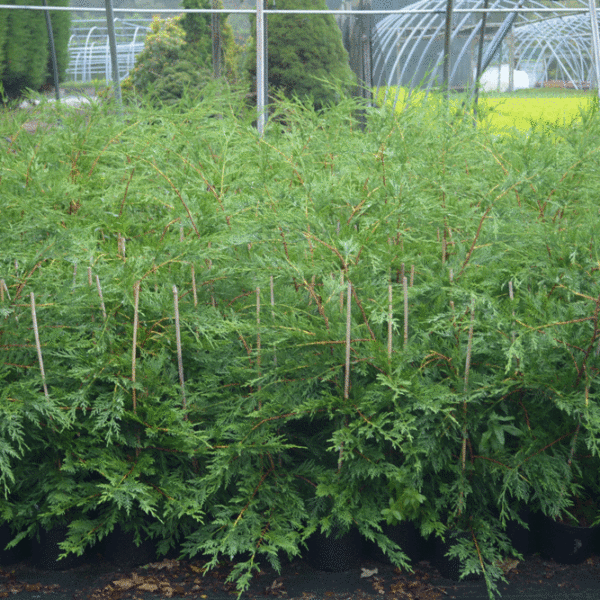
Leyland cypress, commonly called Leylandii, has fine, scale-like foliage held in sprays. It grows vigorously in suitable conditions and can form a substantial evergreen screen. It is best suited to a boundary with enough room and a regular trimming routine.
Manage the width while the hedge is young. Leylandii does not reliably regrow from old bare wood, so cuts need to stay within leafy growth. If it grows too wide, cutting back to the original line may leave a brown surface. Light, regular trimming avoids that difficult correction later.
Castlewellan Gold: a golden form of Leyland cypress
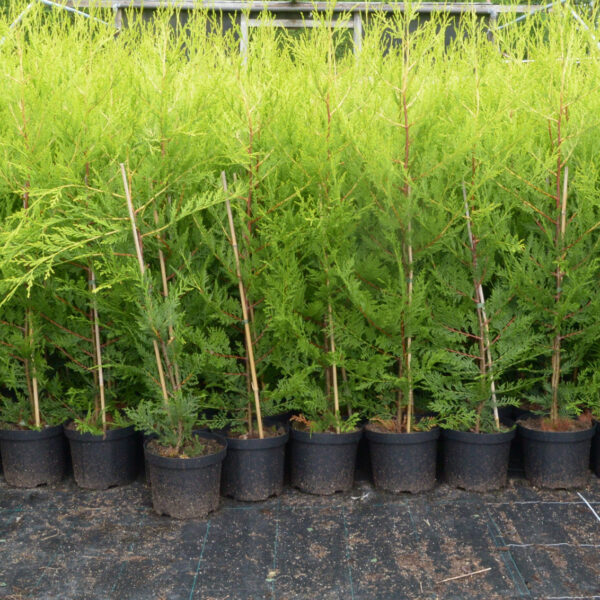
Castlewellan Gold has yellow-toned young foliage, giving a lighter colour than green Leylandii. Its appearance changes with light and the season, so compare views of the foliage as well as the overall hedge.
It needs the same careful planning for width and regular trimming. Keep cuts within green growth and allow access to both sides. For an even golden hedge, choose the named form in a consistent supplied size; an assorted conifer collection will contain different growth habits and colours.
English yew: a dark, formal hedge
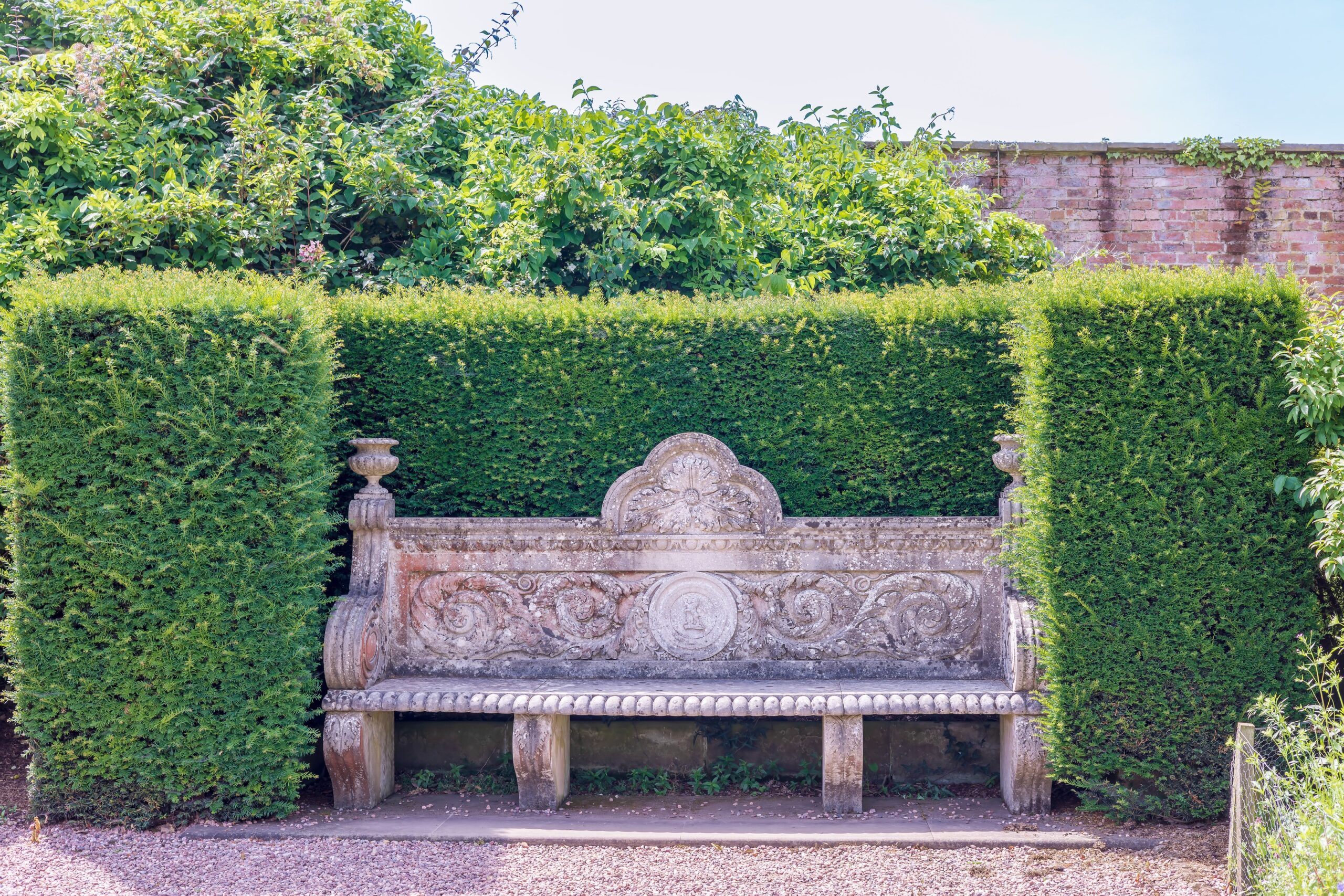
English yew has dark evergreen needles and clips into a dense, defined outline. It can be a useful choice in more shaded positions, provided the soil drains well. Its growth has a different pace from Leylandii, which matters if you are comparing small plants for a new screen.
Unlike most common hedge conifers, yew can regenerate from older wood. This gives scope to renovate an overgrown hedge, although recovery takes time and major reductions need planning. For routine care, keep it within the chosen outline. Yew is toxic if eaten, so consider access by children and animals and clear away clippings carefully.
Mixed dwarf conifers are for a different job
A dwarf conifer collection is intended for ornamental planting, where contrasting shapes, foliage and growth rates are part of the interest. Dwarf means slower or smaller-growing relative to the plant concerned. It does not mean that every plant will stay at its supplied size or match its neighbours.
For a straight, even hedge, choose a named hedging plant and a consistent specification. For containers, rock gardens and mixed borders, compare the dwarf collection separately. Where a collection contains assorted plants, check the selection details rather than assuming a named variety or exact colour combination.
Compare sizes and the full order cost
Check the ground along the full planting line, especially near building work where soil may be compacted or contain rubble. Conifer roots need suitable drainage as well as moisture during establishment. A saturated trench needs attention before planting.
Compare height, pot or root type, minimum order and total quantity. Small potted plants can suit a long run if you have time to train them; larger stock gives more initial height. Confirm spacing for the selected plants before working out the order, and keep enough in the budget for preparation and watering.
Common questions
Is every conifer suitable for hedging?
No. Growth habit, eventual size and response to pruning differ considerably. Choose a named hedge plant for a uniform boundary.
Can I cut a Leylandii hedge back to brown branches?
Avoid that. Leylandii generally does not resprout from old bare wood. Trim within green foliage and get advice before attempting a large reduction.
Are dwarf conifers a low-cost Leylandii alternative?
No. They serve a different purpose and may contain several forms and growth habits. They will not develop as a matching Leylandii hedge.