What is the best evergreen hedge?
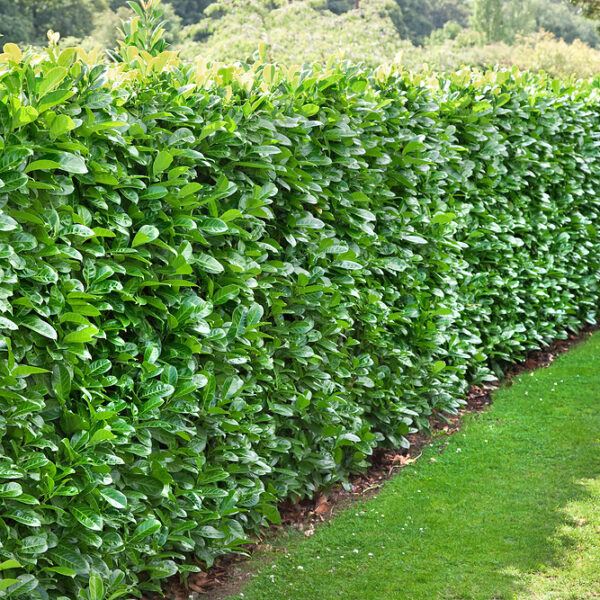
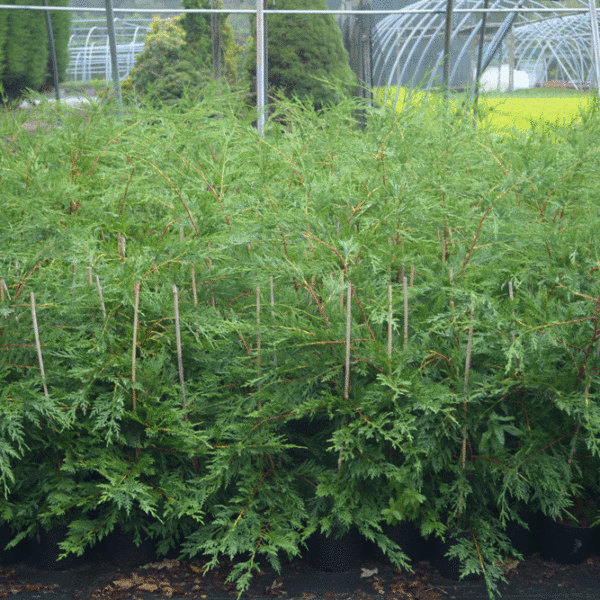
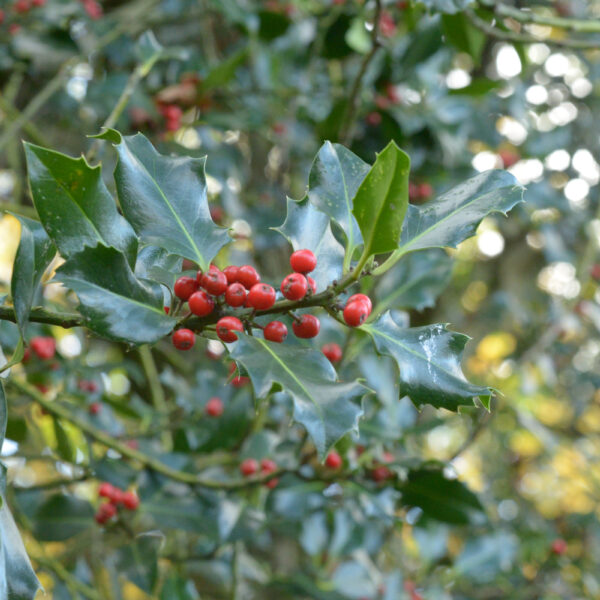
The best evergreen hedge for your garden depends on how quickly you need screening, the height you want to maintain, and the soil and light along your boundary. Cherry laurel develops large, glossy leaves that provide screening as the plants fill out. Portuguese laurel has smaller, pointed leaves and reddish young stems, giving a finer outline when clipped. English yew grows more slowly but makes a dense, dark-green formal hedge. Holly provides spiny foliage and may produce red berries on pollinated female plants, while green Leylandii is useful where rapid height is the priority and regular trimming is practical.
All five retain evergreen foliage through winter, although older leaves or shoots are naturally shed and severe weather can cause some browning. Think about the hedge's eventual width as well as its height. A vigorous Leylandii screen needs room for repeated cutting, while yew and holly grow more slowly and suit a steadier maintenance routine. The spacing figures help you plan the planting line and estimate how many individual plants you need.
Top five evergreen hedging shrubs compared
The five evergreen choices differ in leaf texture, growth speed and the amount of space they need. Compare their typical annual growth and the height you intend to maintain, rather than relying on maximum mature height alone. A closely clipped yew hedge, for example, needs a different planting and trimming plan from a rapidly growing Leylandii boundary.
| Species | Growth per year | Eventual hedge height | Spacing per metre | Key feature |
|---|---|---|---|---|
| Cherry laurel (Prunus laurocerasus) | 30 to 60cm | 3 to 5m | 2 to 3 plants | Large glossy leaves, fast cover |
| Portuguese laurel (Prunus lusitanica) | 20 to 50cm | 3 to 5m | 2 to 3 plants | Smaller pointed leaves, red stems |
| English yew (Taxus baccata) | 20 to 30cm | 2 to 10m | 2 to 3 plants | Fine dark texture, clips tightly |
| English holly (Ilex aquifolium) | 20 to 40cm | 3 to 8m | 2 to 4 plants | Spiny leaves, red winter berries |
| Green Leylandii (× Cuprocyparis leylandii) | 60 to 90cm | 5 to 15m | 2 to 3 plants | Fastest tall screen |
The best evergreen hedges for privacy
When you need to block an overlooking window or screen a seating area quickly, growth rate and planting density matter most. Cherry laurel and green Leylandii are the two fastest options we supply. Cherry laurel puts on broad, leathery leaves that overlap within a couple of growing seasons when spaced at two to three plants per metre. The overlapping leaves can provide useful partial screening while the gaps between young plants gradually close, although the time needed depends on the supplied size and growing conditions.
Green Leylandii grows even faster, adding up to 90cm of height each year. It forms a dense column of scale-like foliage that works well where you need a tall screen quickly, for example along a boundary with a two-storey building. The trade-off is that Leylandii needs at least one trim a year, ideally two, to keep it within bounds. Never cut back into old bare wood, because it will not regrow from brown stems.
Portuguese laurel is a slightly slower alternative with a finer leaf texture and attractive red young stems. It clips neatly and tolerates shade better than Leylandii, making it useful under tree canopies or beside tall fences. For greater height at planting, cherry laurel is available at 90-120cm in 2 litre pots, while Green Leylandii is available at 120-150cm and 150cm in 5 litre pots. These taller options reduce the initial height you need to grow, although the plants will still need time to develop a continuous screen between them.
What is the easiest hedge to maintain?
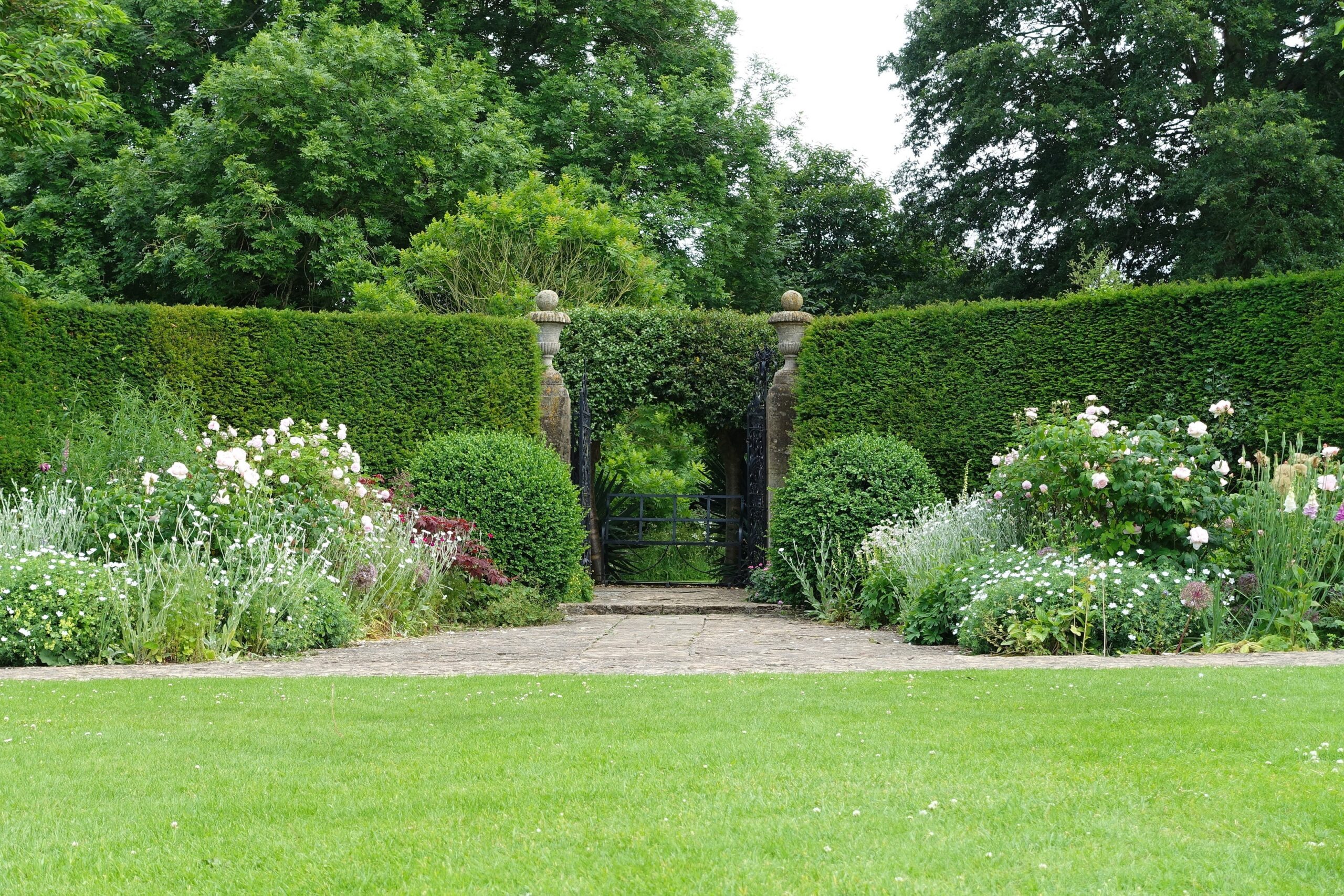
For a formal evergreen hedge with relatively little clipping, English yew is a strong choice. Once it reaches the intended size, one well-timed annual trim is often enough to maintain a neat outline. It grows 20 to 30cm annually and holds its shape well, so an annual clip in late summer or early autumn keeps it looking sharp. Yew also lives for many decades and regenerates from old wood, so you can renovate an overgrown hedge gradually if needed.
Holly is another low-maintenance choice, particularly if you are happy with a slightly looser, more natural outline. Its spiny leaves deter intruders and it produces red berries on female plants (you need a male holly nearby for pollination). Trim holly once in late summer to keep it tidy. Both yew and holly are slower than laurel or Leylandii, so they suit gardeners who prioritise long-term structure over instant screening.
Avoid Leylandii if you want minimal upkeep: its rapid growth demands frequent cutting to prevent it from becoming a chore. Cherry laurel sits in the middle ground. It grows fast but responds well to a single annual trim with secateurs or loppers, which avoids the shredded-leaf look that hedge trimmers can leave on its large foliage.
Is laurel evergreen?
Yes, both cherry laurel and Portuguese laurel are evergreen hedging shrubs. They hold their leaves through winter, shedding older foliage gradually in spring and summer as new growth replaces it. This means you get year-round screening without the bare winter months you would experience with a deciduous hedge such as beech or hawthorn.
Cherry laurel has large, glossy, oval leaves up to 15cm long. Portuguese laurel has smaller, darker, more pointed leaves on red-tinged stems. Both stay green in all but the harshest winters, though very exposed sites can cause some leaf scorch. Planting in a sheltered spot or behind a windbreak helps keep the foliage looking its best through the coldest months.
How many plants do you need?
Spacing determines how quickly your hedge fills out and how dense it becomes. The table below shows recommended planting distances for a single row and the number of plants you need for common hedge lengths. For a thicker hedge, plant a staggered double row with the same within-row spacing.
Use these figures to calculate your order. Multiply the length of your boundary in metres by the plants-per-metre figure for your chosen species and size. Always round up to the nearest whole pack quantity.
| Species | Plants per metre (single row) | Plants for 5m | Plants for 10m | Plants for 20m |
|---|---|---|---|---|
| Cherry laurel | 2 to 3 | 10 to 15 | 20 to 30 | 40 to 60 |
| Portuguese laurel | 2 to 3 | 10 to 15 | 20 to 30 | 40 to 60 |
| English yew | 2 to 3 | 10 to 15 | 20 to 30 | 40 to 60 |
| English holly | 2 to 4 | 10 to 20 | 20 to 40 | 40 to 80 |
| Green Leylandii | 2 to 3 | 10 to 15 | 20 to 30 | 40 to 60 |
Flowering evergreen hedges for UK gardens
Most classic evergreen hedging shrubs are grown for their foliage rather than their flowers, but several produce blooms that add seasonal interest. Cherry laurel sends up upright spikes of small white flowers in spring, which attract bees and other pollinators. Portuguese laurel produces similar but slightly longer flower racemes in early summer.
For a lower flowering evergreen boundary, dwarf evergreen azaleas are worth considering where the soil is acidic and moisture-retentive but drains well. Their small leaves sit beneath colourful spring flowers, with individual plants available in single-colour selections. Keeping the edging to one colour gives a more uniform appearance, while different colours can be planted in groups for an informal border. They suit the front of a border or a low dividing hedge in partial shade. French lavender Bandera Purple gives aromatic grey-green foliage and deep purple flower spikes through summer, ideal for a sunny, well-drained edge.
These flowering evergreens work best as informal hedges or border edging rather than tall privacy screens. Clip azaleas lightly after flowering to keep them bushy. Trim lavender in late summer after the flowers fade, cutting back to just above the new growth. Both combine well with structural evergreens such as yew or holly to create a layered boundary with year-round interest.
Evergreen hedge care through the year
A month-by-month routine keeps your evergreen hedge healthy and dense. The table below outlines the key tasks for each season, covering planting, watering, feeding and trimming. Adjust timings by a week or two depending on your local climate and the weather each year.
| Month | Task |
|---|---|
| November to March | Plant bare root yew, privet, hawthorn or Green Leylandii while dormant and the soil is workable. English holly is supplied in 9cm pots, not bare root. Keep exposed roots moist until planted and avoid frozen or waterlogged ground. |
| March to April | Plant pot-grown evergreens. Apply a balanced slow-release fertiliser around the root zone. Mulch with compost or bark, keeping stems clear. |
| May to June | Check soil moisture weekly during dry spells. Water newly planted hedges deeply. Watch for aphids on new laurel and Leylandii growth. |
| July to August | Trim yew, holly and most formal hedges. Give Leylandii its first cut of the year. Water container-grown and newly planted stock in hot weather. |
| September to October | Give Leylandii its second trim before winter. Tidy laurel hedges with secateurs. Plant pot-grown evergreens while the soil is still warm. |
How to choose the best hedge evergreens for your garden
Start by looking at the site conditions along your boundary. Check the planting line after heavy rain. If water remains on the surface or fills a test hole for long periods, improve drainage before choosing your hedge. Yew is particularly sensitive to waterlogged soil, and holly and laurel can also suffer where their roots remain saturated. Note how much sun the line gets. Yew and Portuguese laurel tolerate shade well; Leylandii and cherry laurel need at least half a day of sun to grow densely.
Next, decide on the mature height you want to maintain. For a low garden divider of 1 to 2m, holly or yew clipped formally work well. For a 2 to 3m privacy screen, cherry laurel or Portuguese laurel are practical choices. If you need to block a view above 3m, green Leylandii is the fastest route, but commit to regular trimming from the start.
Finally, think about the look you want. Large-leaved laurels give a lush, tropical feel. Yew creates a classic, formal backdrop that suits traditional gardens. Holly adds seasonal berries and a more rustic character. Visit gardens or look at photographs of mature hedges to see which foliage texture and colour you prefer against your house and planting.
Planting your new evergreen hedge
Good planting gives your hedge the strongest start. Clear a strip at least 60cm wide of grass and weeds. Dig a trench slightly deeper and wider than the root ball or bare roots. For bare root plants (available roughly November to March), soak the roots in water for an hour before planting. Spread the roots out in the trench and backfill with soil, firming gently with your heel.
For pot-grown plants, tease out any circling roots before setting the plant at the same depth it sat in the pot. Water thoroughly after planting, even if rain is forecast. Apply a 5cm layer of mulch, leaving a gap around the stems to prevent rot. Adding RHS Rootgrow mycorrhizal fungi to the planting hole helps roots establish faster, particularly on poor or compacted soils.
Space plants according to the figures in the table above. For a staggered double row, offset the second row so each plant sits in the gap between two plants in the first row. This gives a thicker hedge more quickly without overcrowding the roots.
Common questions
What type of hedge stays green year-round?
Evergreen hedges keep their leaves through all four seasons. Cherry laurel, Portuguese laurel, English yew, English holly and green Leylandii are the most common choices for UK gardens. They shed older leaves gradually rather than dropping them all in autumn, so the hedge always has a green covering. Deciduous hedges such as beech and hawthorn lose their leaves in winter, leaving bare branches until spring.
What are the top 5 evergreen shrubs?
Five useful evergreen hedging choices are cherry laurel for broad-leaved screening, Portuguese laurel for smaller leaves and red-tinged stems, English yew for a dense clipped outline, English holly for spiny foliage, and Green Leylandii for rapid height. Holly berries depend on having a suitable female plant and pollination. For low ornamental edging, dwarf evergreen azaleas suit acidic soil, while French lavender Bandera Purple prefers a sunny, well-drained position.
What is the easiest hedge to maintain?
English yew is the easiest formal hedge to maintain because it grows at a moderate 20 to 30cm per year and needs only one trim annually in late summer. It regenerates from old wood, so you can correct overgrown sections over time. Holly is another low-maintenance option with one trim per year. Avoid Leylandii if you want minimal upkeep, as it requires cutting at least once, ideally twice, each year.
What is the best hedge to block neighbours?
Green Leylandii is the fastest hedge for blocking an overlooking view, adding up to 90cm of height each year. Cherry laurel is a close second, with large leaves that create a solid visual screen within two to three growing seasons. For a tall screen, plant Leylandii at two to three plants per metre and start trimming early to keep the hedge dense and manageable. Portuguese laurel works well for a slightly slower but neater screen.
Is laurel evergreen?
Yes, both cherry laurel (Prunus laurocerasus) and Portuguese laurel (Prunus lusitanica) are fully evergreen. They keep their leaves through winter, shedding older foliage gradually in spring and summer. This gives continuous screening without bare winter branches. Cherry laurel has large, glossy leaves; Portuguese laurel has smaller, pointed leaves on red stems. Both stay green in normal UK winters, though exposed sites may see some leaf browning.
How many evergreen hedge plants do I need per metre?
For most evergreen hedging shrubs, plant two to three per metre in a single row. English holly can be planted at two to four per metre for a denser barrier. For a thicker hedge, use a staggered double row with the same within-row spacing. Multiply your boundary length in metres by the plants-per-metre figure to calculate the total. Always round up to the nearest pack size.
When should I trim an evergreen hedge?
Trim yew, holly and most formal evergreen hedges once in late summer (July to August). Leylandii needs two cuts: one in midsummer and a second in early autumn. Cherry laurel is best trimmed with secateurs in late summer to avoid damaging the large leaves. Avoid trimming during very hot, dry spells or when frost is forecast. Always check for nesting birds before cutting between March and August.
Can I plant evergreen hedging in shade?
Yes, several evergreen hedges tolerate shade well. English yew is the best choice for deep shade, growing densely even under tree canopies. Portuguese laurel also copes with partial shade and is useful beside tall fences. Cherry laurel and holly manage light shade but grow more slowly and less densely. Leylandii needs at least half a day of direct sun to develop a thick screen.