Bare root hedging: what it is and when to plant
Bare root hedging plants are field-grown shrubs and trees lifted while dormant, with the soil shaken from their roots. With no pot or heavy ball of soil to handle, the plants are light enough to carry along a prepared planting trench, and bare root stock generally costs less than equivalent potted plants when covering a long boundary. Bare root stock is only available during the dormant season, roughly November to March, when the plants are not in active growth. Planting in this window gives roots time to settle before the demands of spring.
The exposed roots must stay moist and protected from frost and drying wind from the moment they arrive. Have the planting trench ready before delivery and aim to get the plants into the ground within a day or two. If that is not possible, heel the bundles into a temporary trench or keep the roots wrapped in damp sacking in a cool, sheltered spot. Never let the roots dry out or sit in waterlogged conditions.
Comparing bare root, rootball and pot grown hedging
Bare root plants arrive with exposed roots, rootball plants retain a substantial ball of field soil, and pot grown plants have their roots contained in compost. These differences affect when you can plant, how carefully the roots need handling and how much work is involved. The comparison below is useful when planning the planting season and choosing a suitable starting size.
| Feature | Bare root | Rootball | Pot grown |
|---|---|---|---|
| Root system | Bare, no soil; lightweight | Field soil wrapped in hessian or similar; heavy | Grown in compost within a pot; moderate weight |
| Planting season | Dormant season, roughly November to March | Dormant season, typically October to April | Any time the ground is workable, avoiding frozen or waterlogged soil |
| Handling | Keep roots moist and covered; plant promptly | Lift by the rootball, not the stem; keep wrapping intact | Remove the pot; keep rootball moist until planting |
| Typical sizes available | 40 to 60cm, 60 to 90cm, 80 to 100cm (species dependent) | 60 to 80cm, 80 to 100cm (often larger, heavier specimens) | 9cm pot to 5 litre pot; heights from 20 to 150cm |
| Best for | Long runs on a budget; winter planting projects | Larger plants for quicker impact; heavier soil types | Flexible planting times; smaller quantities; filling gaps |
| Watering after planting | Essential during first growing season | Essential; larger rootball needs consistent moisture | Essential; pot-grown roots can dry out faster in warm spells |
Advantages and disadvantages of bare root hedging
Bare root plants are particularly useful when planting a long hedge during winter. Their exposed roots make them lighter to handle and generally cheaper to buy, although they need prompt planting and careful protection from drying out.
The main advantage is cost. Because bare root plants are field-grown and lifted with no pot or heavy soil ball, they are cheaper to produce and transport. That saving is passed on, making them the most economical way to plant a hedge of any length. They are also light and easy to handle, which speeds up planting once the trench is ready.
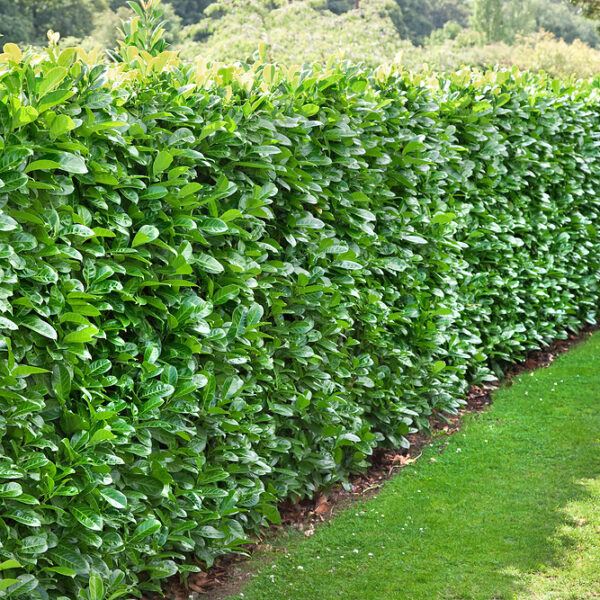
The key disadvantage is the restricted planting window. Bare root plants must go into the ground during the dormant season, so you cannot plant them in late spring or summer. There is also a higher risk of failure if the roots are allowed to dry out before planting, or if the plants sit in waterlogged ground. Bare root plants are usually smaller than equivalent potted or rootballed stock, so they take longer to form a dense screen. Not every hedging species is offered in every root type. Cherry laurel and Portuguese laurel are supplied here in pots, while English yew is available bare root at 40 to 60cm, rootballed at 60 to 80cm and 80 to 100cm, and potted at 20 to 40cm.
What is the best bare root hedging for my garden?
For a thorny native boundary, consider hawthorn. Privet suits a regularly clipped garden screen, while yew offers slower-growing evergreen cover. The right bare root plant depends on your soil, the eventual hedge height and how much winter screening you need.
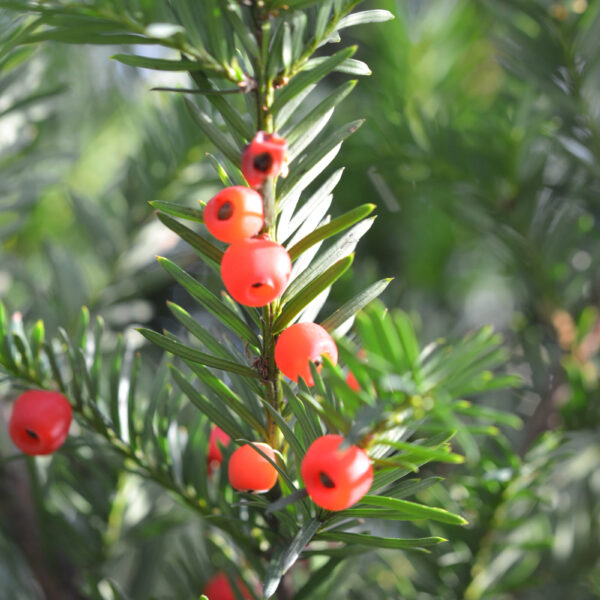
Common hawthorn hedging (Crataegus monogyna) is a top choice for a mixed native hedge. It is tough, thorny and wildlife-friendly, with white spring flowers and red autumn haws. Plant at 4 to 5 plants per metre in a single row. Privet hedging (Ligustrum ovalifolium) is semi-evergreen, holding its leaves in all but the coldest winters, and tolerates regular clipping. Space bare root privet at 4 to 5 per metre. Green beech hedging (Fagus sylvatica) holds many of its copper-brown autumn leaves through winter when clipped regularly, providing seasonal cover. The 90 to 120cm plants in this catalogue have no specified root type, so check the supplied format before planning the planting date. Space plants at 3 to 5 per metre. For a formal evergreen hedge, English yew hedging (Taxus baccata) is slow-growing but long-lived and can be planted bare root at smaller sizes, such as 40 to 60cm. Box hedging (Buxus sempervirens) is also available bare root for low parterre or edging hedges.
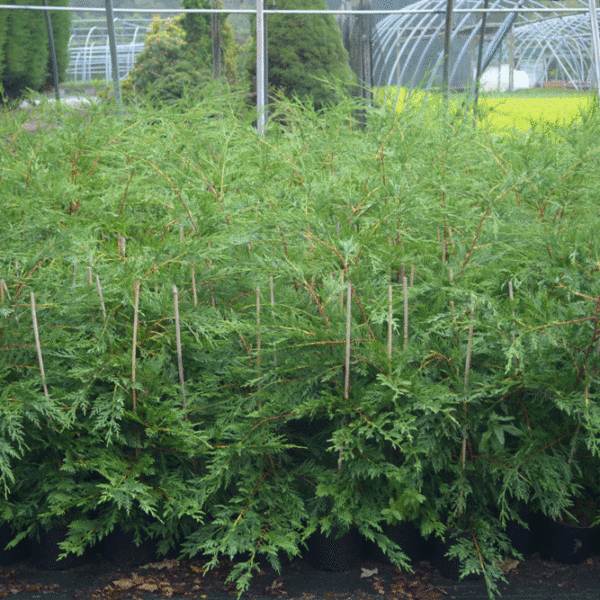
Green Leylandii, bare root, offers fast-growing evergreen screening in 40 to 60cm, 60 to 90cm and 3 to 4ft sizes. Grade B bare root Leylandii is also listed separately at 80 to 100cm. Plant 2 to 3 per metre. If you need a dense, evergreen hedge and can plant in the dormant season, bare root Leylandii is a cost-effective way to cover a long boundary quickly. Just be prepared to trim it two or three times a year once established.
How to plant bare root hedging
Planting bare root hedging well gives the roots the best start. Begin by clearing the planting strip of weeds and grass. Dig a trench wide enough for the roots to spread naturally and deep enough so the plants sit at the same depth as the soil mark on the stem. Fork over the base to break up any compaction.
Soak the roots in a bucket of water for an hour or two before planting, unless they are already moist from storage. Set each plant in the trench, spread the roots out and backfill with soil, firming gently with your heel as you go. Water thoroughly after planting, even if rain is forecast. A mulch of bark or compost around the plants (keeping it clear of the stems) helps retain moisture and suppress weeds. Adding RHS Rootgrow mycorrhizal fungi to the planting hole can support root establishment.
- Clear the planting strip of all weeds and grass.
- Dig a trench wide and deep enough for the roots to spread.
- Soak bare roots in water for 1 to 2 hours before planting.
- Set plants at the same depth as the nursery soil mark.
- Backfill, firm gently and water thoroughly.
- Apply a mulch, keeping it away from the stems.
How many bare root plants do I need?
Spacing depends on the species and how quickly you want a dense hedge. The table below gives a guide for common bare root hedging plants. For a thicker hedge, use a staggered double row and calculate the quantity from the spacing in each row. Two full rows at the same within-row spacing require twice the number of plants shown for a single row.
| Species | Plants per metre (single row) | Plants for 5m | Plants for 10m | Plants for 20m |
|---|---|---|---|---|
| Common hawthorn | 4 to 5 | 20 to 25 | 40 to 50 | 80 to 100 |
| Privet | 4 to 5 | 20 to 25 | 40 to 50 | 80 to 100 |
| Green beech | 3 to 5 | 15 to 25 | 30 to 50 | 60 to 100 |
| English yew (bare root) | 3 to 4 | 15 to 20 | 30 to 40 | 60 to 80 |
| Box (bare root) | 5 to 6 | 25 to 30 | 50 to 60 | 100 to 120 |
| Green Leylandii, bare root | 2 to 3 | 10 to 15 | 20 to 30 | 40 to 60 |
How long can I keep bare root hedging before planting?
Bare root hedging plants should ideally be planted within a few days of arrival. If you cannot plant straight away, the roots must be kept moist, cool and protected from frost and wind. Store the bundles in a shed or garage with the roots wrapped in damp hessian or compost. Check the wrapping daily and remoisten if it starts to dry out.
For delays longer than a week, heel the plants into a temporary trench. Dig a shallow V-shaped trench in a sheltered spot, lay the plants at an angle with the roots in the trench and cover the roots with soil. Firm gently and water. They can stay heeled in for several weeks during the dormant season, but aim to move them to their permanent positions as soon as the ground is ready. Never store bare root plants in a bucket of water for more than a few hours, as this can drown the roots.
Bare root hedging aftercare: month by month
The first year after planting is critical. Use this calendar as a reminder of the key tasks to keep your new bare root hedge healthy and growing strongly.
| Month | Task |
|---|---|
| November to February | Plant during mild spells when the ground is not frozen or waterlogged. Water in after planting. |
| March | Check for frost-heaved plants and firm back in. Apply a general-purpose fertiliser if growth is slow. |
| April to May | Keep the hedge well watered during dry spells. Top up mulch to retain moisture. |
| June to August | Water deeply once or twice a week in dry weather. Hand-weed around the plants. |
| September | Reduce watering as growth slows. Check ties on any support stakes. |
| October | Clear fallen leaves from the base. Plan any autumn planting for new bare root stock. |
Rootball and pot grown hedging: when to choose them
Rootball hedging plants are field-grown like bare root, but lifted with a ball of soil around the roots, wrapped in hessian or a biodegradable membrane. They are typically larger than bare root plants and give a more established look from day one. Rootball stock is heavier to handle but useful for larger evergreens, particularly English yew hedging, which is available here at 60 to 80cm and 80 to 100cm. Portuguese laurel is supplied in 9cm and 2 litre pots rather than as rootball plants. Plant rootball hedging during the dormant season, keeping the wrapping intact until the plant is in the hole.
Pot grown hedging plants are the most flexible option. They can be planted at any time of year as long as the ground is not frozen or waterlogged, and you can keep them in their pots for weeks before planting if you water them regularly. Pot grown plants are available in a wide range of sizes, from 9cm pots for small starter plants to 5 litre pots for taller specimens. Cherry laurel, Green Leylandii, pot grown, and Castlewellan Gold are all available as pot grown plants, giving you choice over planting time. The main trade-off is price: pot grown plants cost more per plant than bare root equivalents.
Common questions
When should you plant bare root hedging?
Plant bare root hedging during the dormant season, which runs roughly from November to March. The ground must be workable, not frozen or waterlogged. Planting in this window allows roots to establish before the plant puts energy into new leaves and shoots in spring. Mild spells in late autumn or early winter are ideal. If a cold snap is forecast, wait until conditions improve.
What are the disadvantages of bare root trees?
The main disadvantages are the restricted planting season (dormant period only) and the risk of the roots drying out before planting. Bare root plants are usually smaller than potted or rootballed stock, so they take longer to form a dense hedge. Some evergreen species are less reliable from bare root. There is also a higher failure rate if aftercare, especially watering, is neglected during the first growing season.
What is the best bare root hedging for my garden?
The best choice depends on your soil, desired height and whether you want evergreen or deciduous cover. Common hawthorn is excellent for a tough, wildlife-friendly native hedge. Privet gives semi-evergreen screening. Green beech holds its autumn leaves for winter cover. For a formal evergreen hedge, English yew is slow but long-lived. Green Leylandii, bare root, offers fast, tall screening at a low cost per plant.
How long can I keep bare root hedging before planting?
Ideally, plant within a few days of delivery. If you need to wait, keep the roots moist and cool, wrapped in damp sacking in a shed or garage. For delays longer than a week, heel the plants into a temporary trench in a sheltered spot. They can stay heeled in for several weeks during the dormant season, but move them to their final positions as soon as possible.
Can I plant bare root hedging in spring?
You can plant bare root hedging in early spring, up to late March, as long as the plants are still dormant and the ground is not frozen. Once buds start to break and new leaves appear, the planting window has passed. If you miss the dormant season, switch to pot grown plants, which can be planted at any time the soil is workable.
How do I prepare the ground for bare root hedging?
Clear the planting strip of all weeds and grass. Dig a trench wide enough for the roots to spread out and deep enough to plant at the same depth as the nursery soil mark. Fork over the base to relieve compaction. If the soil is heavy clay, mix in some grit or compost to improve drainage. Do not add fertiliser directly into the planting hole; a surface mulch after planting is better.