Prunus laurocerasus
£2.50 per plant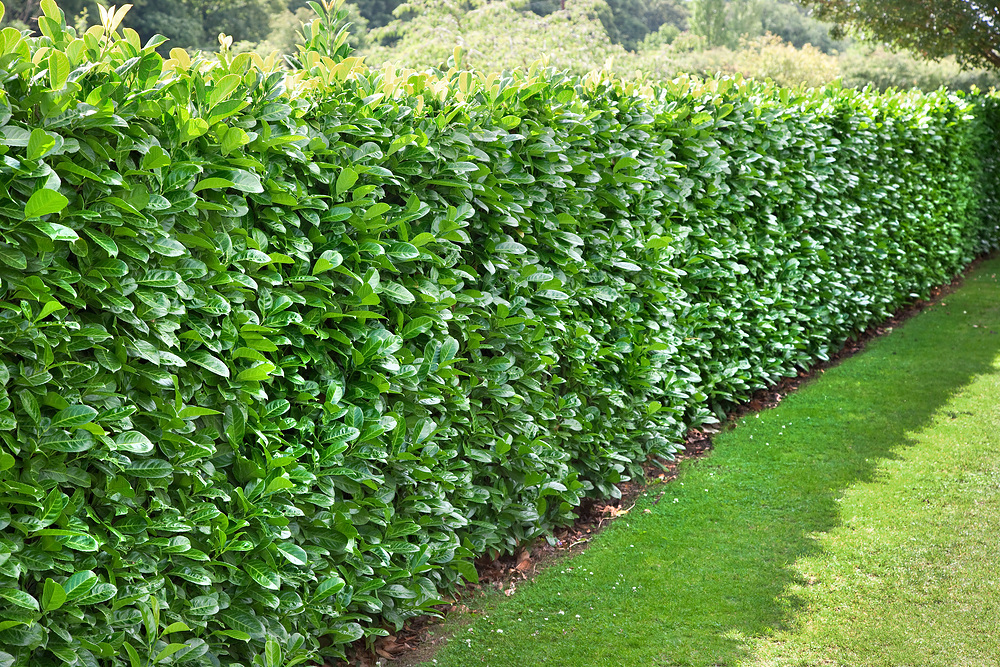
- UK Nursery Grown
- Planting Advice
Cherry Laurel Hedge Plants (Prunus laurocerasus)
Prunus laurocerasus
£2.50 per plant
Cherry laurel hedging grows into a thick evergreen screen, with large, glossy green leaves that provide privacy throughout the year. It grows vigorously in sun or partial shade and suits most soils that drain well. An annual trim helps control its height and spread. Choose from three potted sizes, ranging from 40-60cm starter plants to 90-120cm plants for a taller hedge from the outset.
- Glossy evergreen foliage year-round
- Vigorous, dense screening hedge
- Thrives in sun or partial shade
Step 1: Choose Your Root Type
Pot-grown plants, supplied in the pot size shown for each option. Plant at any time of year when the ground is workable. Ask about this plant
Understanding root types
- Bare root
- Lifted with little or no soil around the roots. Keep the roots moist and plant during the dormant season.
- Rootball
- Supplied with soil around the roots. Handle the rootball carefully and follow its planting instructions.
- Potted
- Grown in a nursery container. The pot size and supplied height are shown with each plant option.
Step 2: Choose Your Plant
Need help with your planting?Ask about sizes, root types and quantities
Position
Sun or partial shade
Soil
Moist but well-drained soil
Supplied size
40-60cm, 9cm pot
Ordering
Minimum order 10
Description
Cherry Laurel Hedge Plants (Prunus laurocerasus)
A broad-leaved evergreen hedge for privacy
Cherry laurel, Prunus laurocerasus, has broad, glossy green leaves and branches that fill out densely as the plant grows. With regular clipping, a cherry laurel hedge provides year-round privacy around lawns, patios and garden boundaries. Its large leaves give it a distinctly leafy appearance, particularly alongside the narrower foliage of conifer hedging. Allow enough width for the branches to develop without crowding nearby paths or planting beds.
Mature plants can produce upright clusters of small white flowers in spring, followed by cherry-like fruits that turn black as they ripen. Frequent clipping usually means fewer flowers and berries, particularly when the hedge is trimmed before flowering shoots develop. All parts of the plant are toxic if eaten, so site the hedge where pets and livestock cannot browse it.
Why choose a cherry laurel hedge
Once established, cherry laurel can put on 30 to 60cm of growth a year, with new shoots gradually closing the gaps between plants. Its overlapping leaves and dense branches help shelter a garden from wind and provide some screening from surrounding activity, although the hedge will not soundproof a boundary. Cherry laurel is hardy across much of the UK and grows in a range of soils, including clay and chalk, provided excess water can drain away.
Give cherry laurel enough space to spread and leave room to reach both sides when trimming. You can maintain a mature hedge at 2 to 2.5 metres tall, although untrimmed plants will grow considerably higher. Cutting back the season's new growth each year helps maintain the height and width you want.
Eventual height, spread and growth rate
With regular trimming, cherry laurel can be kept at a hedge height of 1.5 to 2.5 metres. Left to grow naturally, it can eventually reach 5 to 8 metres tall and 4 to 6 metres wide. A maintained hedge may extend 1 to 1.5 metres from its centre line, so account for the full width when planting beside a path, fence or neighbouring boundary.
Established cherry laurel typically grows around 30 to 60cm a year in favourable conditions. Expect less shoot growth during the first growing season while the roots spread into the surrounding soil. As new branches develop, trimming their tips encourages the plants to become bushier and helps neighbouring plants grow together into a continuous hedge.
Using cherry laurel in the garden
Plant cherry laurel along a boundary where you want to screen neighbouring windows, soften the outline of a fence or shelter a seating area. In larger gardens, a tall hedge can also separate a lawn from a vegetable plot or create a sheltered space for more delicate planting. Its glossy leaves remain green in winter, while the dense branches can provide nesting cover for garden birds.
Because the leaves are large, secateurs give a cleaner finish than hedge shears, though shears are practical for long runs. Keep the hedge slightly wider at the base so light reaches the lower branches. Avoid planting cherry laurel where horses, dogs or other animals might eat the leaves or berries.
Choosing a size
Cherry laurel is available in three potted sizes: 40-60cm plants in 9cm pots, and 60-90cm or 90-120cm plants in 2 litre pots. The smaller plants suit longer boundaries where initial cost matters, while the taller options provide more height from planting. All three sizes need time to establish roots and fill the spaces between plants. As they are supplied in pots, you can plant throughout the year whenever the soil is workable and conditions allow you to water them properly.
Measure the full length of your boundary before choosing a size. Think about how quickly you need the hedge to reach its intended height, then use the planting distances below to calculate quantities. Include any gaps for gates or paths, and check that you can still reach the hedge for trimming once it has grown.
| Option | Supplied size | Pot type | Best for | Plants per metre |
|---|---|---|---|---|
| 40-60cm | 40-60cm | 9cm pot | Budget-friendly long runs | 3 to 5 |
| 60-90cm | 60-90cm | 2 litre pot | Good balance of cost and height | 2 to 3 |
| 90-120cm | 90-120cm | 2 litre pot | Taller start for instant presence | 2 to 2.5 |
Planting and care
Planting and aftercare
When and how to plant
Pot-grown cherry laurel can be planted at any time of year, provided the ground is not frozen or waterlogged. Autumn and spring are ideal because the soil is warm and moist, helping roots settle quickly. Water the rootball thoroughly before removing the pot.
For a continuous hedge, digging a trench allows you to loosen compacted soil along the planting line and position each rootball at an even depth. Set each plant at the same depth it was in the pot, backfill with the excavated soil and firm gently with your hands. Water well after planting and mulch with bark or compost, keeping the mulch clear of the stems.
Spacing and quantities
For a single-row cherry laurel hedge, allow 40 to 60cm between plants, measured from the centre of one stem to the next. Planting at 40cm brings the foliage together sooner, while 60cm spacing uses fewer plants along a long boundary. If you have enough room for a wider hedge, arrange plants in two staggered rows, leaving 60cm between rows and 60 to 90cm between plants within each row.
Use the table below to calculate how many plants you need for common hedge lengths.
| Hedge length | Plants needed (spaced 40cm) | Plants needed (spaced 50cm) | Plants needed (spaced 60cm) |
|---|---|---|---|
| 5 metres | 13 | 10 | 9 |
| 10 metres | 25 | 20 | 17 |
| 20 metres | 50 | 40 | 34 |
Watering and feeding
Keep newly planted cherry laurel watered during its first growing season, especially through warm, dry weather. Check the original rootball as well as the soil around it, because rain may wet the surrounding ground without soaking the compost the plant arrived in. When the rootball begins to dry, water slowly so moisture reaches the roots. In dry spells, a thorough soaking once or twice a week may be needed, with more frequent checks in hot or exposed positions.
Feed in early spring with a general-purpose granular fertiliser or a slow-release shrub feed. A second light feed in early summer can support strong growth on young hedges. Mulch annually in spring to conserve moisture and suppress weeds.
Trimming calendar
Give cherry laurel its main trim in late spring or early summer, once the new shoots have lengthened. This helps control the hedge's width and encourages a fuller shape. If a few branches grow beyond the outline later in the season, tidy them in early autumn. Avoid heavy cutting after September, as fresh shoots encouraged by late pruning may be vulnerable to frost.
Use secateurs for a clean cut on the large leaves, or hedge shears for speed on long hedges. Always check for active bird nests before cutting. Remove trimmings from the site: laurel leaves break down slowly and are toxic if eaten by animals.
| Month | Task |
|---|---|
| March | Apply spring feed and mulch |
| April to May | Check for nests; trim after main growth flush |
| June to July | Light summer feed if needed |
| September | Light tidy trim (optional) |
| October to February | No trimming; plant during mild spells |
Compare cherry and Portuguese laurel Choose hedge sizes and quantities Plant a garden hedge Care for a new hedge
Read our planting guideFurther growing advice: RHS plant and growing guidance
Sizes and prices
Cherry laurel sizes, prices and minimum orders
| Option | Supplied height | Pot or root | Plants | Price | Minimum order | Availability |
|---|---|---|---|---|---|---|
| 40-60cm | 9cm pot | 1 plant | 40-60cm | 9cm pot | 1 | £2.50 per plant | 10 | Available |
| 60-90cm | 2 litre pot | 1 plant | 60-90cm | 2 litre pot | 1 | £7.99 per plant | 10 | Available |
| 90-120cm | 2 litre pot | 1 plant | 90-120cm | 2 litre pot | 1 | £8.99 per plant | 10 | Unavailable |
The price is for the selected plant or pack. Pack size tells you how many plants are included, and the minimum order is the smallest quantity we can send.
Plant sizes and quantities explainedDelivery
Delivery for your plant order
Delivery options and charges are shown in your basket and confirmed before you place your order.
Plants are living products. Unpack promptly after delivery, check moisture around the roots and keep them in a sheltered spot until you can plant.
Delivery informationPlant questions
Before you order
How many cherry laurel plants do I need per metre?
For a single-row hedge, plant 2 to 3 cherry laurel plants per metre, spacing them 40 to 60cm apart. Closer spacing gives a thicker screen more quickly. For a double-row hedge, use 3 to 4 plants per metre, setting them in a staggered pattern with 60cm between rows.
How quickly does a cherry laurel hedge grow?
Cherry laurel grows 30 to 60cm per year once established. The first year after planting is mainly root growth, so top growth may be modest. After that, regular feeding and watering encourage the full growth rate. Under favourable conditions, a hedge planted at 60 to 90cm tall may reach 1.5 to 2 metres within three to four years, although poor soil, dry weather or heavy pruning can slow its progress.
What is the disadvantage of cherry laurel?
Cherry laurel is vigorous and needs annual trimming to stay within bounds. Its large leaves can look ragged if cut with blunt shears, so secateurs are often better. All parts of the plant are toxic if eaten, making it unsuitable where livestock or pets might browse it. The fallen leaves break down slowly.
Is cherry laurel a good hedge?
Yes, particularly where you have space for a broad evergreen hedge. Cherry laurel keeps its glossy green leaves through winter and can grow quickly once established in well-drained soil. Its dense branches provide privacy and some shelter from wind, but will not eliminate traffic or neighbouring noise. Allow room for the mature width and enough access to trim both sides.
Is cherry laurel poisonous?
Yes, all parts of cherry laurel (Prunus laurocerasus) are toxic if eaten. The leaves and berries contain compounds that release cyanide when chewed or digested. Keep the hedge away from horses, dogs, cats and other animals that might browse it. Wash hands after handling or trimming.
Can I plant cherry laurel in shade?
Cherry laurel grows well in partial shade and will tolerate fairly deep shade, though growth may be slower and less dense. A position with some direct sunlight will generally encourage fuller growth and help the hedge develop a more even screen. Avoid dry shade under large trees where competition for moisture is high.
Ask a plant question