Buxus sempervirens
£2.99 per plant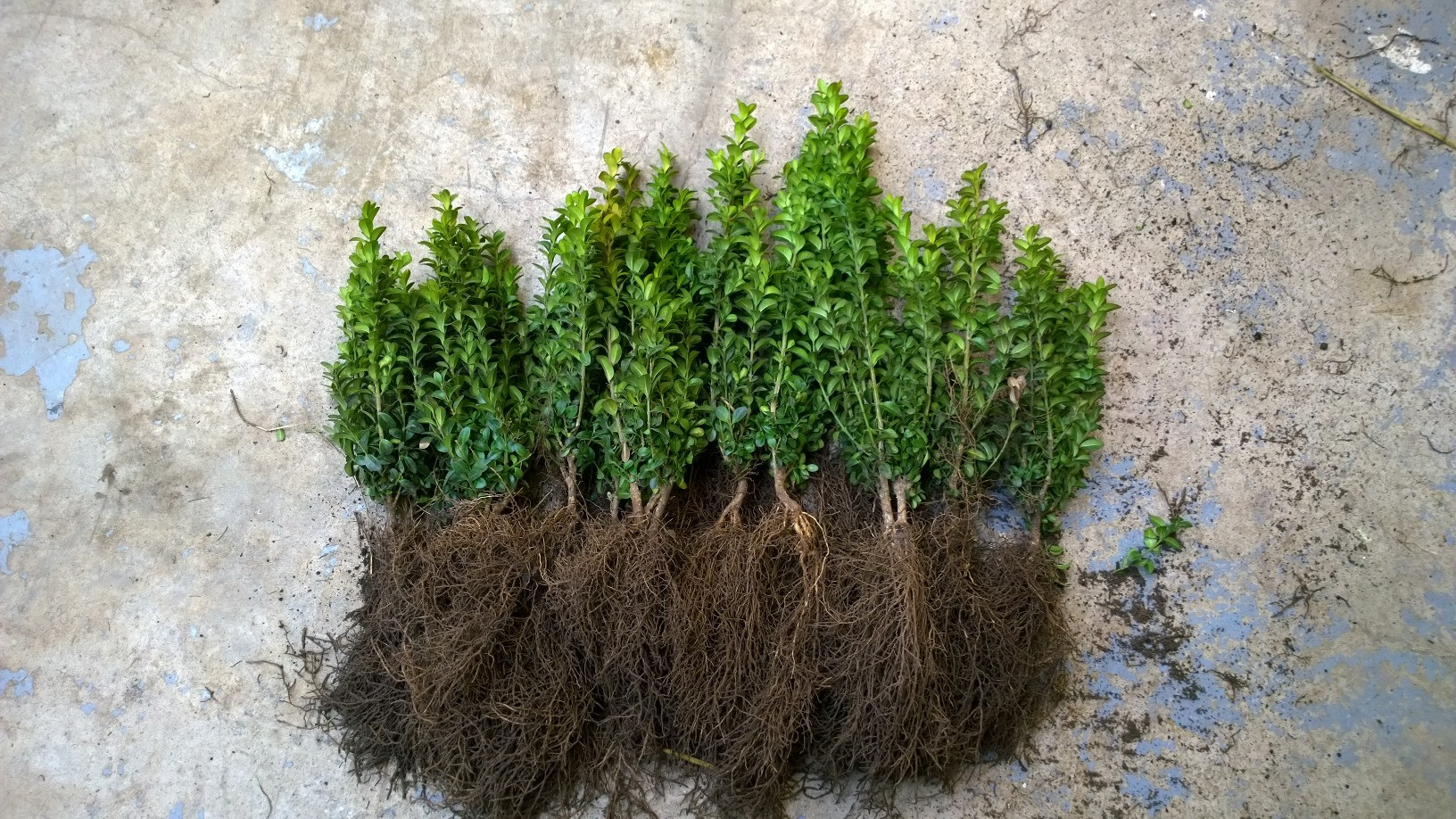
- UK Nursery Grown
- Planting Advice
Box Hedging (Buxus sempervirens) Bare Root Plants
Buxus sempervirens
£2.99 per plant
Box hedging has small, closely packed evergreen leaves that clip neatly into low formal hedges, parterre borders and topiary shapes. Our 20-40cm bare root plants are an economical choice for planting a new hedge during the dormant season. Box grows slowly, so allow time for the plants to fill out. Regular trimming maintains a tidy outline, while checks for box blight and box tree caterpillar help keep the foliage healthy.
- Tight, small-leaved evergreen foliage
- For formal low hedges and topiary
- Bare root plants for dormant-season planting
Step 1: Choose Your Root Type
Bare-root plants are lifted and sent in the dormant season, roughly November to March. Plant promptly and keep the roots moist. Ask about this plant
Understanding root types
- Bare root
- Lifted with little or no soil around the roots. Keep the roots moist and plant during the dormant season.
- Rootball
- Supplied with soil around the roots. Handle the rootball carefully and follow its planting instructions.
- Potted
- Grown in a nursery container. The pot size and supplied height are shown with each plant option.
Step 2: Choose Your Plant
Need help with your planting?Ask about sizes, root types and quantities
Position
Full sun to partial shade
Soil
Moist, well-drained soil
Supplied size
20-40cm, Bare root
Ordering
Minimum order 10
Description
Box Hedging (Buxus sempervirens) Bare Root Plants
What is box hedging?
Box hedging, or Buxus sempervirens, is a slow-growing evergreen shrub with small, glossy, dark green leaves carried on a dense network of twiggy branches. Its compact branching and fine foliage make it particularly suitable for the crisp edges and geometric shapes of formal gardens. Without pruning, box eventually develops into a large, rounded shrub or small tree several metres tall. In most gardens, regular trimming keeps it between 30cm and 1.5m, forming a low border or a more substantial hedge.
Our 20-40cm bare root box plants are supplied without soil around their roots for planting during the dormant season, generally November to March. Bare root planting costs less than establishing a hedge with individually potted shrubs, particularly along longer borders. The roots can be spread naturally in the planting trench before the soil is firmed around them.
Why choose box hedging?
A clipped box hedge gives borders and paths a clear outline throughout the year, with small, dark green leaves that remain in place over winter. Box tolerates partial shade, making it useful beside north-facing walls or in sheltered parts of the garden, although deep shade and competition from tree roots can restrict growth. Its closely packed shoots can also be trained into topiary, from rounded balls to more intricate spirals.
Box needs checking between trims, particularly during the growing season. Box blight is a fungal disease that causes leaf spots, bare patches and shoot dieback, while box tree caterpillars can strip leaves surprisingly quickly. Inspect the foliage regularly, including the inner branches where early damage may be harder to spot. If frequent monitoring is a concern, consider the ongoing care before committing to a long box hedge.
Eventual height, spread and growth rate
Under regular clipping, a box hedge is typically maintained between 30cm and 1.5m tall, with a width of 30cm to 60cm. The growth rate is slow, usually 10cm to 15cm of new shoot extension per year once established. Starting with our 20-40cm bare root plants, expect several growing seasons before neighbouring plants join into a continuous hedge. Consistent watering during establishment and regular light trimming will help encourage bushy growth.
Without clipping, Buxus sempervirens can eventually reach 4m to 5m in height and spread over many decades. Keeping it as a low hedge means trimming regularly rather than allowing the plants to develop their natural rounded form.
How to use box hedging in a garden
In parterre and knot gardens, box is commonly clipped to 30cm to 40cm, tracing the edges of geometric beds with a narrow band of evergreen foliage. It also makes tidy edging beside paths and drives, although the planting line needs enough room for the hedge to thicken without narrowing the walkway. At around 80cm to 1.2m, a box hedge can separate planting areas or give a seating space some definition while remaining low enough to see over.
Box can also be trained into clipped spheres or cones for containers beside a doorway. Our bare root plants are supplied for dormant-season planting and will need time to develop before they can form substantial topiary shapes. If growing box in pots, use containers with drainage holes and check moisture frequently in summer, as compost dries out faster than garden soil.
Choosing a size
Our box hedging comes in one size: 20-40cm bare root plants, supplied individually. These young plants are suitable for establishing low hedges and formal edging during the dormant season. Allow several growing seasons for them to develop a dense, continuous outline, particularly if you intend to maintain a taller hedge. The planting details are shown below.
table
Planting and care
Planting and aftercare
When and how to plant bare root box hedging
Plant bare root box hedging during the dormant season, roughly November to March, when the soil is not frozen or waterlogged. Keep the roots covered and moist from the moment the plants arrive, as exposed bare roots can dry out quickly. If planting must be delayed, heel the plants into a temporary trench with soil covering the roots, or keep them in a cool, frost-free place with the roots surrounded by damp compost.
Prepare a planting trench wide enough to spread the roots without cramping. Set each plant at the same depth it was growing in the nursery, indicated by the soil mark on the stem. Backfill with crumbled soil, firm gently with your heel and water thoroughly to settle the soil around the roots. Finish with a layer of well-rotted organic mulch to slow moisture loss and discourage weeds. Leave a small gap around each stem rather than piling mulch against the base of the plants.
Spacing and quantities
For a dense low hedge, space plants 15cm to 20cm apart in a single row (5 to 7 plants per linear metre). If you want a slightly wider hedge from the start, you can plant a staggered double row with the same spacing within each row and 20cm between rows, using 10 to 14 plants per metre. The table below shows the number of plants needed for common hedge lengths.
table
Watering, feeding and trimming calendar
Water newly planted box hedging regularly throughout its first growing season. Check the soil beneath the surface and water when it begins to dry, aiming for evenly moist roots without leaving the ground saturated. Once established, box can tolerate some dry weather, although a thorough watering during prolonged dry spells is helpful, particularly in sandy soil or where walls and paving limit natural moisture.
Apply a balanced general-purpose fertiliser or slow-release shrub feed in early spring, following the recommended application rate. A light mulch of garden compost afterwards will help improve the soil. Plan the main trim for late summer, around August to early September, so fresh growth has time to harden before winter. Work with clean, sharp shears or topiary clippers, taking small amounts off at a time to maintain an even surface. Clear away trapped clippings, particularly from inside the hedge, where damp foliage can encourage disease. An additional light trim in early summer can tidy uneven shoots, but avoid cutting during hot, sunny spells when newly exposed leaves may scorch. Check carefully for nesting birds before starting.
Managing box blight and box tree caterpillar
Box blight shows as dark spots on leaves, bare patches and black streaks on young stems. Improve airflow by not overcrowding plants and by clearing fallen leaves from the hedge interior. If blight appears, prune out affected growth, bag and bin the clippings (do not compost), and disinfect tools between cuts. Some fungicides may help protect healthy growth, but treatment options depend on current UK approvals and product labels. Removing infected material, improving airflow and keeping tools clean remain important parts of managing blight.
Box tree caterpillar is the larva of a moth that can strip foliage rapidly. Look for pale yellow eggs on the underside of leaves, greenish-yellow caterpillars with black heads, and fine webbing across shoots. On a small hedge, pick off visible caterpillars by hand and check inside the shoots for further webbing. A suitable biological treatment containing Bacillus thuringiensis may help control feeding larvae where the product is approved for that use. Follow the label instructions carefully. Pheromone traps can help you monitor adult moth activity, while checking plants every couple of weeks from spring to autumn gives you a better chance of spotting damage before it spreads.
Compare hedging plants Understanding bare-root plants Establishing and checking a new hedge
Read our planting guideFurther growing advice: RHS plant and growing guidance
Sizes and prices
Box hedging (Buxus) sizes, prices and minimum orders
| Option | Supplied height | Pot or root | Plants | Price | Minimum order | Availability |
|---|---|---|---|---|---|---|
| 20-40cm | Bare root | 1 plant | 20-40cm | Bare root | 1 | £2.99 per plant | 10 | Unavailable |
The price is for the selected plant or pack. Pack size tells you how many plants are included, and the minimum order is the smallest quantity we can send.
Plant sizes and quantities explainedDelivery
Delivery for your plant order
Delivery options and charges are shown in your basket and confirmed before you place your order.
Plants are living products. Unpack promptly after delivery, check moisture around the roots and keep them in a sheltered spot until you can plant.
Delivery informationPlant questions
Before you order
How quickly does a box hedge grow?
Box is a slow-growing shrub, typically adding 10cm to 15cm of new growth per year once established. Our 20-40cm bare root plants will need several growing seasons to join up into a continuous hedge. They are best suited to a border you can establish gradually rather than a screen that needs to provide immediate privacy. Light, regular clipping encourages closely spaced shoots and a denser finish, although box will still grow at its naturally slow pace.
When should you plant box hedging?
Plant bare root box hedging during its dormant period, generally November to March, while the soil is workable. Box retains its evergreen leaves through winter, even when active growth has slowed. Avoid planting into frozen or waterlogged ground. Our box hedging is supplied as 20-40cm bare root plants, so plan to plant during this winter window, allowing the roots to settle before spring growth begins.
What is better than a box hedge?
If you want a formal hedge without the usual box blight and box tree caterpillar concerns, other evergreen plants are worth considering. Ilex crenata (Japanese holly) has small leaves and takes close clipping, while Lonicera nitida grows faster but needs more frequent trimming to hold a sharp outline. In our range, English yew hedging is an option for a dense, regularly clipped evergreen hedge, although its needle-like foliage gives a different texture. The choice depends on the height you want, the growing conditions and how much time you can give to maintenance.
When to trim a box hedge?
The main annual trim is best done in late summer, typically August to early September. This gives any fresh shoots time to harden before winter frost. If a few stems spoil the outline earlier in the season, a light trim in early summer will tidy them up. Avoid clipping in hot, sunny weather, when newly exposed foliage can scorch. Always use clean, sharp tools and remove clippings from the hedge surface to reduce humidity and disease risk.
How do I avoid box blight and box tree caterpillar?
Give plants enough room to develop, direct watering towards the soil rather than the foliage, and remove fallen leaves trapped inside the hedge. These measures improve airflow and reduce the damp conditions in which box blight can spread. Inspect foliage every couple of weeks from spring to autumn for early signs of blight (leaf spots, dieback) or caterpillar activity (webbing, chewed leaves, greenish caterpillars). Prune out affected shoots promptly and bin the clippings. For caterpillar control, pheromone traps monitor adult moths, and a biological spray containing Bacillus thuringiensis can be applied when larvae are young and actively feeding.
Is box hedging safe around pets and children?
Box contains alkaloids that are toxic if ingested, so it is not a plant to use where pets or young children are likely to chew the foliage. Do not rely on the bitter taste to prevent pets or children from eating the leaves. Choose a position away from areas where young children or animals regularly play, and prevent them from chewing or handling fallen foliage. Wear gloves when clipping, as the sap can irritate sensitive skin.
Ask a plant question