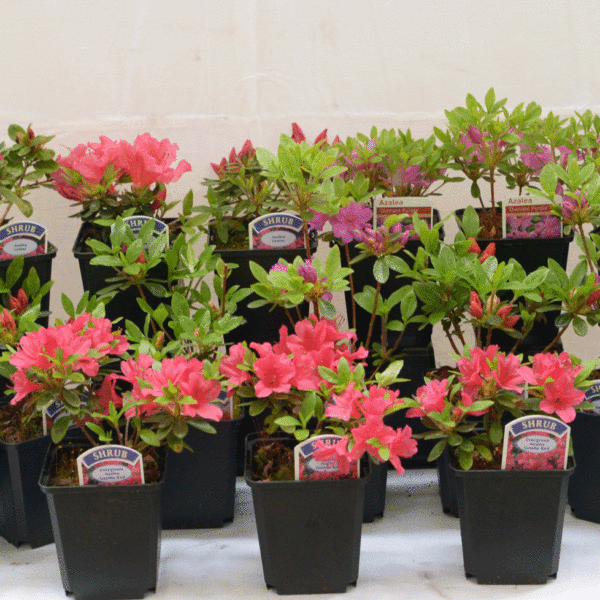
Rhododendron, evergreen azalea group
£12.99 per plant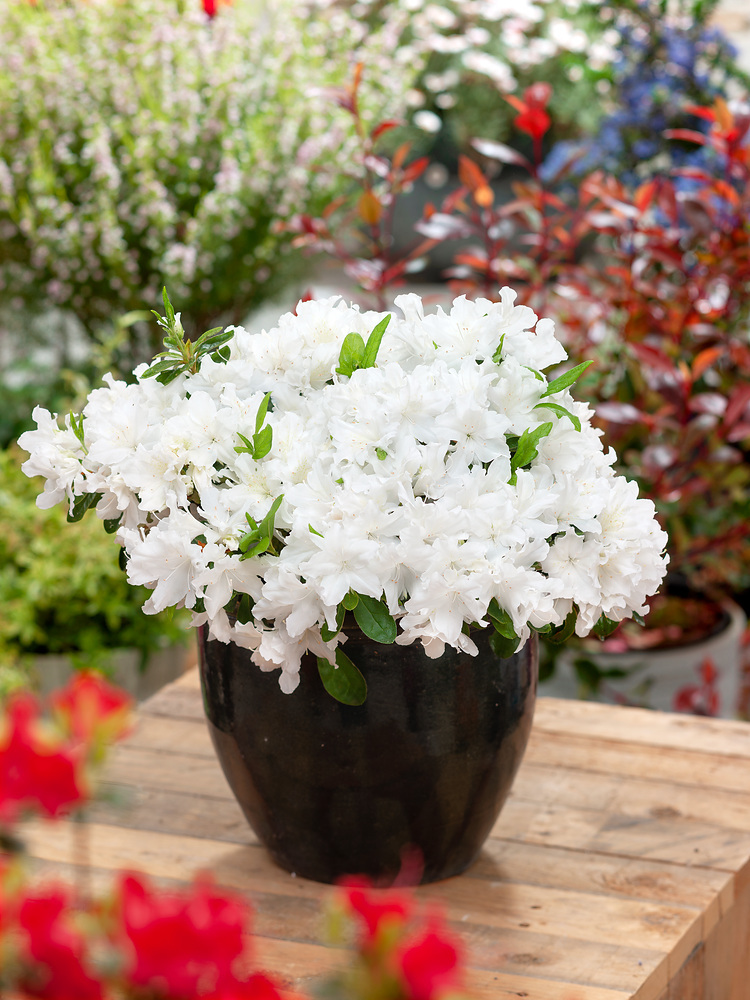
- UK Nursery Grown
- Planting Advice
Dwarf Azalea: Compact Evergreen Shrubs for Spring Colour
Rhododendron, evergreen azalea group
£12.99 per plant
Dwarf evergreen azaleas produce masses of colourful flowers in spring, often hiding their small, glossy green leaves beneath the blooms. Their low, rounded growth suits the front of a sheltered border, a woodland-style garden or a patio pot filled with ericaceous compost. The leaves remain through winter, giving smaller planting spaces some greenery between flowering seasons.
- Colourful spring flowers on a compact shrub
- Evergreen foliage for year-round structure
- Thrives in acidic soil or pots
Step 1: Choose Your Root Type
Pot-grown plants, supplied in the pot size shown for each option. Plant at any time of year when the ground is workable. Ask about this plant
Understanding root types
- Bare root
- Lifted with little or no soil around the roots. Keep the roots moist and plant during the dormant season.
- Rootball
- Supplied with soil around the roots. Handle the rootball carefully and follow its planting instructions.
- Potted
- Grown in a nursery container. The pot size and supplied height are shown with each plant option.
Step 2: Choose Your Plant
Need help with your planting?Ask about sizes, root types and quantities
Position
Sheltered spot in dappled shade
Soil
Acidic, moist, well-drained soil or ericaceous compost
Supplied size
2 litre pot
Ordering
Order from 1 plant
Description
Dwarf Azalea: Compact Evergreen Shrubs for Spring Colour
What is a dwarf azalea?
Dwarf azaleas are low-growing members of the Rhododendron genus, with small, dark green leaves and abundant spring flowers. Depending on the variety, blooms appear in different colours, usually during April and May. Their naturally rounded, spreading habit makes them well suited to mixed borders, sheltered rockeries and roomy containers where the roots can stay cool and moist.
Once flowering finishes, the slightly glossy evergreen leaves provide a low mound of greenery through the remaining seasons. The branches tend to fill out naturally, with little shaping needed. In a partly shaded garden, these azaleas sit comfortably among ferns, heathers and other shrubs that enjoy acidic soil.
Why choose this compact evergreen azalea?
Dwarf azaleas can carry an impressive number of flowers for such small shrubs. Once established in suitable conditions, their branches may be almost hidden beneath the spring display. Their slow, compact growth makes them particularly useful in smaller gardens, where a larger rhododendron could eventually take up too much room.
Try planting one beside a shaded path, filling gaps along the front of a border or grouping several in large patio containers. The spreading branches gradually soften hard edges, while the evergreen foliage keeps the planting from looking bare in winter. Allow enough space around each shrub for air circulation and its natural rounded shape to develop.
Eventual height, spread and growth rate
Many dwarf evergreen azaleas mature at around 60 to 90cm tall and wide, although some remain smaller and others spread further depending on the variety. Growth is generally slow to moderate, with the amount of new growth varying according to soil, moisture and growing conditions. These shrubs take several years to develop their mature shape and seldom need much more than a light trim after flowering.
Short, branching stems gradually build a dense, rounded framework, with some varieties spreading more widely than they grow tall. This makes dwarf azaleas useful beneath open-branched shrubs or small trees, where they receive filtered light. Leave room around each plant, especially beside vigorous neighbours that could eventually shade it too heavily or compete for moisture.
Using dwarf azaleas in the garden
A dwarf azalea makes an attractive spring container plant, particularly where garden soil is too alkaline for acid-loving shrubs. Fill a pot with ericaceous compost, making sure there are plenty of drainage holes. Small spring bulbs can add colour around the base, provided they do not crowd the shallow roots. Move the container nearer a seating area when the flowers open, then return it to a sheltered, partly shaded position.
In a partially shaded border, groups of three or five dwarf azaleas create generous patches of spring colour. Pair them with pieris, dwarf rhododendrons and heathers in acidic soil, or add ferns for contrasting foliage. Keep them away from hot, south-facing walls where the shallow roots may dry out. A sheltered position also helps protect developing flower buds from cold winds and late frosts.
For a low, informal flowering hedge, set plants 40 to 50cm apart. The branches will gradually meet to create a low evergreen edge, with a colourful display when the spring flowers open. Allow the shrubs to keep their natural rounded outlines for an informal boundary that works especially well beside woodland paths or through a cottage-style planting scheme.
Choosing a size
Dwarf evergreen azaleas are supplied individually in 2 litre pots, ready for planting into suitable acidic soil or ericaceous compost. The pot size is the same across the available single-colour options, although plant height and branching may vary. The table below gives the supplied pot size and a guide to using these shrubs in borders, containers and low hedges.
These dwarf evergreen azaleas are offered as single-colour plants rather than a specified named cultivar, so mature dimensions and flower shades can vary between varieties. Each option contains one plant in a 2 litre pot. Pot-grown azaleas can be planted through much of the year, provided the soil is neither frozen nor waterlogged and you can keep the roots watered while they establish.
Is this azalea safe for pets and children?
All parts of the plant contain grayanotoxins and are toxic if eaten. Keep the shrub away from areas where pets or young children might chew the leaves or flowers. Wash hands after handling or pruning, and dispose of clippings carefully. Contact with the plant is not the same as eating it, but ingestion can cause serious poisoning, particularly in pets, so seek prompt veterinary or medical advice if any part is swallowed.
Planting and care
Planting and aftercare
When and how to plant
A pot-grown dwarf azalea can be planted at any time of year, provided the soil is not frozen or waterlogged. The ideal windows are early autumn and mid-spring, when the soil is naturally moist and temperatures are mild. With moisture in the soil and fewer extremes of temperature, the shallow roots have a better chance to establish before hot or freezing weather arrives.
Before planting, water the pot thoroughly and let it drain. Dig a hole slightly wider than the rootball and the same depth. Azaleas have shallow, fibrous roots, so the top of the rootball should sit level with the surrounding soil surface. Backfill with a mix of the original soil and ericaceous compost, firm gently and water well. In heavy clay, plant slightly proud and mound the soil up to the rootball to avoid water sitting around the crown.
For container planting, choose a pot at least 30cm wide and deep. Fill it with fresh ericaceous compost and check that water can escape freely through the drainage holes. Standing the container on pot feet helps prevent the base from sitting in trapped water. Container-grown azaleas need more frequent watering than those in the ground, especially in summer.
Spacing for a low hedge
When planting a dwarf azalea hedge, space the shrubs 40 to 50cm apart in a single row. This gives each plant enough room to develop while still allowing the branches to meet over time. The table below shows how many plants you need for three common hedge lengths.
| Hedge length | Plants needed (at 40cm spacing) | Plants needed (at 50cm spacing) |
|---|---|---|
| 5 metres | 13 | 10 |
| 10 metres | 25 | 20 |
| 20 metres | 50 | 40 |
Watering and feeding
Keep the root zone consistently moist, especially during the first growing season and in dry spells. Azaleas suffer quickly if they dry out, and the shallow roots mean they cannot search deep for water. Use rainwater where possible, particularly in hard-water areas, because tap water can gradually raise the soil pH.
Feed with a fertiliser formulated for ericaceous plants in late winter or early spring, just before new growth starts. If further feeding is needed after flowering, follow the fertiliser instructions carefully and avoid feeding late in the season. Do not use high-nitrogen lawn feeds or fertilisers containing lime, which can make conditions unsuitable for these acid-loving roots. Mulch annually with leaf mould, pine needles or ericaceous bark chips, keeping the mulch away from the stems.
Trimming and care calendar
Dwarf azaleas need very little pruning. Remove any dead, damaged or crossing branches in late spring, immediately after the flowers fade. This timing is important because the plant starts forming next year's flower buds soon after flowering. Pruning later in summer or autumn will cut off those developing buds and reduce the spring display.
Light shaping can be done at the same time. Snip back any shoots that spoil the outline, cutting just above a leaf or a whorl of leaves. Leave most of the rounded outline intact rather than clipping it into a formal shape. If an older shrub becomes sparse, remove one or two ageing stems back to a healthy low sideshoot, spreading more substantial renovation over two or three years to avoid excessive stress.
| Month | Task |
|---|---|
| February to March | Apply ericaceous feed and renew mulch |
| April to May | Enjoy flowers; water if dry |
| Late May to June | Light trim after flowering if needed |
| June to September | Water regularly, especially containers |
| October to November | Plant new shrubs; check drainage |
| December to February | Minimal care; protect containers from hard frost |
Choose plants for your soil and light Understand pot sizes Watering and establishment
Read our planting guideFurther growing advice: RHS plant and growing guidance
Sizes and prices
Dwarf evergreen azalea (single colours) sizes, prices and minimum orders
| Option | Supplied height | Pot or root | Plants | Price | Minimum order | Availability |
|---|---|---|---|---|---|---|
| White | 2 litre pot | 1 plant | – | 2 litre pot | 1 | £12.99 per plant | None | Available |
| Orange | 2 litre pot | 1 plant | – | 2 litre pot | 1 | £12.99 per plant | None | Available |
| Red | 2 litre pot | 1 plant | – | 2 litre pot | 1 | £12.99 per plant | None | Available |
| Pink | 2 litre pot | 1 plant | – | 2 litre pot | 1 | £12.99 per plant | None | Available |
The price is for the selected plant or pack. Pack size tells you how many plants are included, and the minimum order is the smallest quantity we can send.
Plant sizes and quantities explainedDelivery
Delivery for your plant order
Delivery options and charges are shown in your basket and confirmed before you place your order.
Plants are living products. Unpack promptly after delivery, check moisture around the roots and keep them in a sheltered spot until you can plant.
Delivery informationPlant questions
Before you order
Where is the best place to plant azaleas?
Choose a spot in dappled or partial shade, sheltered from cold, drying winds. The light beneath deciduous trees is ideal, because the shrubs get sun in spring before the canopy closes and shade in summer. Avoid deep shade, which reduces flowering, and hot, exposed sites that dry the shallow roots quickly. A north- or east-facing border often works well, provided it is not a frost pocket where early blooms might get damaged.
Are azaleas better in pots or ground?
Both methods work well, as long as the roots have acidic growing conditions. In the ground, azaleas need naturally acidic, moisture-retentive soil that drains freely. On alkaline or chalky soils, growing in a pot filled with ericaceous compost is the safer choice. Containers also let you move the plant into a prominent spot while it flowers. Pots dry out faster than garden soil, so check the compost regularly and water with rainwater where possible.
Do azaleas come back next year?
Yes. Dwarf evergreen azaleas are perennial shrubs that can live and flower for many years in suitable conditions. They retain most of their foliage through winter and develop the buds for the following spring during the previous growing season. For regular flowering, provide acidic soil, keep the shallow roots moist and prune shortly after the flowers fade rather than later in the year. Flower numbers can vary with the weather and growing conditions.
Can azaleas stay outside in winter?
Dwarf evergreen azaleas are generally hardy enough to remain outside through a typical UK winter, although tolerance varies between varieties and exposed sites can cause damage. Their evergreen leaves may droop or curl during freezing weather. In prolonged cold spells, move container plants to a sheltered position or insulate the pots with bubble polythene to protect the roots. Established plants in the ground usually need less protection, particularly when sheltered from drying winds and severe frost.
What if my garden soil is alkaline?
On alkaline or chalky soil, it is much easier to grow dwarf azaleas in containers than to try to alter the ground. Digging a small pocket of ericaceous compost into alkaline soil gives only temporary relief, because the surrounding lime gradually neutralises it. Use a large pot with fresh ericaceous compost, water with rainwater and feed with an ericaceous fertiliser. This gives the roots a more consistently acidic growing medium, although regular watering, drainage checks and occasional repotting are still needed.
Why are the leaves turning yellow?
Yellow azalea leaves can indicate that the soil is too alkaline for the roots to absorb iron effectively. This often shows as yellowing between the veins while the veins themselves remain green, known as lime-induced chlorosis. Waterlogged compost, dry roots and planting too deeply can also cause discolouration. Check the moisture level and drainage first, followed by a soil pH test. If the ground is alkaline, growing the azalea in a container of ericaceous compost may be the most practical answer.
Ask a plant questionYou may also like