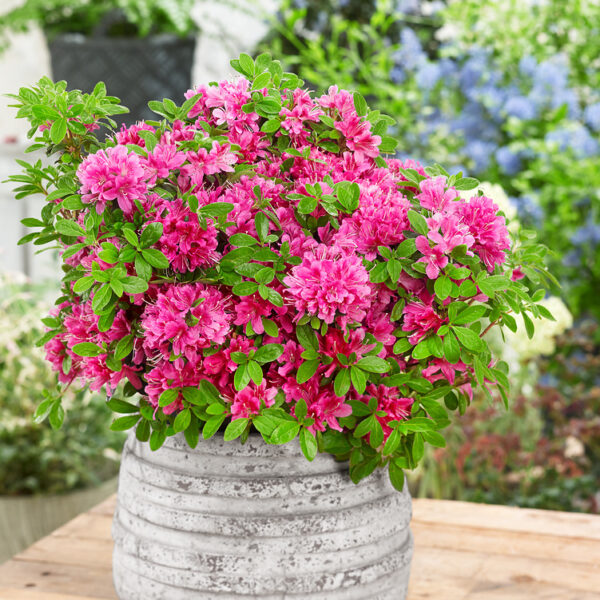
Rhododendron, evergreen azalea group
£17.99 per pack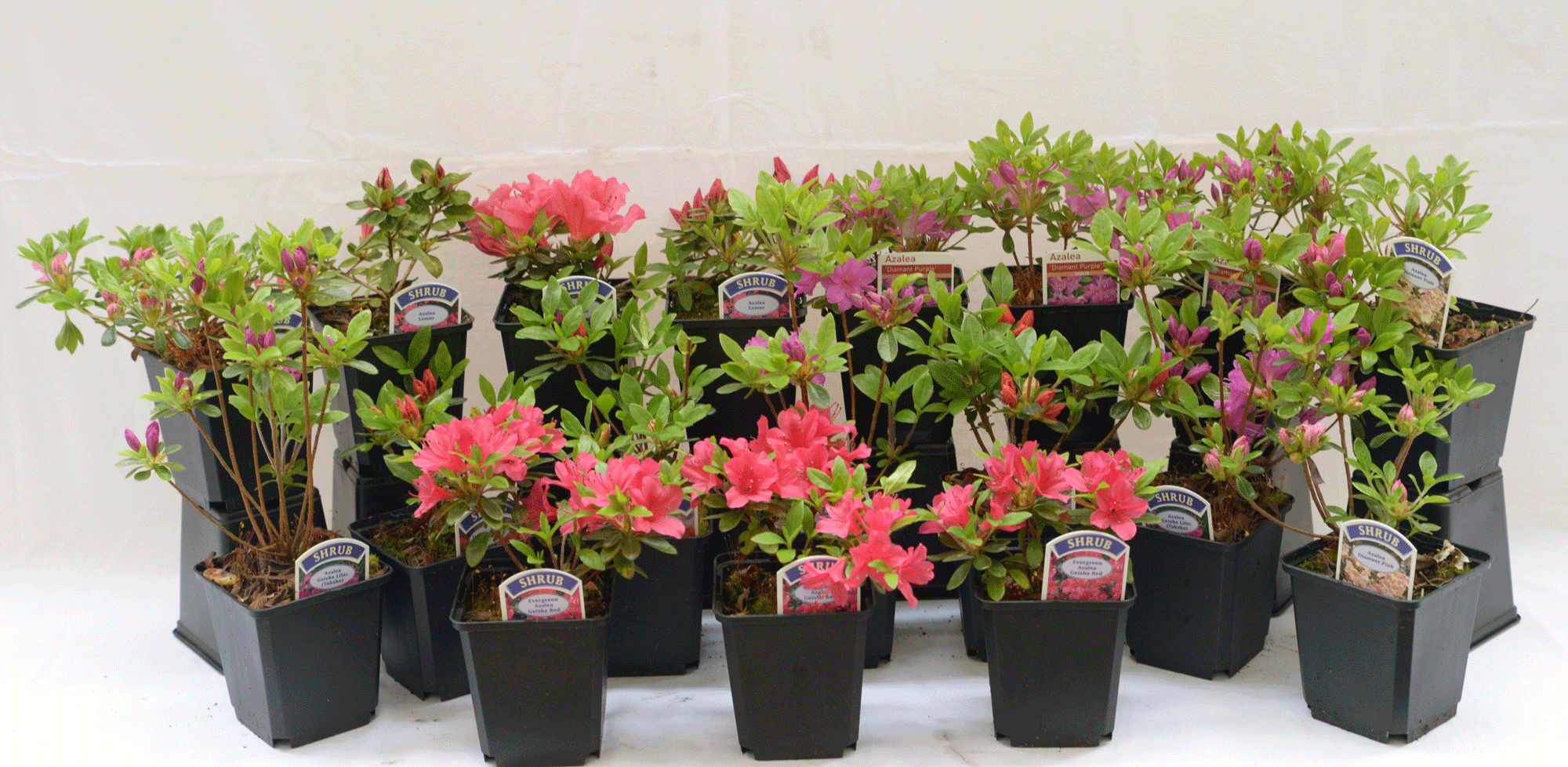
- UK Nursery Grown
- Planting Advice
Mixed Japanese Azalea Shrubs (Evergreen Collection)
Rhododendron, evergreen azalea group
£17.99 per pack
Compact evergreen Japanese azaleas with a mix of flower colours for a lively spring display. Plant them together in an acidic border, tuck them beneath taller shrubs or give each plant its own patio pot. The mix varies between packs, bringing different shades into the garden. Supplied in 9cm or 2 litre pots, depending on the pack selected.
- Mixed flower colours for a varied display
- Compact, evergreen shrubs for year-round structure
- Suitable for acidic borders and patio pots
Step 1: Choose Your Root Type
Pot-grown plants, supplied in the pot size shown for each option. Plant at any time of year when the ground is workable. Ask about this plant
Understanding root types
- Bare root
- Lifted with little or no soil around the roots. Keep the roots moist and plant during the dormant season.
- Rootball
- Supplied with soil around the roots. Handle the rootball carefully and follow its planting instructions.
- Potted
- Grown in a nursery container. The pot size and supplied height are shown with each plant option.
Step 2: Choose Your Plant
Need help with your planting?Ask about sizes, root types and quantities
Position
Sheltered dappled shade
Soil
Acidic, moist but well-drained soil or ericaceous compost
Supplied size
9cm pot
Ordering
Order from 1 pack
Description
Mixed Japanese Azalea Shrubs (Evergreen Collection)
What are mixed Japanese azaleas?
Japanese azaleas are compact evergreen shrubs with small, dark green leaves and masses of flowers in spring. Each mixed pack contains a selection of varieties, with flower colours and individual growth habits varying between packs. Plant them along the front of an acidic border, beneath taller shrubs or in separate pots on a sheltered terrace. Their naturally rounded growth suits informal planting, particularly where you want spring colour without a tall shrub taking over.
The small evergreen leaves provide low-growing greenery through winter, although some foliage may bronze or drop during particularly cold weather. Once flowering finishes, the rounded shrubs sit comfortably among ferns, hostas and other plants that enjoy similar conditions. The mixed varieties bring different flower shades together, with some variation in flowering time and mature shape.
Why choose a mixed Japanese azalea collection?
A mixed pack lets you establish a group of Japanese azaleas without choosing each variety separately. All enjoy acidic soil, steady moisture and a sheltered position, while their flowers bring different shades into the planting. Colours may include pink, white, red and purple, although the exact combination varies. Grouping several plants together creates a colourful spring border with subtle differences in flower shape and growth.
These azaleas also grow well in containers filled with ericaceous compost. Give each shrub its own pot, then arrange them around a sheltered patio or beside a garden seat where the spring flowers can be enjoyed close up. Containers are particularly useful in gardens with alkaline or chalky soil, as they let you provide the acidic growing conditions azaleas need. Keep pots out of strong afternoon sun and check the compost regularly for moisture.
Eventual height, spread and growth rate
Many compact Japanese azaleas reach around 60 to 90cm in height and spread over 10 to 20 years, although the final dimensions depend on which varieties are included. Growth is generally slow to moderate, with around 5 to 10cm of new shoot growth in a typical year under suitable conditions. Individual plants may grow more slowly or develop a broader shape.
Their compact, branching habit makes them suitable for smaller borders and sheltered courtyards. Allow roughly 60 to 80cm between plants where you want each shrub to develop a rounded outline. For container growing, a pot around 30cm wide and deep gives the shallow roots space to establish. Make sure it has drainage holes, as azaleas dislike sitting in waterlogged compost.
How to use mixed Japanese azaleas in your garden
Plant Japanese azaleas along a path for a low, informal flowering edge, or group them towards the front of an acidic shrub border. Their shallow roots and preference for dappled shade make them suitable beneath taller shrubs and open-canopied trees, provided there is enough moisture and limited root competition. Leave room around each plant for its rounded branches to spread.
On a patio, arrange several pots at different heights to show off the flowers, or place a pair beside a sheltered entrance. The small evergreen leaves remain attractive between flowering seasons, while the spring blooms bring colour close to seating areas. Choose a position away from drying winds and strong afternoon sun, which can scorch the foliage and leave container compost drying out too quickly.
Choosing a size
Choose from three pack options: 4 plants in 9cm pots, 4 plants in 2 litre pots or 6 plants in 2 litre pots. The smaller 9cm plants suit a new border where they have time to establish, while the 2 litre plants provide a larger starting size. The 6-plant pack is useful when planting a longer stretch of border or arranging several containers together.
All three options are supplied as potted plants. Compare the pot sizes and pack quantities below to work out which suits your planting space.
| Option | Supplied size | Pot or root type | Best for | Plants per pack |
|---|---|---|---|---|
| 9cm pot | 4 plants | 9cm pot | Pot-grown | Young plants for borders and small pots | 4 |
| 2 litre pot | 4 plants | 2 litre pot | Pot-grown | Larger starting plants for borders and containers | 4 |
| 2 litre pot | 6 plants | 2 litre pot | Pot-grown | Six plants for longer borders or grouped pots | 6 |
Planting and care
Planting and aftercare
When and how to plant
Plant potted Japanese azaleas whenever the soil is workable, avoiding frozen or waterlogged ground. Spring and early autumn are particularly good times, as mild conditions help the roots establish before periods of heat or cold. Choose a sheltered spot with dappled shade and acidic, well-drained soil. Water the nursery pot thoroughly about an hour before planting.
Dig a planting hole no deeper than the rootball and about twice its width. Set the azalea with the top of the rootball level with the surrounding soil, taking care not to bury the stem. These shrubs have shallow roots and can struggle when planted too deeply. Backfill with suitable acidic soil, firm gently and water thoroughly. Where the existing soil is chalky or alkaline, grow the plants in containers of ericaceous compost instead.
Spacing and quantity guide
For a closely planted, informal flowering edge, allow 50 to 60cm between Japanese azaleas in a single row. If you prefer to see the rounded outline of each shrub, increase the spacing to 70 to 80cm. The quantities below use 55cm spacing as a guide for planning a continuous border. Check the available width as well as the length, so the shrubs have room to spread as they mature.
| Hedge length | Plants needed (single row at 55cm spacing) |
|---|---|
| 5 metres | 9 to 10 plants |
| 10 metres | 18 to 19 plants |
| 20 metres | 36 to 37 plants |
Watering and feeding
Keep the soil or compost consistently moist while the roots establish, and check plants more often during warm, dry weather. Japanese azaleas have fine, shallow roots, so the surface soil can dry out before deeper-rooted shrubs show signs of stress. Rainwater is preferable, especially in hard-water areas where repeated use of alkaline tap water may gradually affect compost pH.
Apply a liquid ericaceous fertiliser in early spring as the flower buds begin to swell, following the product instructions. If foliage looks pale after flowering, check soil moisture and acidity before adding more feed, as yellowing can indicate a pH problem. Avoid excessive nitrogen, which encourages soft leafy growth. Spread leaf mould, composted bark or pine needles around the roots to conserve moisture, leaving a clear gap around the stems.
Trimming and care calendar
Japanese azaleas usually hold their rounded shape with very little pruning. After flowering, remove dead, damaged or crossing stems and shorten any shoots growing beyond the main outline. Do this soon after the blooms fade, before the plant develops the flower buds for the following spring. Cutting back in late summer or autumn risks removing those buds and reducing next year's display.
Use this seasonal guide to keep on top of feeding, watering and light pruning.
| Month | Task |
|---|---|
| March to April | Apply ericaceous liquid feed as buds swell |
| May to June | Deadhead if practical; lightly shape after flowering |
| July to August | Water consistently in dry weather |
| September to October | Plant new shrubs; mulch established plants |
| November to February | Check pots do not dry out; protect from harsh wind |
Choose plants for acidic soil Compare collection sizes Looking after new plants
Read our planting guideFurther growing advice: RHS plant and growing guidance
Sizes and prices
Mixed Japanese azaleas sizes, prices and minimum orders
| Option | Supplied height | Pot or root | Plants | Price | Minimum order | Availability |
|---|---|---|---|---|---|---|
| 9cm pot | 4 plants | – | 9cm pot | 4 | £17.99 per pack | None | Available |
| 2 litre pot | 4 plants | – | 2 litre pot | 4 | £29.50 per pack | None | Available |
| 2 litre pot | 6 plants | – | 2 litre pot | 6 | £39.99 per pack | None | Available |
The price is for the selected plant or pack. Pack size tells you how many plants are included, and the minimum order is the smallest quantity we can send.
Plant sizes and quantities explainedDelivery
Delivery for your plant order
Delivery options and charges are shown in your basket and confirmed before you place your order.
Plants are living products. Unpack promptly after delivery, check moisture around the roots and keep them in a sheltered spot until you can plant.
Delivery informationPlant questions
Before you order
How much ground or how many pots will a pack of 4 cover?
Four Japanese azaleas planted 50 to 60cm apart can fill roughly 2 to 2.5 metres of border once established, depending on their eventual spread and the space left at either end. Alternatively, plant each shrub in its own patio container. The 6-plant pack gives you two additional shrubs and can cover approximately 3 to 3.5 metres using the same spacing guide.
Are Japanese azaleas hardy?
Many Japanese azaleas are hardy in UK gardens, although their tolerance of severe cold varies between varieties. Established plants generally cope well with ordinary winter conditions, but freezing winds and bright winter sunshine can scorch evergreen leaves. A sheltered position with dappled shade helps reduce damage. In exposed gardens, use temporary wind protection during severe cold spells and protect container roots from prolonged freezing.
Do azaleas japonicas come back every year?
Yes. Japanese azaleas are perennial evergreen shrubs, so the same plants remain in the garden and can flower again each spring. They retain most of their small leaves through winter, although cold weather may cause some leaf loss or bronzing. Flower buds develop during the previous growing season, which is why pruning straight after flowering matters. With acidic soil, steady moisture and a sheltered position, established plants can provide spring flowers for many years.
How to take care of azalea japonica?
Grow Japanese azaleas in acidic, moisture-retentive but well-drained soil or ericaceous compost. Position them in sheltered dappled shade, water with rainwater where possible, and feed with an ericaceous liquid fertiliser in early spring. Prune lightly after flowering if needed, and mulch annually with acidic organic matter such as leaf mould or composted bark, keeping the mulch away from the stems.
How long do Japanese azaleas flower for?
Japanese azaleas typically flower for around three to six weeks in spring, often between late April and early June. The timing depends on the varieties included and the weather that year. In a mixed pack, one shrub may start flowering before another, spreading the display over a longer period. Flowers tend to last better in cool, sheltered conditions, while hot sunshine and drying winds can shorten the display.
Can I plant these on chalky or alkaline soil?
Japanese azaleas need acidic growing conditions and generally struggle in chalky or alkaline soil. At a high pH, iron becomes less available to the roots, often causing yellow leaves and weak growth. Grow them in containers filled with ericaceous compost if your garden soil is alkaline. Adding a little acidic compost to a planting hole is unlikely to provide a lasting answer, as the roots eventually grow into the surrounding soil. Containers also make it easier to monitor moisture and maintain suitable compost conditions.
Ask a plant questionYou may also like