Rhododendron, dwarf collection
£19.99 per pack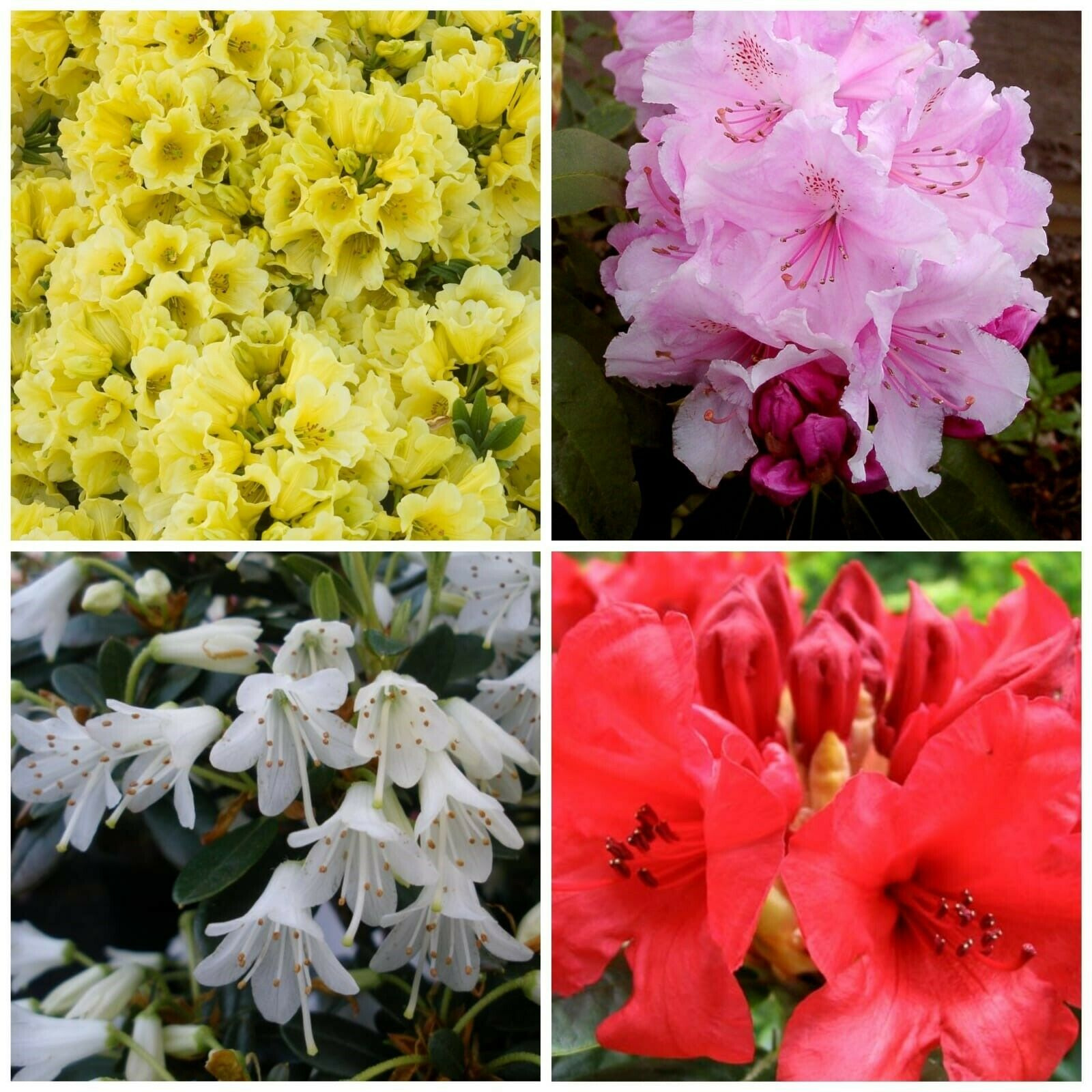
- UK Nursery Grown
- Planting Advice
Mixed Dwarf Rhododendrons for Acidic Borders & Pots
Rhododendron, dwarf collection
£19.99 per pack
Mixed dwarf rhododendrons bring spring flowers and evergreen foliage to smaller gardens. Their compact, rounded growth suits patio pots, low borders and the front of beds with acidic soil. Flower colours and mature sizes vary between varieties, giving grouped plantings a pleasing mix of shapes and seasonal colour.
- Mixed spring flower display
- Compact, small-space habit
- For acidic borders and containers
Step 1: Choose Your Root Type
Pot-grown plants, supplied in the pot size shown for each option. Plant at any time of year when the ground is workable. Ask about this plant
Understanding root types
- Bare root
- Lifted with little or no soil around the roots. Keep the roots moist and plant during the dormant season.
- Rootball
- Supplied with soil around the roots. Handle the rootball carefully and follow its planting instructions.
- Potted
- Grown in a nursery container. The pot size and supplied height are shown with each plant option.
Step 2: Choose Your Plant
Position
Sheltered dappled shade
Soil
Acidic, moist but well-drained
Supplied size
9cm pot
Ordering
Order from 1 pack
Description
Mixed Dwarf Rhododendrons for Acidic Borders & Pots
What is a mixed dwarf rhododendron collection?
These mixed dwarf rhododendrons offer a selection of compact varieties, many of which can reach around 60 to 90cm in height and spread, depending on the variety and growing conditions. In spring, clusters of trumpet-shaped flowers appear above small, often glossy evergreen leaves. Their naturally rounded growth makes them particularly useful in narrow borders, courtyard gardens and containers where larger rhododendrons would need too much room.
With different varieties in the mix, flower shades and flowering periods may vary from plant to plant. Group several together for a colourful spring border, place individual shrubs among other acid-loving plants, or grow them in a row to create a low, informal flowering hedge.
Why choose a dwarf rhododendron over a standard one?
Many larger rhododendrons eventually reach 2m or more, taking up considerable space in a courtyard garden or narrow border. Dwarf varieties offer the familiar clusters of spring flowers on smaller, naturally rounded shrubs. Their shallow roots also suit container growing with ericaceous compost, provided watering and drainage are managed carefully. Established plants usually need little pruning beyond removing damaged growth and occasional light shaping.
The mixed selection brings variety to a planting, with flower colours that may include shades of pink, white, red or purple, depending on the plants supplied. Individual varieties may also flower at slightly different times during spring, although the exact colours and flowering sequence will vary between packs.
Eventual height, spread and growth rate
Many dwarf rhododendrons grow to around 60 to 90cm in height and spread, although some varieties remain smaller and others grow larger. They generally develop slowly, with annual growth influenced by variety, soil conditions, moisture and position. Young plants gradually build a fuller framework of branches and foliage, with flowering often becoming more abundant as the shrubs establish over several growing seasons.
In a mixed planting, some shrubs may remain noticeably smaller than their neighbours. Allow room for their eventual spread, placing more vigorous plants towards the back of a border and slower-growing ones near the front. If individual varieties can be identified, use their expected mature sizes to guide your planting arrangement.
Uses for miniature rhododendron plants
Plant dwarf rhododendrons in a partly shaded border alongside ferns, hostas and other woodland plants that enjoy similar soil conditions. A row beside a garden path creates a low flowering edge, with evergreen foliage providing structure after the spring flowers have faded. For patios, try growing two rhododendrons supplied in 2 litre pots in separate, generously sized containers on either side of a doorway, where their rounded shapes and seasonal flowers can be enjoyed up close.
In larger borders, dwarf rhododendrons can sit among taller camellias or beneath the open canopy of a Japanese maple, with low-growing heathers planted nearby where soil conditions suit both. Leave enough space between shrubs for their branches to spread naturally, rather than relying on regular clipping to control their width.
Choosing a size
Mixed dwarf rhododendrons are available in 2 litre and 9cm pots, with different pack quantities to suit your planting plans. Choose 2 litre pots if you prefer larger plants to begin filling out a border or container. The smaller 9cm pots are useful for planting longer stretches or establishing groups across a wider area, although they will need more growing time before reaching a similar size.
Choose from packs of 3, 4 or 6 plants in 2 litre pots, or packs of 6, 12 or 18 plants in 9cm pots. The table below compares the available options for different planting projects.
table
Dwarf rhododendron in pots: container growing
The shallow roots of dwarf rhododendrons make them well suited to containers, particularly in gardens where the natural soil is alkaline. Start with a container around 30 to 40cm wide, depending on plant size, and make sure it has drainage holes. Use ericaceous compost rather than ordinary multi-purpose compost, setting the top of the rootball level with the surface. Water with rainwater where possible, especially in hard-water areas. Refresh the compost surface in spring and move the plant into a larger pot when its roots need more space.
Rhododendrons in containers need regular moisture checks because their compost dries out faster than garden soil. Check frequently from April to September, especially during warm, windy spells, and water before the rootball becomes dry. A surface mulch of bark chips or pine needles helps reduce moisture loss and protects the shallow roots from excessive heat.
Planting and care
Planting and aftercare
When and how to plant
Pot-grown dwarf rhododendrons can be planted at any time the ground is workable, but early autumn or mid-spring are ideal because the soil is naturally moist and temperatures are moderate. Avoid planting into frozen or waterlogged ground.
Soak the rootball in a bucket of water for 10 minutes before planting. Dig a hole twice as wide as the pot and the same depth. Set the plant in the hole so the top of the rootball is level with the surrounding soil, backfill with the excavated soil mixed with ericaceous organic matter, and firm gently. Water thoroughly after planting and mulch with bark or leaf mould, keeping the mulch a few centimetres away from the stem.
Spacing for a dwarf rhododendron hedge
For a low, informal flowering hedge, you can start by spacing dwarf rhododendrons around 50 to 60cm apart, measured from the centre of each plant. They will gradually fill the gaps as they grow, although the final effect depends on the varieties supplied and their mature widths. For separate rounded shrubs, allow around 70 to 80cm between plants, adjusting the spacing if you know a particular variety will grow wider.
The table below helps you work out how many plants you need for common hedge lengths.
table
Watering and feeding
Keep the soil or compost consistently moist during the first growing season, without allowing the roots to sit in waterlogged conditions. Check the soil beneath the foliage during dry spells, as rain may not always reach the rootball. Use collected rainwater where possible, particularly in hard-water areas, to help maintain the acidic conditions rhododendrons prefer.
Apply a fertiliser formulated for ericaceous plants in early spring, following the recommended quantity on the packaging. Established plants growing in suitable garden soil may need little additional feeding, while container-grown shrubs depend more on the nutrients available in their compost. Avoid excessive nitrogen, which can encourage leafy growth at the expense of flowers. Add a mulch of suitable acidic organic matter each year to help conserve moisture and improve the soil.
Trimming and deadheading calendar
Dwarf rhododendrons need very little pruning. Remove any dead, damaged or crossing branches in late spring after the flowers have faded. If a plant becomes leggy over several years, you can shorten a few of the oldest stems back to a sideshoot to encourage fresh growth from lower down.
Deadheading is optional, particularly on smaller-flowered varieties, but removing spent blooms can leave the foliage looking tidier. Gently snap off faded flower trusses by hand, keeping clear of the developing leaf buds immediately below them. The flowers commonly fade in May or June, depending on the variety and weather, so check each shrub rather than following a fixed date.
list
Choose shrubs for the soil available Compare packs and pot sizes Watering and plant establishment
Read our planting guideFurther growing advice: RHS plant and growing guidance
Sizes and prices
Mixed dwarf rhododendrons sizes, prices and minimum orders
| Option | Supplied height | Pot or root | Plants | Price | Minimum order | Availability |
|---|---|---|---|---|---|---|
| 2 litre pot | 3 plants | – | 2 litre pot | 3 | £26.99 per pack | None | Available |
| 2 litre pot | 4 plants | – | 2 litre pot | 4 | £28.99 per pack | None | Available |
| 2 litre pot | 6 plants | – | 2 litre pot | 6 | £39.99 per pack | None | Available |
| 9cm pot | 6 plants | – | 9cm pot | 6 | £19.99 per pack | None | Available |
| 9cm pot | 12 plants | – | 9cm pot | 12 | £32.99 per pack | None | Available |
| 9cm pot | 18 plants | – | 9cm pot | 18 | £42.99 per pack | None | Available |
The price is for the selected plant or pack. Pack size tells you how many plants are included, and the minimum order is the smallest quantity we can send.
Plant sizes and quantities explainedDelivery
Delivery for your plant order
Delivery options and charges are shown in your basket and confirmed before you place your order.
Plants are living products. Unpack promptly after delivery, check moisture around the roots and keep them in a sheltered spot until you can plant.
Delivery informationPlant questions
Before you order
How much ground will a pack of 3 cover?
A pack of 3 dwarf rhododendrons in 2 litre pots is suitable for a short border, an informal flowering row or three separate containers. At 50 to 60cm between plant centres, the three shrubs span 1 to 1.2 metres from the first centre to the last. At 70 to 80cm spacing, that increases to 1.4 to 1.6 metres. Allow additional space at the ends for their eventual spread. For patio planting, start with one shrub in each 30 to 40cm container, depending on plant size.
How big does a dwarf rhododendron get?
Many dwarf rhododendrons reach around 60 to 90cm in height and spread, but their eventual size depends on the variety. Some stay below this range, while others can grow larger over time. Growth is generally slow, with the amount of new growth each year affected by soil, moisture, position and growing conditions. As this is a mixed collection, allow for differences in mature size and give each shrub enough room to develop its natural rounded shape.
Where not to plant a rhododendron?
Avoid planting rhododendrons directly into alkaline or chalky soil. In these gardens, containers filled with ericaceous compost are usually a better choice. Exposed positions with strong, drying winds can damage leaves and flower buds, while deep shade beneath dense trees may reduce flowering and create competition for moisture. Avoid ground that remains waterlogged after rain, as rhododendron roots need both moisture and good drainage.
What is the best dwarf rhododendron?
The best dwarf rhododendron depends on the space available, your preferred flower colour and the growing conditions in your garden. A mixed collection suits gardeners who enjoy a variety of spring flowers and naturally rounded evergreen shrubs. Colours and flowering times may differ between plants, creating an informal display when several are grouped together. If you have a specific colour or mature size in mind, a named variety is a better choice than a mixed pack.
How do I care for a dwarf rhododendron?
Grow it in acidic, moisture-retentive but well-drained soil or ericaceous compost. Position it in sheltered dappled shade. Water with rainwater during dry spells, especially in the first year and when flower buds are forming. Feed with an ericaceous fertiliser in early spring, and mulch annually with bark or leaf mould. Deadhead spent flowers by snapping them off carefully, and remove any dead or damaged wood after flowering.
How do you deadhead a rhododendron?
Wait until the flower truss has faded and the petals turn brown, usually in late spring. Grasp the base of the old flower head between your thumb and forefinger and snap it sideways. The new leaf buds sit just behind the flower, so work slowly and avoid pulling or twisting the stem. On a compact dwarf rhododendron, removing the faded trusses is usually a small job. It tidies the shrub and may help it put more energy into developing new growth and flower buds for the following spring.
Ask a plant question