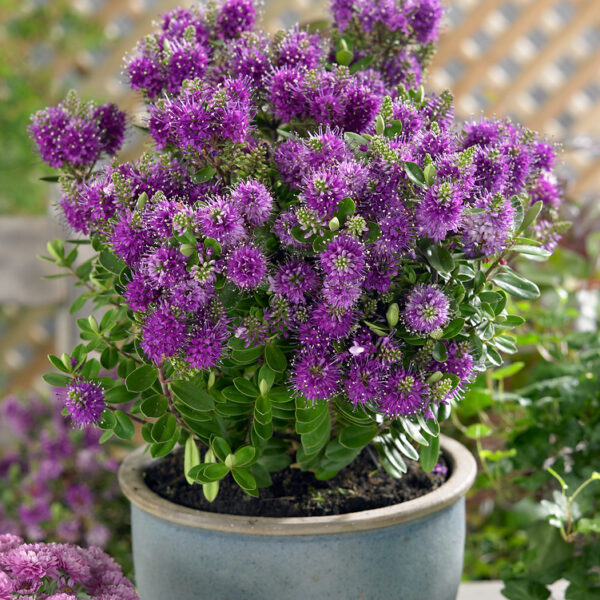
Veronica 'Red Edge' (syn. Hebe 'Red Edge')
£13.99 per pack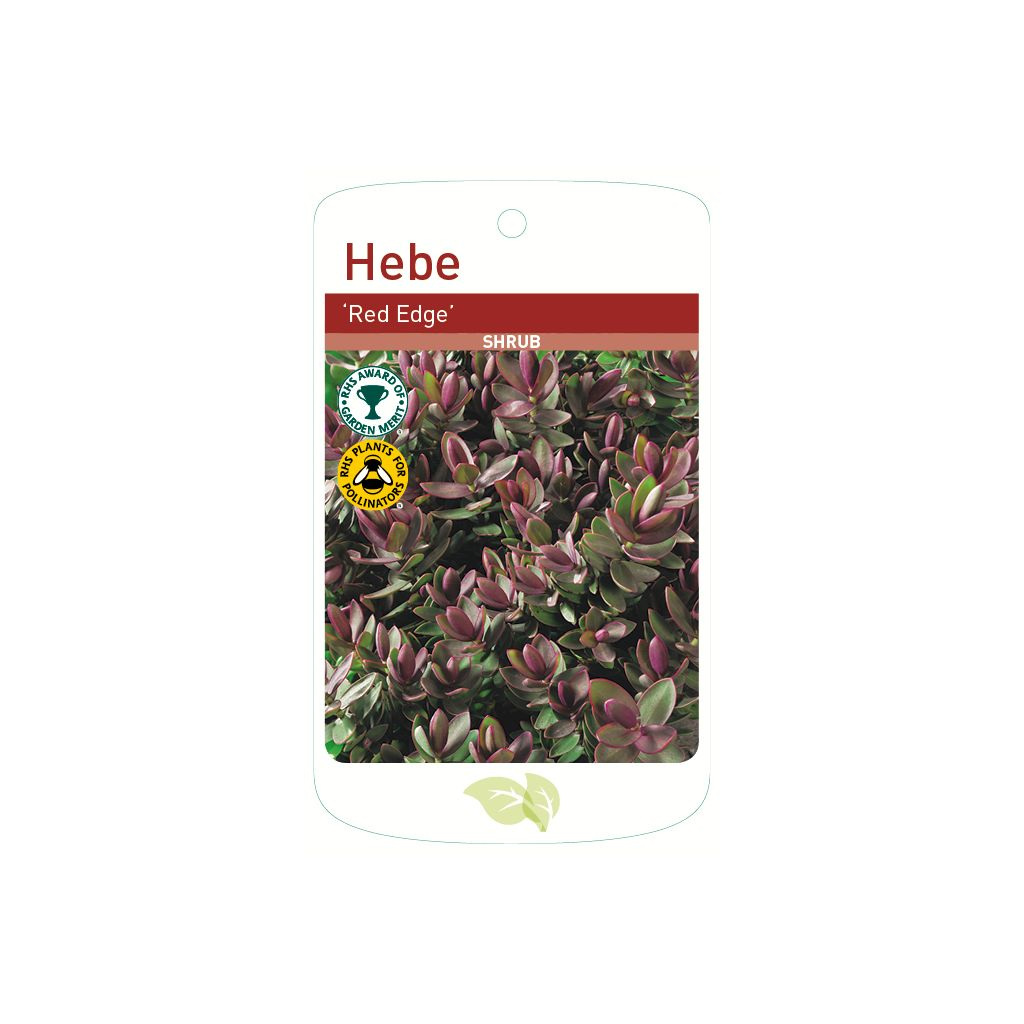
- UK Nursery Grown
- Planting Advice
Hebe Red Edge Shrubs (Veronica 'Red Edge')
Veronica 'Red Edge' (syn. Hebe 'Red Edge')
£13.99 per pack
Hebe Red Edge is a neat evergreen shrub with blue-grey leaves finely rimmed in red, especially vivid in winter. Pale mauve flower spikes appear in summer, fading to white. Its compact, rounded shape suits borders, rock gardens and patio pots. Plant in sun or partial shade with well-drained soil, sheltered from cold winds.
- Blue-grey leaves with red winter margins
- Compact rounded habit, ideal for pots
- Pale mauve summer flower spikes
Step 1: Choose Your Root Type
Pot-grown plants, supplied in the pot size shown for each option. Plant at any time of year when the ground is workable. Ask about this plant
Understanding root types
- Bare root
- Lifted with little or no soil around the roots. Keep the roots moist and plant during the dormant season.
- Rootball
- Supplied with soil around the roots. Handle the rootball carefully and follow its planting instructions.
- Potted
- Grown in a nursery container. The pot size and supplied height are shown with each plant option.
Step 2: Choose Your Plant
Need help with your planting?Ask about sizes, root types and quantities
Position
Sun or partial shade, sheltered from cold winds
Soil
Moist but well-drained soil
Supplied size
9cm pot
Ordering
Order from 1 pack
Description
Hebe Red Edge Shrubs (Veronica 'Red Edge')
What is Hebe Red Edge?
Hebe Red Edge, also known as Veronica 'Red Edge', is a compact evergreen shrub with small, blue-grey leaves outlined in red. The narrow red margins become stronger in winter, bringing a welcome touch of colour to borders and pots through the colder months. Short spikes of pale mauve flowers appear in summer, gradually fading to white above the rounded foliage.
Hebe Red Edge naturally forms a small, rounded bush that needs little pruning to stay tidy. It fits comfortably at the front of a border, among stones in a rock garden or in a generous patio pot. The evergreen leaves keep these smaller planting spaces looking settled through winter, with flowers adding interest in summer.
Why choose Hebe Red Edge?
The changing leaf colour is one of the pleasures of growing Hebe Red Edge. Its blue-grey foliage carries a delicate red outline through summer, which deepens as temperatures fall. Even in the middle of winter, the little rounded leaves provide colour near paths and entrances. In summer, pale mauve flower spikes bring bees and other pollinating insects into the garden.
Its naturally compact growth makes Hebe Red Edge easy to maintain. A light trim after flowering will usually keep any stray shoots in check, without cutting into older wood. Plant one beside a doorstep, set several along a path for a low informal hedge, or divide a pack between patio containers and gaps at the front of a border.
Eventual height, spread and growth rate
Hebe Red Edge typically grows to around 60cm tall and wide, although mature plants may reach 75cm in favourable conditions. Growth is generally slow to moderate, with around 10 to 15cm of new growth possible in a year once established. Occasional light trimming helps keep the shrub compact without spoiling its natural shape.
This relatively slow growth is useful where space is limited, particularly beside paths or in narrow borders. For groups of individual shrubs, leave around 50 to 60cm between plants. This gives the branches room to spread and allows each plant to develop its naturally rounded outline.
How to use Hebe Red Edge in your garden
At the front of a mixed border, Hebe Red Edge looks particularly attractive beside low-growing perennials and plants with fresh green foliage. Groups of three or five can form a low, informal flowering hedge along a path or driveway. The small red-edged leaves give the planting a clear outline, while the rounded branches keep the effect soft and natural.
In containers, Red Edge works well on its own or combined with trailing plants that soften the pot rim. Choose a pot with good drainage holes and use a loam-based compost. A sheltered patio or balcony position helps protect the evergreen leaves from cold, drying winds. It also suits coastal gardens, tolerating salt-laden air better than many shrubs.
Choosing a size
Hebe Red Edge is supplied as young shrubs in 9cm pots, with packs of 2, 3, 4 or 6 plants available. A pair works well in separate containers, while packs of 4 or 6 are useful for planting a short informal hedge or filling several spaces along a border.
All four options contain the same 9cm pot-grown Hebe Red Edge plants, so you can choose the quantity that suits your planting space. Give each shrub enough room to develop and water regularly during establishment, especially when growing in containers.
| Option | Supplied size | Pot or root type | Best for | Plants per pack |
|---|---|---|---|---|
| 9cm pot | 2 plants | Young plant | 9cm pot | Two containers or a small border group | 2 |
| 9cm pot | 3 plants | Young plant | 9cm pot | A trio in a border or three separate pots | 3 |
| 9cm pot | 4 plants | Young plant | 9cm pot | Around 2 metres of low informal hedge at 50cm spacing | 4 |
| 9cm pot | 6 plants | Young plant | 9cm pot | A longer hedge or filling several gaps | 6 |
Planting and care
Planting and aftercare
When and how to plant
Pot-grown Hebe Red Edge can go into the garden throughout the year, provided the ground is not frozen or waterlogged. Spring and early autumn are particularly good planting times, with milder weather and generally more reliable soil moisture. During hot, dry spells, newly planted shrubs need closer attention to watering.
Water the plant thoroughly while it is still in its 9cm nursery pot. Dig a planting hole wider than the rootball but no deeper, keeping the top of the compost level with the surrounding soil. Backfill, firm gently and water well to settle the soil around the roots. For patio containers, choose a pot with drainage holes and fill it with a suitable loam-based compost.
Spacing guide for hedges
If you are planting Red Edge as a low informal hedge, space the plants about 50cm apart. This allows the branches to spread towards neighbouring plants and gradually form a continuous line of evergreen foliage. How quickly the gaps close depends on growing conditions and the size of the young shrubs.
For a single row planted at 50cm intervals, the following quantities will cover common hedge lengths. Allow space at either end according to where you want the hedge to finish.
| Hedge length | Plants needed (single row at 50cm spacing) |
|---|---|
| 5 metres | 10 plants |
| 10 metres | 20 plants |
| 20 metres | 40 plants |
Watering and feeding
Keep the soil or compost consistently moist during the first growing season while roots establish. Check container plants more often, as pots dry out faster than garden soil. Water at the base rather than over the leaves, and allow excess water to drain freely. Cold, waterlogged compost can damage the roots over winter, so keep containers sheltered from prolonged rain where possible and raise them on pot feet to help excess water escape.
Feed lightly in spring with a balanced, slow-release fertiliser suitable for shrubs. Avoid high-nitrogen feeds, which can encourage soft growth that is more vulnerable to cold damage. A mulch of well-rotted organic matter around the base in spring helps retain moisture and suppress weeds, but keep the mulch clear of the stems.
Trimming calendar
Hebe Red Edge needs very little pruning. Once flowering has finished, usually in late summer, snip off faded flower spikes and shorten any shoots that spoil its rounded shape. Make cuts just above healthy leaves, keeping to the leafy growth rather than cutting deep into bare, older stems. Hebes may struggle to regrow after hard pruning.
A simple trimming schedule keeps the shrub neat:
- Late summer (after flowering): Lightly trim to shape and remove dead flower heads.
- Early spring: Check for winter damage and remove frost-affected shoots once the worst cold has passed.
- Ongoing: Pinch out the tips of young plants in spring to encourage bushier growth.
Choose shrubs for borders and pots Choose your pack size Planting and aftercare essentials
Read our planting guideFurther growing advice: RHS plant and growing guidance
Sizes and prices
Hebe Red Edge sizes, prices and minimum orders
| Option | Supplied height | Pot or root | Plants | Price | Minimum order | Availability |
|---|---|---|---|---|---|---|
| 9cm pot | 2 plants | – | 9cm pot | 2 | £13.99 per pack | None | Unavailable |
| 9cm pot | 3 plants | – | 9cm pot | 3 | £14.99 per pack | None | Unavailable |
| 9cm pot | 4 plants | – | 9cm pot | 4 | £15.99 per pack | None | Unavailable |
| 9cm pot | 6 plants | – | 9cm pot | 6 | £19.99 per pack | None | Unavailable |
The price is for the selected plant or pack. Pack size tells you how many plants are included, and the minimum order is the smallest quantity we can send.
Plant sizes and quantities explainedDelivery
Delivery for your plant order
Delivery options and charges are shown in your basket and confirmed before you place your order.
Plants are living products. Unpack promptly after delivery, check moisture around the roots and keep them in a sheltered spot until you can plant.
Delivery informationPlant questions
Before you order
How big does Hebe Red Edge grow?
Hebe Red Edge typically reaches about 60cm in height and spread, though in ideal conditions it may grow up to 75cm. It is a slow to moderate grower, adding roughly 10 to 15cm per year. The naturally rounded shape suits smaller borders and patio pots, where there is little room for a spreading shrub. A gentle trim after flowering will help control its size, but avoid cutting back into old, leafless stems.
Are hebes better in pots or in the ground?
Hebe Red Edge grows well in both situations, provided drainage is good. In the ground, it benefits from more stable root temperatures and moisture levels. In pots, you can move the plant to a sheltered spot over winter, which is useful in colder areas. Use a loam-based compost, check watering regularly during dry spells and ensure the pot has clear drainage holes. Container plants may need a little extra winter protection, such as wrapping the pot with fleece or moving it against a house wall.
Where is the best place to plant a hebe?
Plant Hebe Red Edge in a sunny or partially shaded position that is sheltered from cold, drying winds. A sheltered south- or west-facing border beside a wall or fence can work particularly well, giving the leaves some protection from cold winds while allowing plenty of light. The soil must be moist but well-drained; heavy clay that stays wet in winter can cause root problems. In coastal gardens, this hebe tolerates salt-laden air, making it a good choice for seaside planting.
When to plant Hebe Red Edge?
Pot-grown Hebe Red Edge can be planted at any time of year when the ground is not frozen or waterlogged. Spring and early autumn are ideal, as the soil is warm and rainfall usually helps with establishment. Avoid planting during extended hot, dry periods unless you can water consistently. If you must plant in summer, water thoroughly before and after planting, and check moisture levels every few days until the shrub shows new growth.
How much ground will a pack of 2 cover?
A pack of 2 Hebe Red Edge plants covers about 1 metre of low informal hedge when spaced at 50cm apart. If you are planting them as individual specimens in a border or containers, each shrub will spread to around 60cm wide at maturity, so two plants can fill roughly 1.2 metres of border frontage when given enough room to develop their natural rounded shape.
Is Hebe Red Edge toxic to pets or people?
Hebe Red Edge is not generally considered a poisonous garden shrub, and it is not commonly associated with poisoning in people, cats or dogs. However, this does not mean its leaves or flowers are safe to eat. Discourage children and pets from chewing garden plants, as eating plant material may cause an upset stomach or other reactions. If a pet eats part of the shrub and becomes unwell, contact your vet for advice.
Ask a plant questionYou may also like