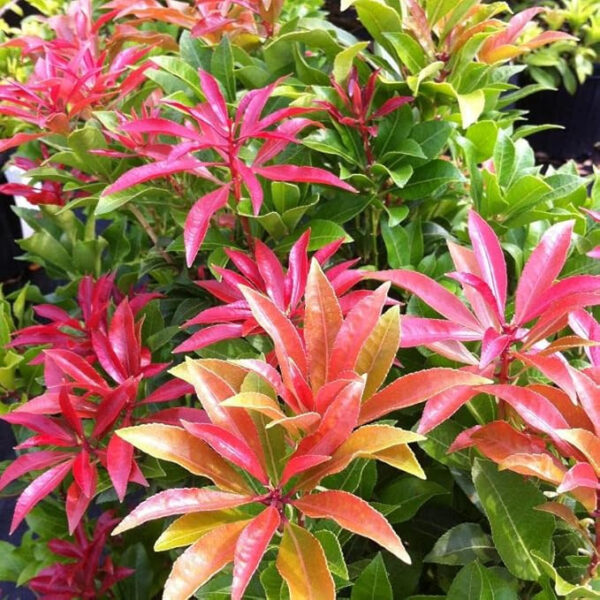
Pieris 'Forest Flame'
£12.99 per plant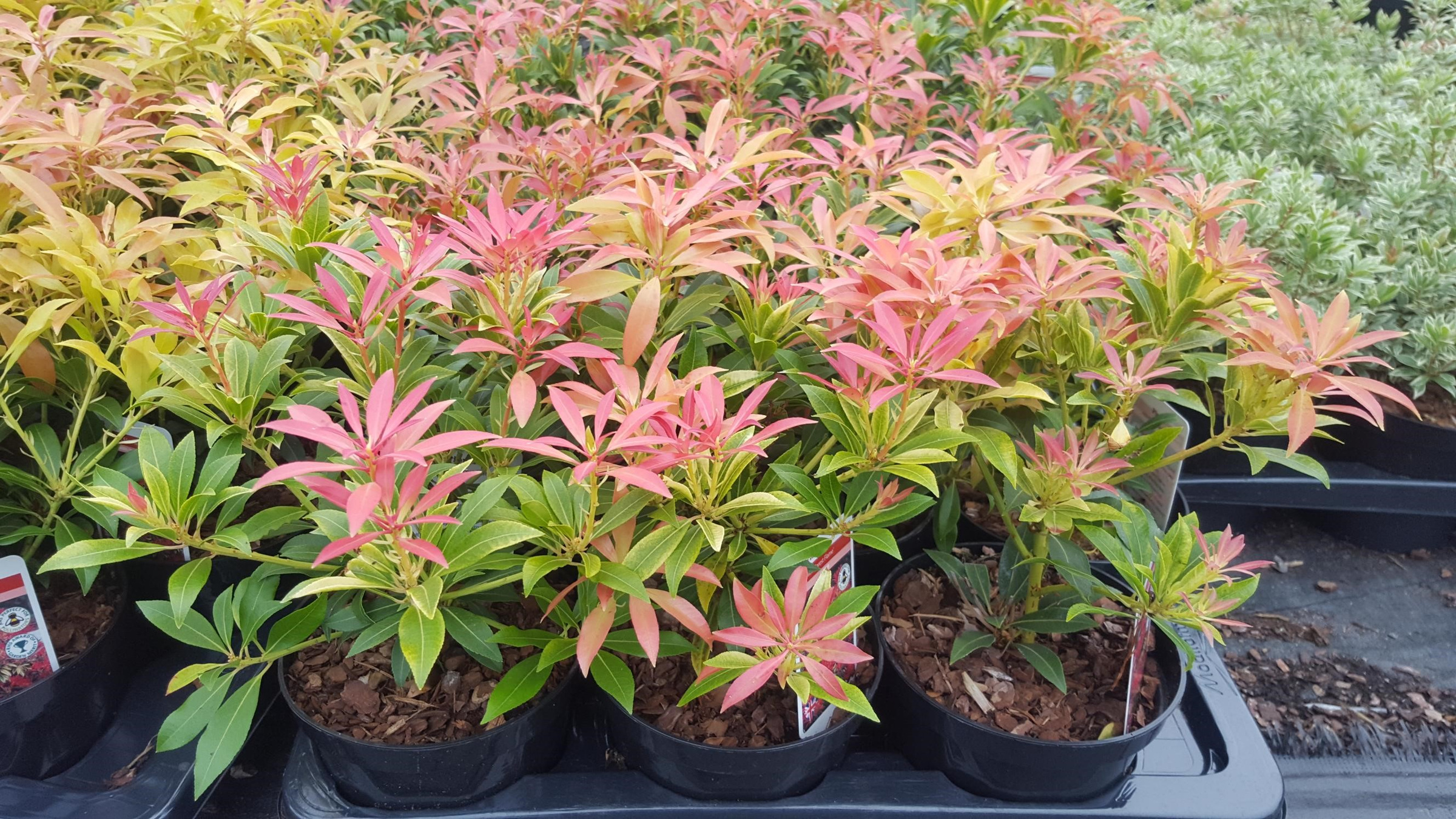
- UK Nursery Grown
- Planting Advice
Pieris Forest Flame Shrubs: Red New Growth & Spring Flowers
Pieris 'Forest Flame'
£12.99 per plant
Pieris Forest Flame brings bright red new leaves in spring, gradually changing through pink and cream to glossy green. Hanging clusters of cream-white, bell-shaped flowers appear around the same time. This evergreen shrub grows best in acidic, moist but well-drained soil, sheltered from cold winds. Plant it among rhododendrons and azaleas, or grow it in a large patio pot filled with ericaceous compost.
- Red new foliage maturing through pink to green
- Cream-white spring flower clusters
- Evergreen shrub for acidic soil or pots
Step 1: Choose Your Root Type
Pot-grown plants, supplied in the pot size shown for each option. Plant at any time of year when the ground is workable. Ask about this plant
Understanding root types
- Bare root
- Lifted with little or no soil around the roots. Keep the roots moist and plant during the dormant season.
- Rootball
- Supplied with soil around the roots. Handle the rootball carefully and follow its planting instructions.
- Potted
- Grown in a nursery container. The pot size and supplied height are shown with each plant option.
Step 2: Choose Your Plant
Need help with your planting?Ask about sizes, root types and quantities
Position
Sun or partial shade, sheltered from cold winds
Soil
Acidic, moist but well-drained, or ericaceous compost
Supplied size
2 litre pot
Ordering
Order from 1 plant
Description
Pieris Forest Flame Shrubs: Red New Growth & Spring Flowers
What is Pieris Forest Flame?
The first flush of growth is what makes Pieris Forest Flame so distinctive. Young leaves open a vivid red, fade through shades of pink and cream, then mature to glossy dark green. Clusters of small, cream-white, bell-shaped flowers hang beneath the foliage in spring. As an evergreen, it keeps its dark green leaves through winter, giving borders some welcome colour and shape between flowering seasons.
Its bushy, upright growth gradually develops into a substantial shrub, so allow enough room when choosing a planting position. Pieris belongs to the heather family, alongside rhododendrons and azaleas, and needs similarly acidic growing conditions. Over 10 to 20 years, Forest Flame can reach approximately 2.5 to 4 metres tall and 1.5 to 2.5 metres wide, although pruning and growing conditions influence its eventual size.
Why choose Pieris Forest Flame?
Few spring shrubs have foliage quite like Forest Flame. Fresh red shoots appear as temperatures rise, and their colour changes over several weeks as the leaves develop. Cream-white flowers hang in clusters among the young growth, bringing a softer contrast to the bright foliage. The mature leaves remain green throughout winter, making this a useful shrub beside paths, near doorways or within view of a favourite seating area.
Plant Forest Flame with other acid-loving shrubs, particularly dwarf rhododendrons and azaleas, for a border with varied foliage and spring flowers. It also grows well in a large container of ericaceous compost, provided the roots stay moist without becoming waterlogged. A pot near a patio or entrance lets you enjoy the changing leaf colours up close, especially when the first red shoots appear.
Eventual height, spread and growth rate
Pieris Forest Flame develops gradually into a large, bushy evergreen shrub. At maturity, it can reach approximately 2.5 to 4 metres in height and 1.5 to 2.5 metres across, usually taking 10 to 20 years to reach its full size. Growth varies with soil, moisture and shelter. Container-grown plants generally remain smaller because their roots have less room to spread.
Shelter, light and consistent moisture all affect how well the shrub grows. Deep shade can dull the red young leaves and reduce flowering, while strong sun may scorch tender growth if the roots become dry. Choose a sheltered position with partial shade or gentle morning sun, and keep the soil moist but well drained. Protection from cold, drying winds is particularly helpful when fresh shoots emerge.
Uses in the garden
Give Pieris Forest Flame space to develop its naturally bushy shape in a mixed border, woodland-style planting or large patio container. Its colourful shoots are most attractive when allowed to grow freely. Regular hedge trimming would remove much of that fresh growth, so it is better grown as an individual shrub or in an informal group.
In a border, plant it where the new growth can be seen from a window or a regularly used path. The red and pink shoots show up particularly well against dark green foliage, such as an established English yew hedge, or in front of a dark-painted garden fence. In a pot, choose a container at least 40cm wide and deep, and use ericaceous compost with good drainage. Raise the pot on feet so water never sits in the base.
Choosing a size
Pieris Forest Flame is available as a single plant in a 2 litre pot, a pack of six plants in 2 litre pots, or packs containing 6, 12 or 18 plants. The larger packs suit borders where several shrubs are needed, while a single 2 litre plant works well for an individual planting position or patio container. Check the available options carefully, as the catalogue does not specify pot type or plant height for the 6, 12 and 18 plant packs without a stated pot size.
For one specimen or a patio container, choose the single plant in a 2 litre pot. The six-pack in 2 litre pots is useful for planting several shrubs together, while the other packs offer quantities of 6, 12 or 18 plants for larger borders. Allow enough space for their mature spread rather than planting closely simply to fill every gap immediately. Good soil preparation and regular watering will help the plants establish.
| Option | Supplied size | Pot or root type | Best for | Plants per pack |
|---|---|---|---|---|
| 2 litre pot | 1 plant | Height not specified | 2 litre pot | Individual specimen or large patio pot | 1 |
| 2 litre pot | 6 plants | 30 to 40cm tall | 2 litre pot | Group planting in a border | 6 |
| 6 plants | Height not specified | Not specified | Planting several shrubs together | 6 |
| 12 plants | 15 to 25cm tall | 9cm nursery pot | Lining a longer border or bed | 12 |
| 18 plants | 15 to 25cm tall | 9cm nursery pot | Planting a larger border or shrub bed | 18 |
Planting and care
Planting and aftercare
When and how to plant
Container-grown Pieris can be planted at any time of year when the ground is not frozen or waterlogged. Spring and early autumn are ideal because the soil is warm and rainfall usually reliable. Avoid planting during hot, dry spells unless you can water regularly.
Before planting, soak the rootball in a bucket of water until bubbles stop rising. Dig a hole twice as wide as the pot and the same depth. Check the soil pH before planting. Pieris needs naturally acidic soil, so if your ground is neutral or alkaline, grow it in a large container of ericaceous compost instead of relying on compost added to the planting hole. Set the plant so the top of the rootball sits level with the soil surface. Backfill firmly, water well and mulch with bark or leaf mould, keeping the mulch away from the stem. In containers, use a pot with drainage holes and fill with ericaceous compost. Water thoroughly after planting.
Spacing guide
Spacing depends on the effect you want and how much room the shrubs have to mature. For a closely planted group, allow 80cm to 1 metre between plants, bearing in mind that their branches will overlap considerably as they grow. For individual specimens, allow at least 1.5 to 2.5 metres so each shrub has room to develop. The table below gives planting quantities for common border lengths using 1 metre spacing, suitable for a close group rather than separate mature specimens.
| Border length | Plants needed (1m spacing) |
|---|---|
| 5 metres | 5 |
| 10 metres | 10 |
| 20 metres | 20 |
Watering, feeding and mulching
Keep the soil or compost evenly moist, especially during the first growing season and in dry weather. Pieris has shallow, fibrous roots that can dry out quickly. Use rainwater rather than tap water in hard-water areas, because lime can raise the pH around the roots over time. A 5cm layer of acidic mulch such as pine bark or leaf mould helps hold moisture and suppress weeds.
Feed in early spring with a fertiliser formulated for acid-loving plants, following the packet instructions. Avoid high-nitrogen lawn feeds, which can scorch the roots. Container plants benefit from a liquid ericaceous feed every two weeks during the growing season. Yellow leaves with green veins can indicate iron chlorosis, often caused by alkaline soil. Check the soil pH before treating the plant. Where the ground is naturally alkaline, moving the shrub into a container with fresh ericaceous compost is usually more reliable than trying to change the surrounding soil.
Trimming and care calendar
Pieris Forest Flame needs very little pruning. The main task is removing dead or damaged wood in spring, once the risk of frost has passed. If the shrub outgrows its space, you can lightly trim it after flowering, cutting back to just above a healthy leaf or sideshoot. Never cut into old, bare wood, because it may not regrow.
Use the seasonal guide below to time feeding, watering and any necessary trimming around the shrub's spring growth and flowering.
| Month | Task |
|---|---|
| March to April | Remove dead or frost-damaged shoots. Apply ericaceous feed. |
| April to May | Enjoy the flowers and new red growth. Water if dry. |
| June to July | Lightly trim after flowering only if needed. Mulch to retain moisture. |
| August to September | Keep watering during dry spells. Check container plants daily. |
| October to February | Clear fallen leaves from the crown. No pruning or feeding. |
Choose plants for acidic borders Compare pot and collection sizes Watering new shrubs
Read our planting guideFurther growing advice: RHS plant and growing guidance
Sizes and prices
Pieris Forest Flame sizes, prices and minimum orders
| Option | Supplied height | Pot or root | Plants | Price | Minimum order | Availability |
|---|---|---|---|---|---|---|
| 2 litre pot | 1 plant | – | 2 litre pot | 1 | £12.99 per plant | None | Available |
| 2 litre pot | 6 plants | – | 2 litre pot | 6 | £35.99 per pack | None | Available |
| 6 plants | – | Potted | 6 | £18.99 per pack | None | Available |
| 12 plants | – | Potted | 12 | £25.99 per pack | None | Available |
| 18 plants | – | Potted | 18 | £38.99 per pack | None | Available |
The price is for the selected plant or pack. Pack size tells you how many plants are included, and the minimum order is the smallest quantity we can send.
Plant sizes and quantities explainedDelivery
Delivery for your plant order
Delivery options and charges are shown in your basket and confirmed before you place your order.
Plants are living products. Unpack promptly after delivery, check moisture around the roots and keep them in a sheltered spot until you can plant.
Delivery informationPlant questions
Before you order
Does Pieris Forest Flame prefer sun or shade?
It grows best in partial shade or a spot with morning sun and afternoon shade. Full sun can work if the soil stays reliably moist, but strong midday sun may scorch the young red leaves. Deep shade reduces flowering and makes the leaf colour less intense. A sheltered position out of cold, drying winds is important, especially in spring when the soft new shoots are vulnerable to damage.
How to look after Pieris Forest Flame?
Keep the soil or compost evenly moist, using rainwater in hard-water areas. Mulch each spring with acidic material such as pine bark. Feed with an ericaceous plant food in March or April. Remove dead or damaged shoots after the last frost. Light trimming after flowering is the only pruning most plants need. In containers, repot every two to three years into fresh ericaceous compost, moving to a slightly larger pot if roots are congested.
What are some common problems with Pieris 'Forest Flame' plants?
Yellow leaves with green veins can indicate iron chlorosis, particularly when the soil is too alkaline for the roots to absorb enough iron. Check the soil pH and use an appropriate ericaceous feed if needed. Moving the plant into a container of fresh ericaceous compost may be necessary in alkaline gardens. Brown spots on the leaves can indicate fungal leaf spot, especially in damp conditions. Remove badly affected foliage and improve air circulation. Pieris lacebug can also cause pale, mottled leaves. Young spring shoots are vulnerable to frost and cold winds, so choose a sheltered site away from strong morning sun after a freezing night.
When should I cut back my Forest Flame?
Light pruning is best done immediately after flowering, typically in late spring or early summer. Cut back wayward shoots to a healthy leaf or sideshoot. Do not cut into old, leafless wood, because Pieris often fails to regrow from bare stems. If an established shrub has become too large, reduce it cautiously over two or three seasons rather than cutting it back hard in one year. Remove selected older or congested stems where appropriate, keeping enough healthy, leafy growth for the plant to recover. Regrowth from old, bare wood is unreliable.
Does Pieris need ericaceous compost?
Yes, when grown in a container you must use ericaceous compost. In the ground, the soil needs to be naturally acidic, with a pH of roughly 5.0 to 6.0. On neutral or alkaline soils, planting in a pot is the most reliable method. Simply digging a hole and filling it with ericaceous compost in alkaline ground rarely works long-term, because the surrounding soil will gradually raise the pH.
Is Pieris Forest Flame toxic?
Yes. All parts of Pieris contain toxic compounds, including grayanotoxins, and are harmful if eaten by people or animals. Keep plants out of reach of pets that may chew foliage, and take particular care in gardens used by grazing animals. Wear gloves when pruning or handling the shrub, then wash your hands. The spring flowers provide nectar for visiting pollinators, including bees, but the plant itself must never be treated as edible.
Ask a plant questionYou may also like