Lavandula stoechas 'Bandera Purple'
£9.99 per plant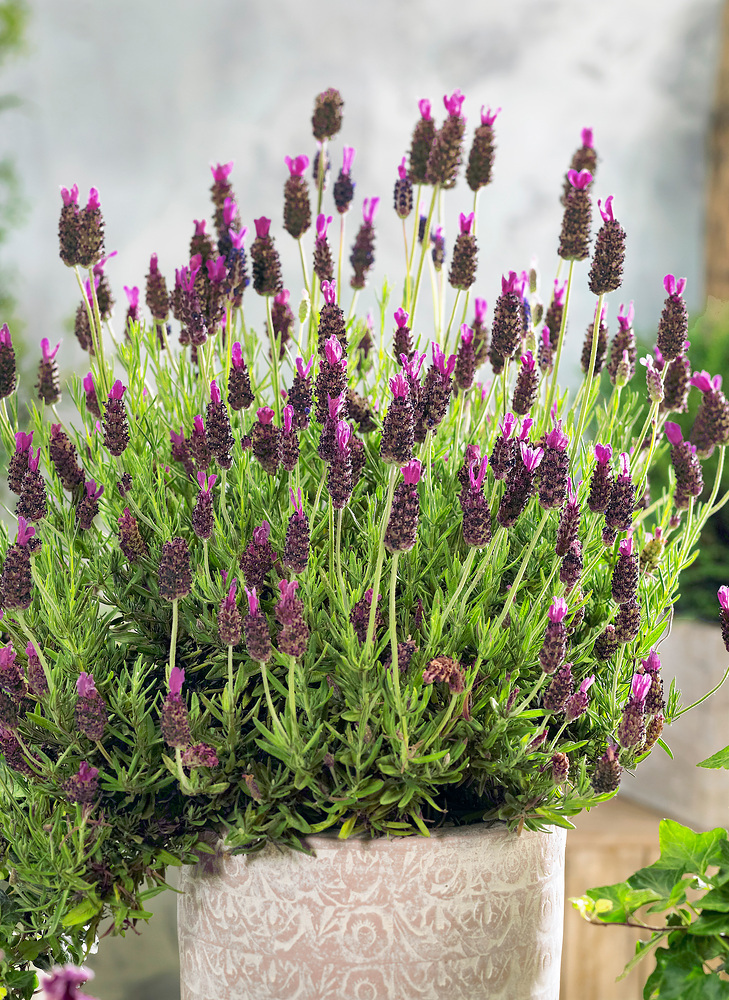
- UK Nursery Grown
- Planting Advice
French Lavender Bandera Purple Plants for Sale UK
Lavandula stoechas 'Bandera Purple'
£9.99 per plant
Bandera Purple is a compact French lavender with deep purple flower heads topped by distinctive purple flags. Its aromatic grey-green foliage forms a neat, bushy mound that suits sunny patio pots and sheltered borders with excellent drainage. It needs more winter protection than English lavender, particularly in colder parts of the UK.
- Dark purple flowers with purple flags
- Aromatic grey-green foliage
- Compact habit, ideal for containers
Step 1: Choose Your Root Type
Pot-grown plants, supplied in the pot size shown for each option. Plant at any time of year when the ground is workable. Ask about this plant
Understanding root types
- Bare root
- Lifted with little or no soil around the roots. Keep the roots moist and plant during the dormant season.
- Rootball
- Supplied with soil around the roots. Handle the rootball carefully and follow its planting instructions.
- Potted
- Grown in a nursery container. The pot size and supplied height are shown with each plant option.
Step 2: Choose Your Plant
Position
Full sun, sheltered spot
Soil
Very well-drained, even poor soil
Supplied size
1 litre pot
Ordering
Order from 1 plant
Description
French Lavender Bandera Purple Plants for Sale UK
What is French lavender Bandera Purple?
French lavender Bandera Purple is a neat, bushy evergreen shrub grown for its striking flower heads and aromatic foliage. Each flower spike carries a tuft of purple bracts, often called flags, which resemble small butterfly wings. Deep purple flowers appear from late spring through summer, with further blooms possible if faded flower heads are removed. The short, branching stems work particularly well in patio pots, low edging and sunny border fronts, where you can see the unusual flowers close up.
Why choose Bandera Purple?
Bandera Purple has a naturally compact, branching shape that fits neatly into smaller planting spaces. Its deep purple flowers stand above grey-green leaves that release their herbal scent when brushed. Bees and other pollinating insects visit the flowers during warm weather. Try planting several along a sunny path, arranging them in a generously sized window box or grouping pots near a seating area. The repeated purple flower heads bring colour to the planting without needing taller shrubs.
Eventual height, spread and growth rate
Bandera Purple typically forms a low, rounded shrub, reaching around 40 to 50cm in height and spread in suitable conditions. Growth varies with warmth, drainage and winter weather, and plants in containers may remain smaller than those grown in the ground. Its naturally bushy habit makes it useful where space is limited. A light trim after flowering helps keep the stems leafy and the outline tidy, although cutting back into old, bare wood can leave gaps that are slow to recover.
How to use French lavender in the garden
Plant French lavender near a path, doorway or seating area to enjoy its purple flower heads and aromatic leaves. For low, informal edging, space plants about 30cm apart, allowing room for their rounded growth. At the front of a mixed border, keep taller shrubs far enough away to avoid shading the lavender. Terracotta pots suit its Mediterranean character, especially on a warm, sunny patio. Containers also make winter care easier, as plants can be moved under cover when freezing weather is forecast.
Choosing a size
Bandera Purple is available in 1 litre pots, with packs of 1, 2 or 4 plants. Choose a single plant for a patio container, a pair for matching pots or four plants for a short stretch of edging or a grouped display. The available pack sizes are shown below.
| Option | Supplied size | Pot or root | Best for |
|---|---|---|---|
| 1 litre pot | 1 plant | 1 litre pot | Pot-grown | Trying a single plant or adding to a small pot |
| 1 litre pot | 2 plants | 1 litre pot | Pot-grown | A pair for flanking a doorway or path |
| 1 litre pot | 4 plants | 1 litre pot | Pot-grown | Filling a border frontage or several containers |
Planting and care
Planting and aftercare
When and how to plant
Spring is a good time to plant French lavender, giving the roots several months to establish before winter. Pot-grown plants can also go into the ground at other times when the soil is workable, provided conditions are not frozen or waterlogged. Water the nursery pot before planting, then dig a hole wide enough for the rootball. Set the plant at its original depth and gently firm the soil around it. French lavender needs sharp drainage, so avoid planting directly into heavy, persistently wet clay. A raised bed or container may be more suitable. For pots, use a free-draining loam-based compost with added horticultural grit, and ensure water can escape through the drainage holes. Empty saucers after watering so the roots never stand in water.
Spacing for a lavender hedge
For a low, informal hedge, space plants about 30cm apart in a single row. The plants can gradually grow together to form a low, informal edge, although the time needed depends on growing conditions and their size when planted. The table below gives planting quantities for three common hedge lengths.
| Hedge length | Plants needed (30cm spacing) |
|---|---|
| 5 metres | 17 plants |
| 10 metres | 34 plants |
| 20 metres | 67 plants |
Watering, feeding and ongoing care
Water newly planted French lavender while its roots establish, allowing excess moisture to drain away. Once settled, plants in the ground usually need less frequent watering, although containers can dry quickly in summer. Check the compost daily during hot weather and water when it begins to dry, rather than keeping it constantly damp. French lavender grows well in relatively poor soil and seldom needs feeding. Too much nitrogen can produce soft, leafy stems with fewer flowers. A layer of gravel around the base helps keep the lower stems clear of damp soil. Before winter, move containers into a bright, sheltered, frost-free position where possible. Plants left outdoors need good drainage and protection from prolonged freezing conditions, particularly in colder districts.
Trimming calendar
Once the main flowers have faded, remove the spent heads and lightly shorten the leafy stems to keep the plant rounded. Make each cut above healthy green growth, as old, bare wood seldom produces fresh shoots. If more flowers appear later in summer, deadhead them without giving the whole plant another heavy trim. Avoid cutting late in autumn, when new shoots may struggle to withstand frost. In early spring, check for winter damage and remove dead tips once you can see where healthy growth is emerging.
Choose plants for sunny containers Compare single plants and packs Watering and seasonal care
Read our planting guideFurther growing advice: RHS plant and growing guidance
Sizes and prices
French lavender Bandera Purple sizes, prices and minimum orders
| Option | Supplied height | Pot or root | Plants | Price | Minimum order | Availability |
|---|---|---|---|---|---|---|
| 1 litre pot | 1 plant | – | 1 litre pot | 1 | £9.99 per plant | None | Unavailable |
| 1 litre pot | 2 plants | – | 1 litre pot | 2 | £18.99 per pack | None | Unavailable |
| 1 litre pot | 4 plants | – | 1 litre pot | 4 | £24.99 per pack | None | Unavailable |
The price is for the selected plant or pack. Pack size tells you how many plants are included, and the minimum order is the smallest quantity we can send.
Plant sizes and quantities explainedDelivery
Delivery for your plant order
Delivery options and charges are shown in your basket and confirmed before you place your order.
Plants are living products. Unpack promptly after delivery, check moisture around the roots and keep them in a sheltered spot until you can plant.
Delivery informationPlant questions
Before you order
Will French lavender come back each year?
Yes, French lavender is an evergreen perennial shrub and can live for several years when conditions suit it. The main challenge in the UK is winter cold, especially when the soil remains wet. It is generally less frost-hardy than English lavender, and prolonged freezing temperatures can damage or kill the plant. In mild, sheltered gardens with sharply drained soil, it may remain outdoors throughout winter. In colder areas, growing Bandera Purple in a pot allows you to move it somewhere bright, sheltered and frost-free during severe weather. Keeping the roots relatively dry in winter also helps.
What is the difference between lavender and French lavender?
The main difference is the flower shape. French lavender (Lavandula stoechas) has a short, dense flower spike topped with a tuft of showy bracts, often called flags or ears. English lavender (Lavandula angustifolia) has longer, slender flower spikes without the prominent top bracts. French lavender generally flowers earlier and has a stronger, slightly camphor-like scent. It is also less tolerant of frost and winter wet. English lavender is usually the better choice for colder or more exposed gardens, while French lavender prefers a warm, sunny position with free-draining soil. Its compact flower spikes and prominent purple flags are particularly attractive in patio pots.
Does French lavender survive UK winter?
French lavender can survive outdoors through winter in milder parts of the UK, particularly in sheltered gardens with excellent drainage. Cold, wet soil is a common cause of winter losses, and prolonged frost can damage the stems and foliage. Gardens in the south and west may offer more favourable conditions, but local exposure and drainage matter as much as location. In colder inland or northern areas, pots are often the safer option. Move them to a bright, frost-free porch or greenhouse during severe weather, keeping the compost on the dry side without allowing it to become completely parched. For plants remaining in the ground, a gravel mulch can help keep surface moisture away from the base.
What is special about French lavender?
The most distinctive feature of French lavender is the tuft of coloured bracts at the top of each flower spike. These upright flags resemble butterfly wings and give Bandera Purple its unusual outline. Flowering often begins in late spring, with further blooms possible after deadheading if growing conditions are favourable. The grey-green leaves release a herbal fragrance when touched, and the plant retains a compact, bushy shape. It suits sunny containers and small borders where the flowers can be seen close up, although its sensitivity to winter cold means a sheltered position is important.
How hard should French lavender be pruned?
Keep pruning light, as French lavender rarely recovers well from cuts into old, woody stems. After the first flush of flowers, remove the faded flower spikes and trim around 2 to 3cm from the leafy growth beneath them. Make sure each stem still has healthy green leaves below the cut. This helps maintain a rounded shape and may encourage further flowering. Avoid severe pruning, particularly late in the season when new growth is vulnerable to frost. In spring, wait until fresh growth is visible before removing any winter-damaged tips. Small, regular trims are safer than allowing the shrub to become woody and then cutting it back hard.
Is Bandera Purple toxic to pets?
French lavender should not be treated as a pet-safe plant. Lavender contains compounds including linalool and linalyl acetate, which can be harmful to dogs and cats if eaten. Symptoms may include vomiting, loss of appetite or other digestive upset, depending on the amount consumed. Keep plants away from pets that chew garden foliage, particularly when growing them in accessible patio pots. If you suspect your dog or cat has eaten lavender, contact your vet for advice rather than waiting for symptoms to appear. Avoid allowing pets to ingest any part of the plant.
Ask a plant question