Plan the hedge with the people who manage safeguarding, grounds maintenance and outdoor learning. Identify the purpose of each length and assess the chosen plants in that setting before buying. A description such as evergreen or native does not establish that a plant is suitable for every school area.
Start with pupil movement and supervision
Mark playground entrances, paths, waiting areas and the routes used at the start and end of the day. Look at the proposed planting from the position of staff who supervise those spaces. Set the maintained height and width to preserve the views they need, and allow for growth between trimming visits.
Where a hedge sits near fencing, gates, lighting or cameras, review the planting with the school’s site team. A dense screen may be useful in one place but obstruct observation in another. Leave enough access to inspect and maintain the boundary, and keep plants away from gate mechanisms and emergency routes.
Choosing hedging plants · Commercial hedging for different sites
Assess plant hazards before choosing a species
Consider thorns, sharp foliage, berries, possible skin reactions and the risk of plant parts being eaten. Include the age of the pupils, their support needs and the way the area will be supervised. Check the exact plant, rather than relying on a broad common name or assuming that a familiar garden species is harmless.
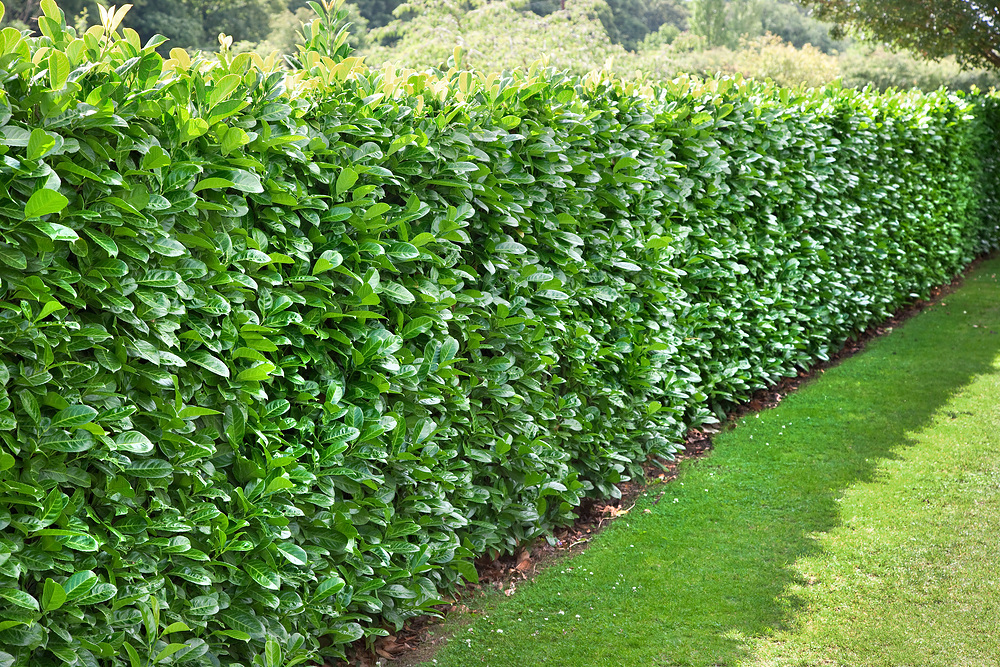
Yew is toxic if eaten and needs particular care in any assessment. Cherry laurel and Portuguese laurel also contain compounds that are harmful when ingested, so avoid them near play areas and anywhere young children might pick leaves or berries. Other common hedging plants also have hazards, so a school planting list should be checked in full. Decide how cuttings will be collected and removed, and teach pupils not to eat ornamental plants. The RHS school gardening resources provide a useful starting point for a setting-specific assessment.
Compare native and deciduous hedging · Plant selection advice
Choose the planting for the activity
A clipped hedge used to divide two spaces needs a clear line and a manageable finished width. A wildlife or learning area may allow a less formal shape, but it still needs access for teaching and care. Keep enough room beside the hedge for a group to use the area without standing on the planting bed.
For a pupil planting project, choose an area that adults can prepare and maintain afterwards. Order quantities against the agreed planting spacing and explain which plants belong in each length. Label the plants and keep the order information with the grounds plan so staff can refer to the exact species when planning later activities.
How to plant a hedge · Hedging plant sizes
Arrange care during school closures
New plants need attention when the grounds are quiet as well as during term time. Agree who will inspect them, how watering will be arranged and who can authorise a response if plants dry out. Check access to taps and hoses before the planting date. The end of a school project should not leave an unassigned watering task over a long holiday.
Include hedge maintenance in the grounds schedule, with access arrangements that suit the school day. Staff and contractors should know which areas pupils use, where cuttings can be collected and how paths will be kept clear during work. Review the hedge as it grows; the supervision plan must still work once young plants become a substantial boundary.
New hedge aftercare · Hedge trimming guidance
Which hedging plants are safe around children?
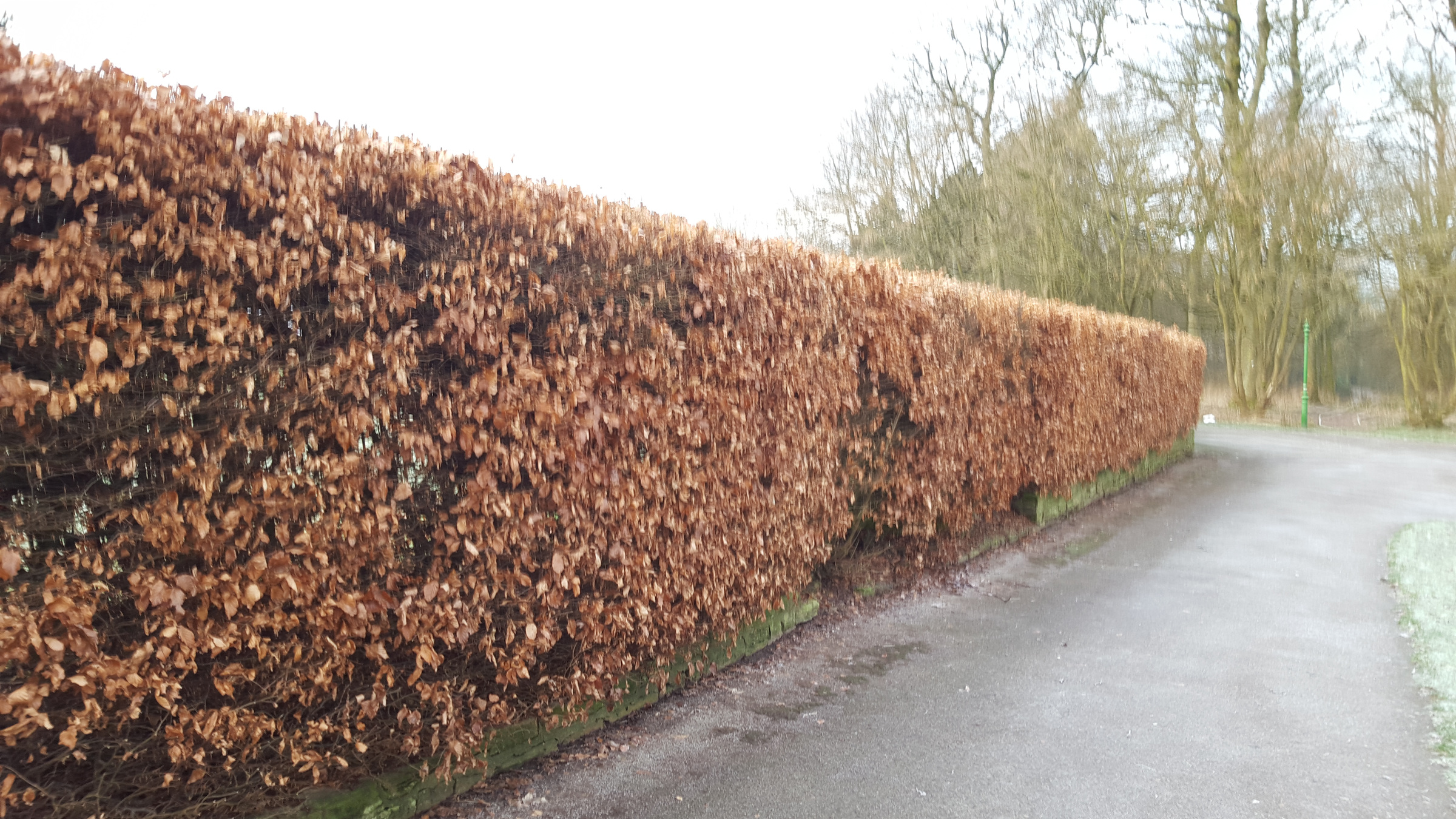
Green beech has smooth, thornless foliage and often retains its dry brown leaves through winter. Hebes and French lavender can be considered for low borders, with the lavender best placed in a sunny, freely draining bed. Box and dwarf evergreen azaleas need greater care in the plant risk assessment because their foliage is harmful if eaten. No species should be treated as automatically safe for a school garden, particularly where younger pupils may put leaves or flowers in their mouths.
Always assess the exact species against the school’s risk assessment and the age of the children who will use the space. Where a hedge will be touched regularly, avoid plants with sharp leaves, thorns or known skin irritants. The table below compares several hedging options we supply, with notes on their suitability for different school locations.
| Plant | Evergreen/Deciduous | Thorns/Sharp foliage | Toxic parts | Typical school use |
|---|
| Common hawthorn | Deciduous | Thorns | None | Perimeter only, away from play areas |
|---|
| Green beech | Deciduous (holds leaf) | None | None | Boundaries, learning gardens |
|---|
| Box (Buxus) | Evergreen | None | Leaves toxic if eaten | Low formal edging, supervised areas |
|---|
| Cherry laurel | Evergreen | None | Leaves and berries toxic | Remote perimeters only |
|---|
| Portuguese laurel | Evergreen | None | Leaves and berries toxic | Remote perimeters only |
|---|
| English yew | Evergreen | None | All parts toxic | Not recommended near pupils |
|---|
| Mixed hebes | Evergreen | None | None | Sensory beds, low dividers |
|---|
| French lavender | Evergreen | None | None | Sensory beds, sunny paths |
|---|
Can pupils help plant a bare root hedge?
A supervised planting activity works well with bare root hedging, which is supplied during the dormant season (roughly November to March). The plants are lightweight, easy to handle and arrive without pots, so pupils can set them into prepared slits or trenches without struggling with heavy rootballs. Adults should mark out the line, dig the ground and check the depth before children place each plant.
Bare root plants need to go into the ground soon after delivery. Arrange the session close to the delivery date and keep the roots covered and moist until planting. After the activity, firm the soil, water thoroughly and assign the ongoing watering and mulching to named staff. A planting day gives pupils a direct connection to their school grounds, but the long-term care must sit with adults from the start.
Hedge grants available in 2026
Funding for school hedging projects can come from several sources, though specific grants vary by region and year. The Tree Council has supported school and community planting through seasonal funding programmes. The Woodland Trust also runs free tree pack initiatives for eligible schools and community groups. Application dates, eligibility and available packs can change, so check each organisation's current scheme details before including funding or plants in the project budget.
Local authorities and wildlife trusts sometimes run their own small grants for green infrastructure on school sites. Check with your county council’s environment or education team. Hedgelink’s ‘hedges for education’ resources also list funding ideas and case studies. When applying, include a clear planting plan, a species list with safety notes and a named person responsible for aftercare. Most funders want to see that the hedge will be maintained beyond the planting year.
How many plants does a school hedge need?
Planting density depends on the species, the size of the plants you order and whether you want a single or double row. The table below gives a guide for a single-row hedge at 10 metres. Multiply the number of plants for longer runs: a 30-metre boundary would need three times the quantity shown.
For a thicker hedge, a staggered double row places plants in two parallel lines, with the second row offset from the first. At the same spacing within each row, the total is roughly twice the single-row quantity. Calculate each row separately, then check the stock quantities and any minimum order requirements before buying.
| Species | Plants per metre (single row) | Plants for 10m |
|---|
| Common hawthorn (bare root 40/60cm) | 5 | 50 |
|---|
| Green beech (90-120cm) | 3 | 30 |
|---|
| Privet (bare root 40-60cm) | 5 | 50 |
|---|
| English holly (30-40cm pot) | 3 | 30 |
|---|
| Box (bare root 20-40cm) | 5 | 50 |
|---|
| Cherry laurel (40-60cm pot) | 2 to 3 | 20 to 30 |
|---|
| Green Leylandii (40-60cm pot) | 2 to 3 | 20 to 30 |
|---|
School hedge maintenance through the year
A school hedge needs a simple, scheduled care plan that fits around term dates and staff availability. New plants need regular watering during their first growing season (April to September), especially in dry spells. Mulching in spring helps retain moisture and suppress weeds. Trimming times depend on the species: most deciduous hedges are cut once in late summer, while fast-growing evergreens like Leylandii may need two cuts a year.
The calendar below suggests a maintenance rhythm for a typical mixed school hedge. Adjust the months to suit your species and local conditions.
| Month | Task |
|---|
| November to March | Plant bare root hedging |
|---|
| March to April | Apply mulch; check for winter damage |
|---|
| May to August | Water new plants regularly; weed |
|---|
| June to July | Trim conifer hedges (first cut) |
|---|
| August to September | Trim deciduous and evergreen hedges |
|---|
| October | Clear fallen leaves from hedge base |
|---|
| Year-round | Check for disease, broken branches and litter |
|---|
Questions about schools
Which hedging plants are safe for a school?
There is no blanket school-safe label that covers every setting. Assess each species and location for ingestion, contact, thorns and berries, taking pupil age and supervision into account. Avoid yew, cherry laurel and Portuguese laurel near play areas because all parts are toxic if eaten. Green beech, selected hebes and French lavender may be considered for supervised planting areas after checking the exact plants and their possible contact or ingestion hazards. Dwarf evergreen azaleas contain harmful compounds and should not be recommended for areas where children may pick or eat plant parts. Use the school’s risk assessment process and check authoritative information for the exact plant.
Can pupils help to plant the hedge?
A supervised planting activity can be planned once the school has assessed the plants, soil, tools and task. Smaller bare root hedging plants, normally supplied from November to March, can be suitable for supervised planting because pupils may be able to position them in prepared holes without handling heavy containers. Adults should prepare the ground, mark the line and check planting depth. After the session, firm the soil, water thoroughly and assign ongoing care to named staff. Keep responsibility for subsequent watering and maintenance with adults throughout the year.
Can a hedge replace the school’s security fence?
Treat hedging as planting within the school’s wider boundary plan. Decisions about secure fencing, gates and access belong with the school and its advisers. Check that a hedge will not obstruct supervision, interfere with existing measures or provide unwanted access over a boundary. A hedge can complement a fence by softening its appearance or adding an extra visual barrier, but it should not be relied upon as the sole security measure.
When should a school order its hedging?
Work backwards from the ground preparation, the suitable planting period for the chosen root type and the availability of aftercare. Bare root plants are only available in the dormant season, roughly November to March, so order in early autumn to secure stock. Potted plants can be planted year-round, provided someone can water them during dry spells. Avoid organising the order solely around a classroom date. Confirm that somebody can care for the plants if weather or school arrangements delay planting.
What are the details of the hedge grants available in 2026?
Funding sources change each year. The Tree Council and the Woodland Trust are useful places to check for school planting support, although the type of assistance, eligibility and application dates depend on the current programme. Local authorities and wildlife trusts may also run small grant schemes. Check with your county council and look at Hedgelink’s ‘hedges for education’ resources for current opportunities. Most applications need a planting plan, a species list with safety notes and a named person responsible for aftercare.
What is the best plant for a school garden?
The best plant depends on where it will grow and who will use the space. For a low border near a classroom, mixed hebes or French lavender may be suitable after a species-specific assessment. Lavender needs a sunny, well-drained position, while hebes generally prefer ground that does not remain waterlogged. Mixed dwarf rhododendrons and Japanese azaleas offer spring flowers in acidic soil but contain toxic compounds, making them unsuitable for areas where pupils may handle or eat plant parts. Green beech is worth considering for a supervised boundary where thornless foliage and seasonal leaf colour are wanted. Always match the species to the specific location and the school’s risk assessment.