Taxus baccata
£2.20 per plant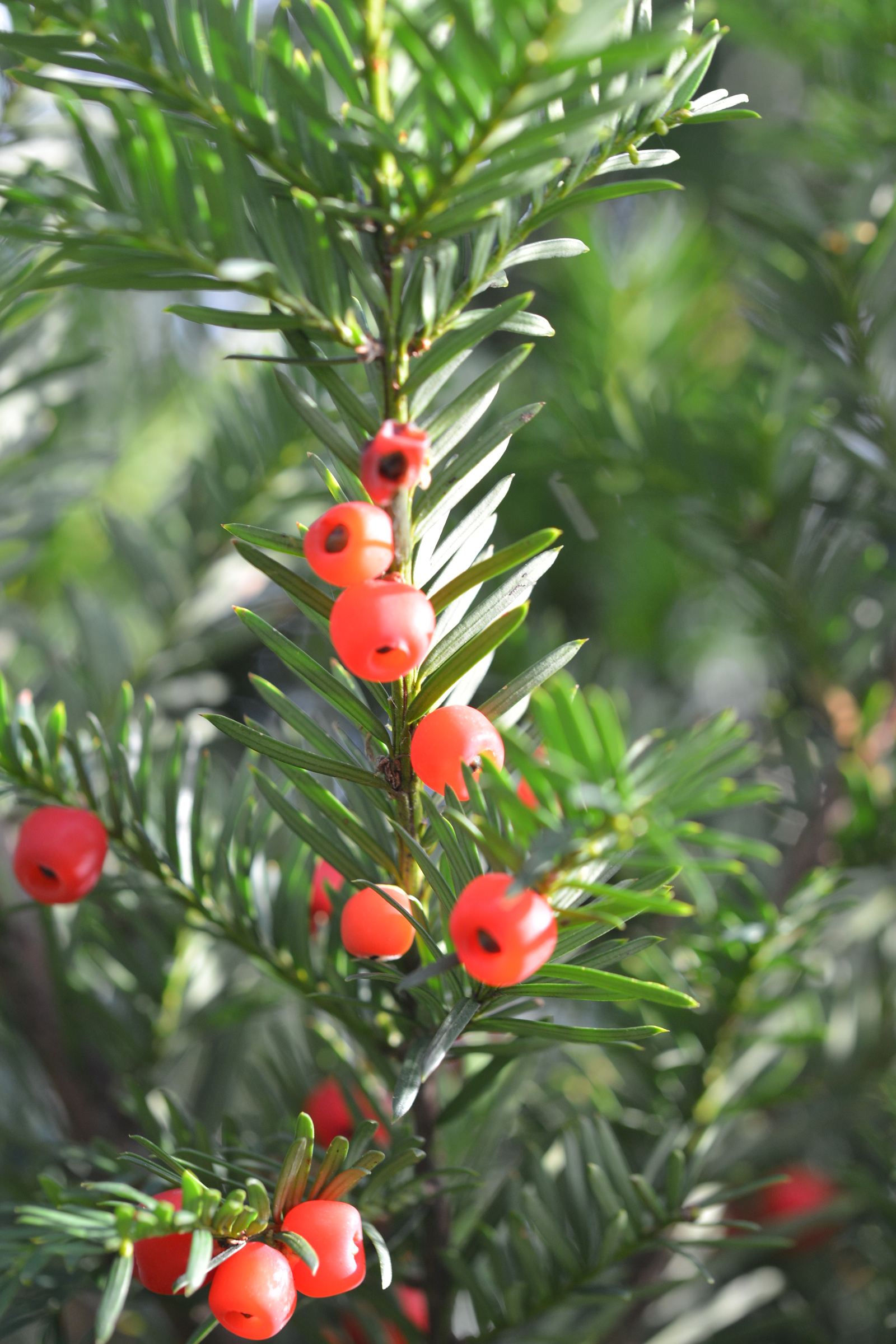
- UK Nursery Grown
- Planting Advice
English Yew Hedge Plants (Taxus baccata Hedging)
Taxus baccata
£2.20 per plant
English yew (Taxus baccata) forms a dense evergreen hedge with deep green foliage that stays attractive through winter. Its fine leaves and closely packed branches take well to precise clipping, making it particularly suited to formal boundaries, screening and topiary. It tolerates shade, regrows from old wood and develops a substantial hedge with patience.
- Dense, dark green evergreen foliage
- Tolerates shade and regrows from old wood
- Ideal for formal hedges and topiary
Step 1: Choose Your Root Type
Pot-grown plants, supplied in the pot size shown for each option. Plant at any time of year when the ground is workable. Ask about this plant
Understanding root types
- Bare root
- Lifted with little or no soil around the roots. Keep the roots moist and plant during the dormant season.
- Rootball
- Supplied with soil around the roots. Handle the rootball carefully and follow its planting instructions.
- Potted
- Grown in a nursery container. The pot size and supplied height are shown with each plant option.
Step 2: Choose Your Plant
Need help with your planting?Ask about sizes, root types and quantities
Position
Sun, partial shade or full shade
Soil
Well-drained soil; avoid waterlogged sites
Supplied size
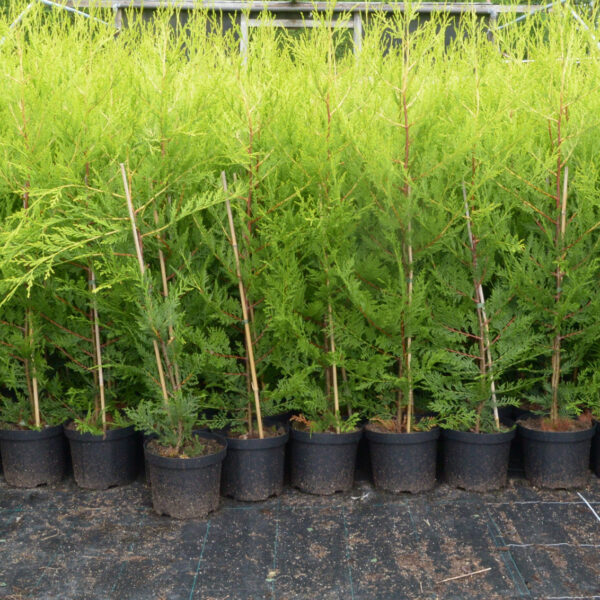
20-40cm, Potted
Ordering
Minimum order 10
Description
English Yew Hedge Plants (Taxus baccata Hedging)
What is an English yew hedge?
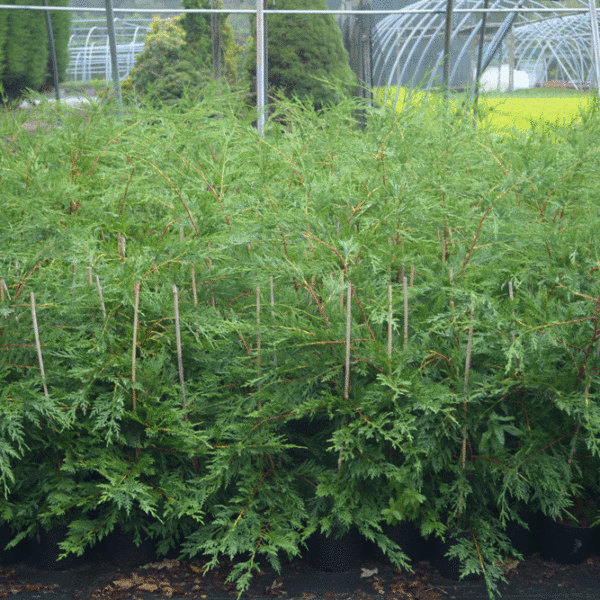
English yew (Taxus baccata) is a native evergreen conifer with narrow, dark green leaves and densely branching growth. Clipped into a garden hedge, its deep green foliage provides a striking backdrop to lawns, roses and flowering perennials. Keep it low and tightly trimmed around formal beds, grow it taller for screening, or shape individual plants into topiary cones and balls.
Yew grows in sun, partial shade and full shade, including north-facing gardens where light is limited. It needs well-drained soil, however, as its roots dislike prolonged waterlogging. Beneath established trees, the ground can be surprisingly dry, so check soil moisture regularly and water new plants while their roots establish.
Why choose an English yew hedge?
Unlike most hedging conifers, English yew can produce fresh shoots from old wood. This means an overgrown hedge can be reduced and reshaped gradually, although recovery takes time. Its small, closely spaced leaves allow a clean, precise finish after clipping, while the dense evergreen branches provide shelter from wind and a dark green boundary throughout winter.
Yew suits gardens where a carefully shaped boundary matters more than quick growth. It grows more slowly than laurel or Leylandii, gradually forming a fine-textured hedge with tightly packed foliage. Once established, a single annual trim is usually enough to maintain its shape.
Eventual height, spread and growth rate
An English yew hedge is usually kept between 1.2m and 3m tall. Left unpruned, Taxus baccata eventually becomes a large tree reaching 15m or more. A clipped hedge can be maintained at around 60cm to 1m wide, with the final width determined by planting space, age and regular trimming.
Growth rate is around 20cm to 30cm per year once the roots are established. Younger plants and those in heavier shade may grow more slowly for the first season or two. Watering during dry spells and applying a suitable feed in spring can help young plants develop healthy roots and steady new growth.
Using English yew in the garden
Plant English yew along pathways, around parterres or between garden spaces to create sharply defined green boundaries. Its dark foliage sets off pale flowers, ornamental grasses and colourful perennials. Individual plants also respond well to clipping into cones, balls and other topiary shapes, including specimens grown in large containers.
Along north-facing walls or beneath the canopy of established trees, yew can form a hedge where sunlight is scarce, provided the soil drains well and young plants receive enough water. Keep it away from grazing animals, as its foliage and seeds are highly poisonous if eaten.
Choosing a size
English yew is available in four sizes and root types, from 20-40cm potted plants to 80-100cm rootballs. Potted yew can be planted throughout the year when ground conditions are suitable. Bare root plants, supplied during the dormant season from roughly November to March, are economical for longer hedges. Rootball plants retain soil around their roots, usually wrapped in hessian, and offer greater height from the outset. Compare the sizes and suggested planting densities below.
| Option | Supplied size | Pot or root | Best for | Plants per metre |
|---|---|---|---|---|
| 20-40cm | Potted | 20-40cm | Potted | Starting a new hedge on a budget; planting outside winter | 4 to 5 |
| 40-60cm | Bare root | 40-60cm | Bare root | Economical planting of a longer hedge in dormant season | 3 to 4 |
| 60-80cm | Rootball | 60-80cm | Rootball | Taller plants for a more substantial new hedge | 2.5 to 3 |
| 80-100cm | Rootball | 80-100cm | Rootball | Greater initial height for formal boundaries | 2 to 2.5 |
Planting and care
Planting and aftercare
When and how to plant
Container-grown yew can be planted at any time the ground is not frozen or waterlogged. Bare root plants are planted during the dormant season, roughly November to March. Rootball plants are also best planted between autumn and early spring.
Prepare the planting strip by clearing weeds and improving drainage if needed. Dig a trench wide enough for the roots to spread. Set each plant at the same depth it was growing before, backfill firmly and water thoroughly. Keep the rootball or bare roots covered while you work so they do not dry out.
Spacing and quantities
Smaller yew plants generally need closer spacing to form a continuous hedge. Plant at the higher density if you want the branches to meet sooner, or allow slightly more room between plants if you can wait for the hedge to fill out. The table gives plant quantities for 5, 10 and 20 metre lengths.
| Hedge length | 20-40cm potted (4 per m) | 20-40cm potted (5 per m) | 40-60cm bare root (3 per m) | 40-60cm bare root (4 per m) | 60-80cm rootball (2.5 per m) | 60-80cm rootball (3 per m) | 80-100cm rootball (2 per m) | 80-100cm rootball (2.5 per m) |
|---|---|---|---|---|---|---|---|---|
| 5 metres | 20 | 25 | 15 | 20 | 13 | 15 | 10 | 13 |
| 10 metres | 40 | 50 | 30 | 40 | 25 | 30 | 20 | 25 |
| 20 metres | 80 | 100 | 60 | 80 | 50 | 60 | 40 | 50 |
Watering and feeding
Water new plants regularly during the first growing season, especially in dry spells. Check the soil a few centimetres down: it should feel damp but not saturated. Water deeply so moisture reaches the roots, adjusting the frequency to rainfall, soil conditions and temperature rather than following a fixed weekly schedule.
Feed in early spring with a general-purpose granular fertiliser or a slow-release hedge feed. A mulch of well-rotted compost or bark helps retain moisture and suppress weeds, but keep it clear of the stems.
Trimming calendar
Trim established English yew hedges once a year, in late summer or early autumn. Trimming at this time keeps the hedge tidy while allowing any remaining new growth to mature before winter. Start shaping young plants early, keeping the base slightly wider than the top so light reaches the lower branches.
Check for nesting birds before you cut. Yew can be cut back into older wood if needed, but recovery is slow. Regular light clipping is easier to manage than a major reduction.
Toxicity note
English yew is highly poisonous if eaten. Its foliage, bark and seeds contain toxic compounds; only the red, fleshy covering around the seed is non-toxic, and the seed itself remains dangerous. Avoid planting yew where horses, livestock or pets may browse the foliage. Collect and dispose of clippings safely, wear gloves when trimming and wash your hands afterwards.
Compare garden hedge types Understand potted and rootball plants Trimming established hedges
Read our planting guideFurther growing advice: RHS plant and growing guidance
Sizes and prices
English yew hedging sizes, prices and minimum orders
| Option | Supplied height | Pot or root | Plants | Price | Minimum order | Availability |
|---|---|---|---|---|---|---|
| 20-40cm | Potted | 1 plant | 20-40cm | Potted | 1 | £2.20 per plant | 10 | Available |
| 40-60cm | Bare root | 1 plant | 40-60cm | Bare root | 1 | £3.48 per plant | None | Unavailable |
| 60-80cm | Rootball | 1 plant | 60-80cm | Rootball | 1 | £25.00 per plant | None | Unavailable |
| 80-100cm | Rootball | 1 plant | 80-100cm | Rootball | 1 | £27.50 per plant | None | Unavailable |
The price is for the selected plant or pack. Pack size tells you how many plants are included, and the minimum order is the smallest quantity we can send.
Plant sizes and quantities explainedDelivery
Delivery for your plant order
Delivery options and charges are shown in your basket and confirmed before you place your order.
Plants are living products. Unpack promptly after delivery, check moisture around the roots and keep them in a sheltered spot until you can plant.
Delivery informationPlant questions
Before you order
How many 20-40cm English yew plants do I need per metre?
For the 20-40cm potted plants we recommend 4 to 5 per metre in a single row. Use 4 per metre if you are happy to wait a little longer for the hedge to knit together, or 5 per metre for a denser hedge more quickly. A staggered double row uses roughly 5 to 7 plants per metre.
How quickly will a yew hedge grow?
Once established, English yew grows around 20cm to 30cm per year. Growth is slower in the first year or two while the roots settle, and in deep shade it may be at the lower end of that range. Regular watering and an annual spring feed help maintain steady growth.
Which yew is best for a hedge?
English yew (Taxus baccata) is a reliable choice for formal hedging in UK gardens. Its dense branching and fine, dark green foliage produce a clean outline when clipped, and it can regrow from older wood if renovation is needed. Irish yew (Taxus baccata 'Fastigiata') grows naturally upright and narrow, making it more suitable for individual specimens or columns.
Do yew trees make a good hedge?
Yes. English yew is particularly good for formal hedges because its dense, fine foliage responds well to regular clipping. It stays green throughout winter, tolerates shade and can be maintained at heights from around 1m to 3m or more. Growth is slower than laurel or Leylandii, so allow more time for smaller plants to reach the height needed for privacy.
When to cut a yew hedge?
Cut an established yew hedge once a year, in late summer or early autumn (August to September). This gives new growth time to harden before winter. Light trimming of straggly shoots can be done in early summer if needed. Always check for nesting birds before you start.
Taxus baccata hedge spacing: how far apart?
Spacing depends on the plant size. For 20-40cm potted plants, set them 20cm to 25cm apart (4 to 5 per metre). For 40-60cm bare root plants, space 25cm to 33cm apart (3 to 4 per metre). For 60-80cm rootballs, allow 33cm to 40cm (2.5 to 3 per metre), and for 80-100cm rootballs, 40cm to 50cm (2 to 2.5 per metre).
Ask a plant question