× Cuprocyparis leylandii
£2.75 per plant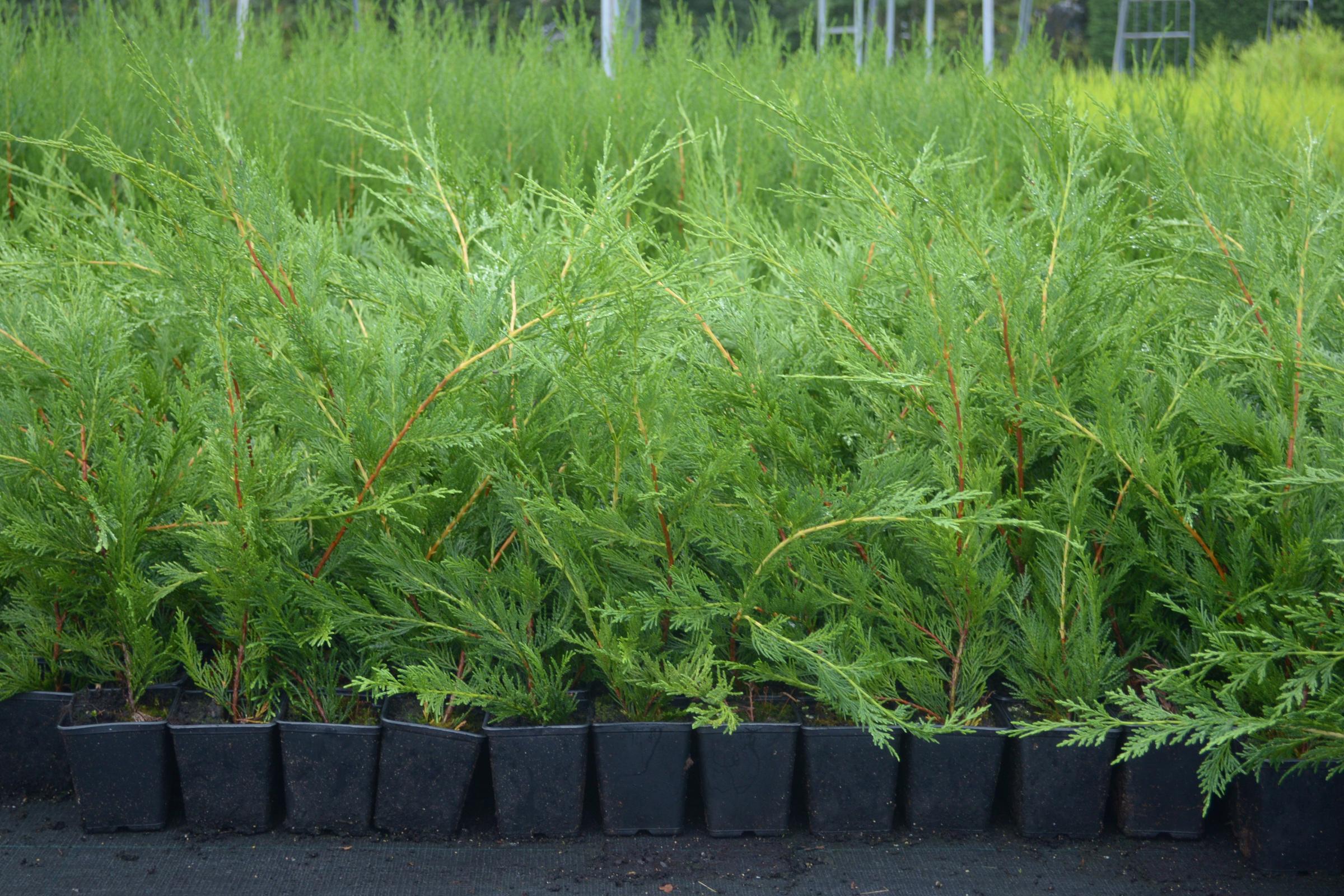
- UK Nursery Grown
- Planting Advice
Green Leylandii Hedge Plants: Pot Grown Conifer Hedging
× Cuprocyparis leylandii
£2.75 per plant
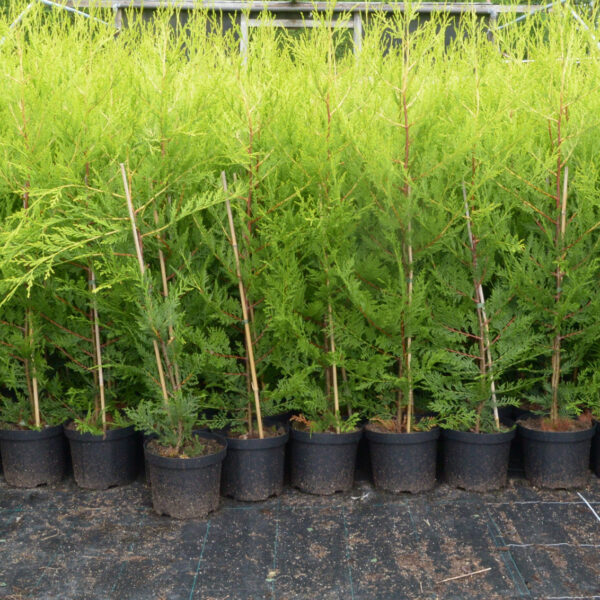
Green Leylandii hedge plants grow into a dense evergreen screen with soft sprays of dark green foliage. Pot grown plants can be planted throughout the year when conditions allow, provided you keep them well watered while they establish. Choose your starting height according to your budget and privacy needs, and plan for regular trimming to keep the hedge at a manageable size.
- Fast, dense evergreen screening
- Soft dark green foliage year-round
- Needs regular trimming to control
Step 1: Choose Your Root Type
Pot-grown plants, supplied in the pot size shown for each option. Plant at any time of year when the ground is workable. Ask about this plant
Understanding root types
- Bare root
- Lifted with little or no soil around the roots. Keep the roots moist and plant during the dormant season.
- Rootball
- Supplied with soil around the roots. Handle the rootball carefully and follow its planting instructions.
- Potted
- Grown in a nursery container. The pot size and supplied height are shown with each plant option.
Step 2: Choose Your Plant
Need help with your planting?Ask about sizes, root types and quantities
Position
Sun or partial shade
Soil
Well-drained soil; avoid waterlogging
Supplied size
40-60cm, 9cm pot
Ordering
Minimum order 10
Description
Green Leylandii Hedge Plants: Pot Grown Conifer Hedging
What is Green Leylandii?
Green Leylandii is a fast-growing evergreen conifer with dense, feathery sprays of dark green foliage. Planted in a row and clipped regularly, it forms a tall, thick hedge that provides privacy throughout the year. Without pruning, Leylandii can grow into a very large tree, so start shaping the sides while the plants are young to encourage bushy growth from the base.
Leylandii hedging plants are particularly useful along boundaries where a tall evergreen screen is needed. Their rapid growth does mean keeping on top of pruning. Allow enough space to reach both sides of the hedge, and expect to trim established plants two or three times during the growing season to maintain their shape and keep the foliage thick.
Why choose pot grown Leylandii?
Pot grown Green Leylandii plants arrive with their roots contained in compost, so there is less root disturbance when planting. They can go into the ground throughout the year, provided the soil is neither frozen nor waterlogged and you can water them during dry weather. Bare root Leylandii, by comparison, is generally planted during the dormant season, roughly November to March.
The larger plants in 5 litre pots, available at 120-150cm and 150cm, give your new hedge a taller starting point, although the plants will still need time to grow together into a continuous screen. The 9cm and 2 litre pot options suit a smaller initial budget. All sizes need careful watering during dry spells while their roots establish in the surrounding soil.
Eventual height, spread and growth rate
With regular clipping, a Leylandii hedge can be kept at 2m to 4m tall, although unpruned trees can eventually exceed 30m. A managed hedge may have a spread of 2m to 4m, depending on how it is trained and maintained. Once established, Leylandii can put on 60 to 90cm of growth a year in favourable conditions, with the actual rate affected by soil, light and moisture.
Keep your cuts within the green foliage as the hedge develops, rather than allowing it to become too wide before pruning. Old, brown, leafless wood rarely produces fresh shoots, which makes a neglected Leylandii hedge difficult to narrow. Regular light trimming from an early age gives you much better control over its eventual shape.
Using Leylandii in the garden
Green Leylandii hedging plants are commonly used for tall boundary screens and shelter from prevailing winds. Their dense foliage can also help soften some garden noise, although it will not provide soundproofing. They are better suited to gardens with room for their mature width and access for pruning. Consider where the hedge will cast shade, as its roots can also leave the surrounding soil drier.
Avoid planting Leylandii in a narrow gap beside a path if you cannot leave room for its growth and future trimming. A boundary with access from only one side can also become difficult to maintain. For a similar conifer hedge with a warmer foliage colour, Castlewellan Gold has golden-green growth, although it needs regular clipping too.
Choosing a size
Pot grown Green Leylandii is available in five sizes, from 40-60cm plants in 9cm pots to 150cm plants in 5 litre pots. Smaller plants cost less to start with, while taller ones give the hedge more height from planting. Compare the sizes and suggested spacing below.
Each option is listed as one plant, so calculate the number you need from your hedge length and planting distance. Check any minimum order requirements shown for your chosen size before placing an order.
| Option | Supplied size | Pot | Best for | Plants per metre |
|---|---|---|---|---|
| 40-60cm | 40 to 60cm | 9cm pot | Economical new hedging | 2 to 3 |
| 60-90cm | 60 to 90cm | 2 litre pot | Mid-sized plants for a new screen | 2 to 3 |
| 90-120cm | 90 to 120cm | 2 litre pot | Taller start for privacy hedging | 2 to 2.5 |
| 120-150cm | 120 to 150cm | 5 litre pot | Extra height from planting | 1.5 to 2 |
| 150cm | 150cm | 5 litre pot | Tallest starting height | 1.5 to 2 |
Planting and care
Planting and aftercare
When and how to plant
You can plant pot grown Leylandii throughout the year when the ground is workable, although spring and early autumn usually offer good conditions for root establishment. Avoid frozen or waterlogged soil, and be prepared to water regularly if planting during hot, dry weather. Clear grass and weeds from the planting line, then dig a trench wide enough to accommodate the rootballs without crowding them.
Give each pot a thorough watering before removing the plant. Position the rootball so its surface sits level with the surrounding soil, backfill and firm gently to remove large air pockets. Water the planting line well, then check soil moisture regularly throughout the first growing season. A slow, thorough soaking is more useful than frequent light sprinkling.
Spacing and quantities
For a dense hedge, space plants 40 to 50cm apart in a single row. If you want a thicker screen, plant a staggered double row with the same spacing between plants and 40cm between rows. The table below shows how many plants you need for common hedge lengths.
Planting closer together helps neighbouring branches meet sooner, although you will need more plants for the same length of hedge. Wider spacing reduces the initial number required but leaves larger gaps to fill as the Leylandii grows. Keep the spacing reasonably consistent along the row for even coverage.
| Hedge length | Plants needed (single row at 3 per metre) | Plants needed (double row at 5 per metre) |
|---|---|---|
| 5 metres | 15 | 25 |
| 10 metres | 30 | 50 |
| 20 metres | 60 | 100 |
Watering and feeding
Newly planted Leylandii needs regular watering until its roots have spread into the surrounding soil. During dry weather, check the soil every few days and water thoroughly if the top few centimetres feel dry. Spread bark mulch or compost over the root area to slow moisture loss and reduce weed growth, leaving a clear gap around each stem.
In early spring, apply a general-purpose granular fertiliser around the root area, following the manufacturer's application rate, and water it into the soil. Avoid applying fertiliser after late summer, when encouraging fresh, soft growth could leave the plants more vulnerable to early frost damage.
Trimming calendar
Plan Leylandii trimming between April and the end of August, adjusting the frequency to suit its growth. Established hedges may need two or three cuts across the season. Keep the sides gently sloping inwards towards the top, leaving the base slightly wider so daylight can reach the lower foliage.
Keep the trimmer within the leafy green growth, as bare brown branches rarely produce new shoots. Before cutting, check carefully for nesting birds. If you find an active nest, leave that area untouched until the young birds have fledged. Damaging or destroying a nest while it is in use or being built is an offence.
Trimming calendar
Trim between April and the end of August, as growth requires. An established leylandii hedge can need two or three cuts in that period. Keep the sides slightly tapered so the base is wider than the top, which allows light to reach the lower branches.
Always cut within green growth; cutting into bare brown wood rarely regrows. Check for active bird nests before each trim, as it is an offence to disturb nesting birds.
Choose and maintain conifer hedging Plan a garden privacy hedge When and how to trim hedges Compare hedge sizes
Read our planting guideFurther growing advice: RHS plant and growing guidance
Sizes and prices
Green Leylandii, pot grown sizes, prices and minimum orders
| Option | Supplied height | Pot or root | Plants | Price | Minimum order | Availability |
|---|---|---|---|---|---|---|
| 40-60cm | 9cm pot | 1 plant | 40-60cm | 9cm pot | 1 | £2.75 per plant | 10 | Available |
| 60-90cm | 2 litre pot | 1 plant | 60-90cm | 2 litre pot | 1 | £6.49 per plant | 5 | Available |
| 90-120cm | 2 litre pot | 1 plant | 90-120cm | 2 litre pot | 1 | £7.99 per plant | 5 | Available |
| 120-150cm | 5 litre pot | 1 plant | 120-150cm | 5 litre pot | 1 | £17.99 per plant | 10 | Unavailable |
| 150cm | 5 litre pot | 1 plant | 150cm | 5 litre pot | 1 | £19.99 per plant | 10 | Unavailable |
The price is for the selected plant or pack. Pack size tells you how many plants are included, and the minimum order is the smallest quantity we can send.
Plant sizes and quantities explainedDelivery
Delivery for your plant order
Delivery options and charges are shown in your basket and confirmed before you place your order.
Plants are living products. Unpack promptly after delivery, check moisture around the roots and keep them in a sheltered spot until you can plant.
Delivery informationPlant questions
Before you order
How many 40-60cm green leylandii plants do I need per metre?
For 40 to 60cm plants, space 2 to 3 per metre in a single row. If you want a thicker hedge, plant a staggered double row with the same spacing between plants and about 40cm between rows. Over time, the branches will meet and fill the gaps, with regular side trimming helping the hedge develop dense foliage.
How long does a Leylandii hedge take to grow?
Once established, Leylandii can grow around 60 to 90cm a year in favourable conditions. Starting with 90 to 120cm plants, a hedge may reach 2m within two to three growing seasons, although growth depends on the soil, weather and aftercare. Smaller plants begin at a lower height and generally take longer to reach the same level of screening.
What are the disadvantages of Leylandii trees?
Leylandii grows quickly, so expect to trim an established hedge two or three times a year to control its height and width. If you leave it untrimmed for several years, reducing the sides can be difficult because old brown wood rarely produces new green growth. Tall hedges also cast considerable shade, and their roots compete with nearby plants for soil moisture.
Is it illegal to plant a Leylandii hedge?
No, planting a Leylandii hedge is legal. In England and Wales, however, the Anti-social Behaviour Act 2003 allows councils to consider complaints about hedges formed mainly from two or more evergreen or semi-evergreen trees or shrubs, where they exceed 2m and affect a neighbour's reasonable enjoyment of their home or garden. A hedge over 2m is not automatically unlawful. Agreeing a sensible height with neighbours and keeping growth under control can help prevent disputes.
When to trim Leylandii?
April to the end of August is the usual trimming period for Leylandii. Established hedges may need two or three cuts during these months, depending on how quickly they grow. Leave the sides slightly wider at the base and avoid cutting into bare brown wood. Check for active bird nests before starting and postpone any work that could damage or disturb them.
Will Leylandii grow in shade?
Leylandii grows best in full sun and can also do well in partial shade. In heavily shaded positions, the branches may become thinner and growth less vigorous, particularly near the base. For a thick, evenly covered hedge, choose a position with several hours of direct sunlight where possible.
Ask a plant question