× Cuprocyparis leylandii
£2.95 per plant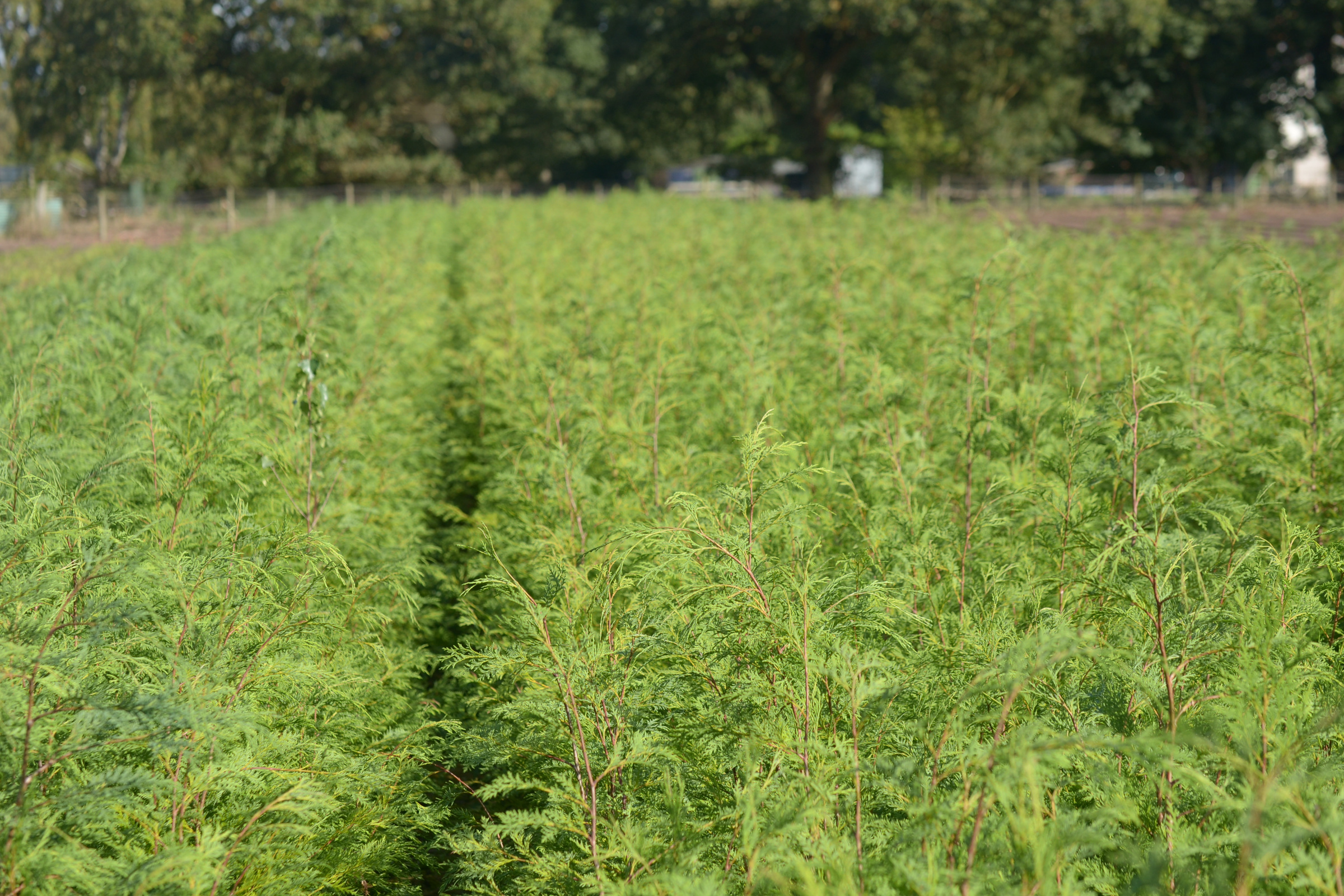
- UK Nursery Grown
- Planting Advice
Cheap Leylandii Hedging, Grade B Bare Root Plants
× Cuprocyparis leylandii
£2.95 per plant
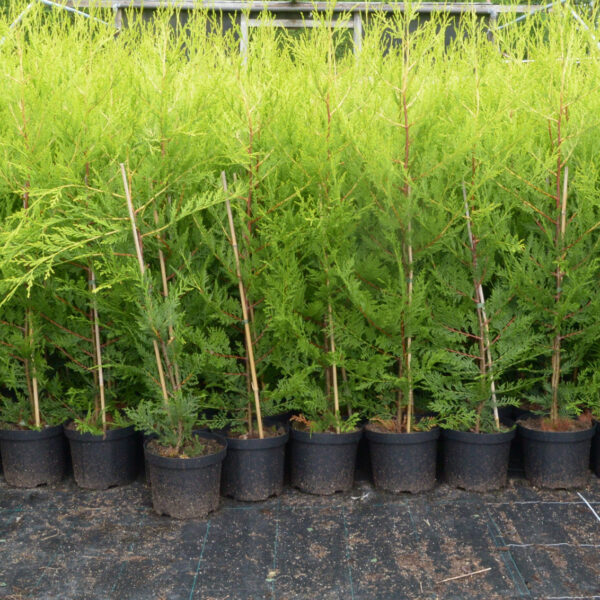
Grade B Green Leylandii bare root plants are a lower-cost option for growing a tall evergreen hedge. They may have uneven branching, an irregular shape or thinner foliage near the base, but they are healthy plants with the same vigorous growth habit as standard Leylandii. Regular trimming, watering and good soil preparation help the branches thicken over time, gradually creating a dense screen for privacy.
- Lower-cost plants for fast-growing hedges
- Healthy plants with uneven branching or thinner foliage
- Trim regularly for a dense hedge
Step 1: Choose Your Root Type
Bare-root plants are lifted and sent in the dormant season, roughly November to March. Plant promptly and keep the roots moist. Ask about this plant
Understanding root types
- Bare root
- Lifted with little or no soil around the roots. Keep the roots moist and plant during the dormant season.
- Rootball
- Supplied with soil around the roots. Handle the rootball carefully and follow its planting instructions.
- Potted
- Grown in a nursery container. The pot size and supplied height are shown with each plant option.
Step 2: Choose Your Plant
Need help with your planting?Ask about sizes, root types and quantities
Position
Sun or partial shade
Soil
Well-drained soil; avoid waterlogged ground
Supplied size
80-100cm, Bare root
Ordering
Minimum order 10
Description
Cheap Leylandii Hedging, Grade B Bare Root Plants
What is cheap Leylandii hedging, grade B?
Green Leylandii grows quickly and is widely used for tall evergreen boundary hedges. Grade B bare root plants have the same vigorous growth habit as standard × Cuprocyparis leylandii, but are sold at a lower grade because their shape or foliage density is less uniform. Some have uneven branches, an irregular outline or noticeably thinner growth around the base. These differences affect their appearance when planted, rather than indicating poor plant health.
For a long boundary where the plants will have time to grow together, grade B Leylandii can help keep planting costs down. Prepare the soil well, water during dry spells and trim the sides regularly to encourage branching. The thinner areas can gradually fill with new green growth, although the time this takes depends on growing conditions and how evenly the plants establish.
Why choose grade B Leylandii for a cheap, fast-growing hedge?
Grade B Leylandii bare roots are particularly useful for longer hedges where the cost of each plant adds up. Once established, Leylandii can produce 60 to 90cm of new growth in a year under favourable conditions. Its evergreen branches provide screening throughout the seasons. Grade B plants are less uniform when supplied, so the young hedge may initially have an uneven outline and patches of thinner foliage.
Early shaping helps the young hedge develop evenly. Lightly trim the sides during the first growing season once the plants are established enough to produce fresh growth, encouraging shoots to branch lower down. Leave the main leading stem to grow until the hedge approaches your intended height. With regular side trimming, thinner areas can become less noticeable over two to three growing seasons, though results depend on the plants and their growing conditions.
Eventual height, spread and growth rate
Green Leylandii is a vigorous conifer that can reach an eventual height of over 20 metres if left unpruned, but as a managed hedge it is normally kept between 2 and 5 metres tall. The spread of a single plant can exceed 5 metres, though a trimmed hedge is usually maintained at 1 to 1.5 metres wide. Growth may slow in poor soil or dry shade. Once established, Leylandii can produce 60 to 90cm of new growth annually in favourable conditions, although individual plants will vary.
Using cheap Leylandii hedging in your garden
Leylandii is best suited to medium and larger gardens where you need a tall screen fairly quickly and can commit to trimming it two or three times a year. Its dense evergreen foliage can provide shelter from wind, soften some background noise and screen overlooking windows or neighbouring gardens. Because it casts dense shade and draws moisture from the soil, avoid planting it right next to flower borders or vegetable beds unless you are prepared to manage the competition.
Leylandii needs space for its roots and regular access for clipping, so think carefully before planting it beside a narrow path or in a confined corner. A slower-growing hedge may be easier to manage where space is limited. For a lighter foliage colour, Castlewellan Gold (golden Leylandii) has yellow-green growth and can also be maintained as an evergreen boundary hedge.
Choosing grade B bare root Leylandii
Grade B Green Leylandii is available in the 80-100cm bare root size. These plants are suitable for establishing a new evergreen hedge without the higher initial cost of larger potted stock. Bare root plants are normally lifted and supplied during the dormant season, roughly November to March, and should be planted promptly once received.
At 80-100cm tall, these plants already have some height, although their branching may be uneven. Allow space for the roots to establish and for the sides to develop as the plants grow together. For a longer boundary, calculate the number needed from your chosen spacing before ordering.
| Option | Supplied size | Root type | Best for | Plants per metre (single row) |
|---|---|---|---|---|
| 80-100cm | 80-100cm | Bare root | Budget planting, long runs | 2 to 3 |
Planting and care
Planting and aftercare
When and how to plant bare root Leylandii
Plant bare root Leylandii during the dormant season, from November to March, while the plants are not in active growth. Choose a day when the ground is not frozen or waterlogged. Before the plants arrive, clear the planting strip of weeds and grass and dig over the soil, mixing in some well-rotted organic matter if the ground is heavy or sandy.
On planting day, keep the roots wrapped and protected from wind and sun. Soak the roots in a bucket of water for an hour or two before setting them out. Dig a trench wide enough to spread the roots comfortably and set each plant at the same depth it was growing in the nursery, shown by the soil mark on the stem. Firm the soil gently, water thoroughly and mulch with bark or compost to hold moisture.
Spacing and how many plants you need
For a dense Leylandii hedge, space plants 45 to 60cm apart in a single row. If you want a thicker screen more quickly, plant a staggered double row with 60 to 75cm between plants and 45cm between the rows. The table below gives the number of plants needed for common hedge lengths at 50cm spacing.
Plants set further apart need longer to join up, while closer planting uses more plants along the same boundary. Spacing grade B Leylandii at around 50cm gives the side branches room to develop while keeping the young plants close enough to grow together. Keep the row straight and allow enough width for future trimming.
| Hedge length | Plants needed (single row at 50cm spacing) |
|---|---|
| 5 metres | 10 |
| 10 metres | 20 |
| 20 metres | 40 |
Watering and feeding
Newly planted bare root Leylandii need consistent moisture during their first growing season. Water deeply once or twice a week in dry weather rather than giving a light daily sprinkle. Keep the root zone moist but not soggy, as waterlogged soil can cause root rot. A mulch layer helps reduce evaporation and keeps weeds down.
Feed in early spring with a general-purpose granular fertiliser or a conifer feed, following the packet instructions. Avoid high-nitrogen feeds late in the season, which can produce soft growth vulnerable to frost. Established hedges benefit from an annual mulch of well-rotted compost or manure spread along the root zone.
Trimming calendar
Trim Leylandii between April and late August, staying within the green foliage. Never cut back into old brown wood, as it rarely regrows. Aim to trim two or three times a year, taking off a few centimetres of new growth each time to build density. The first trim can be in late spring once the risk of hard frost has passed, with a second cut in midsummer and a final light trim in late August.
Check for nesting birds before every cut: it is an offence to disturb active nests. Keep the hedge slightly wider at the base than the top so that light reaches the lower branches, helping grade B plants to fill out evenly from the ground up.
Choose and maintain conifer hedging Plan a garden privacy hedge When and how to trim hedges Compare hedge sizes
Read our planting guideFurther growing advice: RHS plant and growing guidance
Sizes and prices
Green Leylandii, grade B sizes, prices and minimum orders
| Option | Supplied height | Pot or root | Plants | Price | Minimum order | Availability |
|---|---|---|---|---|---|---|
| 80-100cm | Bare root | 1 plant | 80-100cm | Bare root | 1 | £2.95 per plant | 10 | Unavailable |
The price is for the selected plant or pack. Pack size tells you how many plants are included, and the minimum order is the smallest quantity we can send.
Plant sizes and quantities explainedDelivery
Delivery for your plant order
Delivery options and charges are shown in your basket and confirmed before you place your order.
Plants are living products. Unpack promptly after delivery, check moisture around the roots and keep them in a sheltered spot until you can plant.
Delivery informationPlant questions
Before you order
What does grade B mean for a Leylandii hedging plant?
Grade B Leylandii plants are healthy but do not have the consistently even shape and dense branching associated with grade A stock. Some have thinner foliage near the base, irregular side branches or a less symmetrical outline. These differences are mainly cosmetic. With suitable soil, watering during establishment and regular side trimming, the plants can develop fuller growth. Uneven areas often become less noticeable as the hedge matures, although this can take several growing seasons.
How many 80-100cm grade B Leylandii plants do I need per metre?
For an 80-100cm grade B Leylandii hedge, plant 2 to 3 bare root plants per metre in a single row. Spacing them at 50cm intervals (2 per metre) is a common choice that balances cost and speed of fill. If you want a denser screen more quickly, use 3 plants per metre or plant a staggered double row. Wider spacing reduces the initial outlay but takes longer to close up.
Will grade B Leylandii plants fill out into a full hedge?
Grade B Leylandii can grow into a dense evergreen hedge, although some plants will take longer to fill out than others. The thinner branching or uneven shape visible at planting does not necessarily affect their long-term growth. Lightly trimming the sides encourages new shoots, while keeping the roots watered during dry weather supports establishment. Over two to three growing seasons, neighbouring plants may begin to knit together, with the final density depending on growing conditions and ongoing care.
When should you plant bare root Leylandii hedging?
Bare root Leylandii should be planted during the dormant season, roughly from November to March. The ground must be workable and not frozen or waterlogged. Planting during dormancy allows the roots to begin establishing before the stronger growth of spring. If you receive plants and conditions are unsuitable, heel them into a temporary trench or keep the roots covered and moist until you can plant.
Will Leylandii grow back after cutting into brown wood?
Leylandii does not reliably regrow from old brown wood. Once you cut past the green foliage into leafless inner branches, those areas usually stay bare. Regular light clipping of the green outer growth helps maintain the hedge without exposing bare inner branches. If a hedge has become overgrown, you may be able to reduce its height slightly by cutting to just above green shoots, but a hard renovation into brown wood is likely to leave permanent gaps.
What are the cheapest and fastest growing hedges?
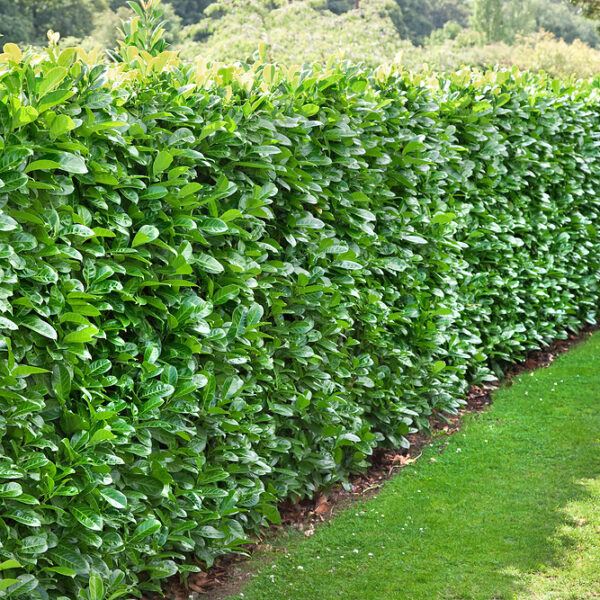
Green Leylandii is a fast-growing option for an evergreen hedge, with grade B bare root plants offering a lower-cost starting point. In favourable conditions, established Leylandii can grow 60 to 90cm in a year. Cherry laurel is another vigorous evergreen option, with broad, glossy leaves, while privet can make a neatly clipped hedge but may lose some foliage in colder winters. Leylandii is particularly useful where height and year-round screening matter, provided you have room for regular trimming.
Ask a plant question