× Cuprocyparis leylandii 'Castlewellan'
£2.49 per plant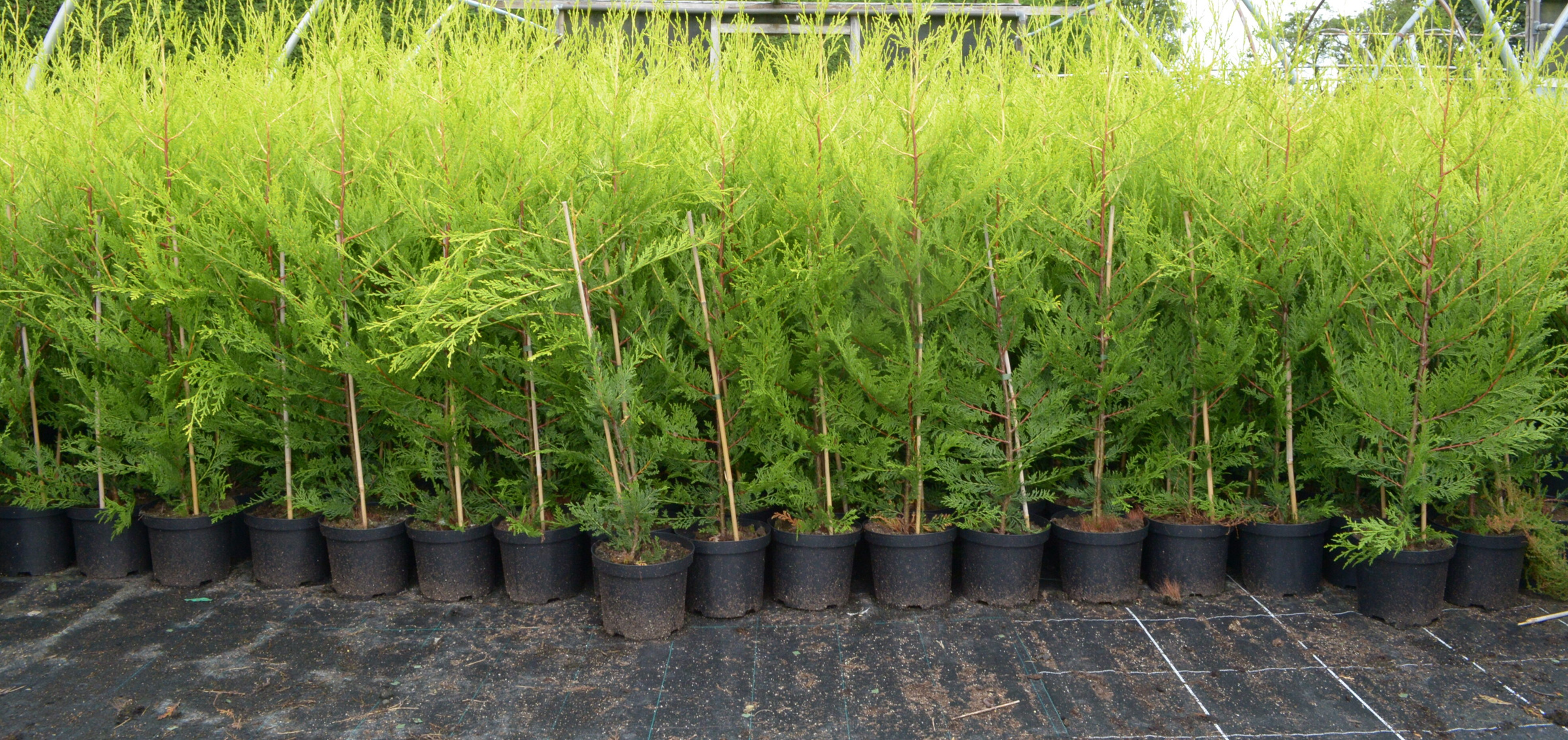
- UK Nursery Grown
- Planting Advice
Golden Leylandii (Castlewellan Gold) Hedge Plants
× Cuprocyparis leylandii 'Castlewellan'
£2.49 per plant
Castlewellan Gold is a fast-growing golden Leylandii with bright yellow-green foliage and dense evergreen growth. It makes a useful boundary screen where there is room for regular clipping. The golden colour is strongest in full sun, becoming softer and more lime-green in shade. Its fresh colouring brings warmth to a garden throughout the year.
- Bright golden-yellow evergreen foliage
- Dense evergreen growth for boundary screening
- Best colour in full sun
Step 1: Choose Your Root Type
Pot-grown plants, supplied in the pot size shown for each option. Plant at any time of year when the ground is workable. Ask about this plant
Understanding root types
- Bare root
- Lifted with little or no soil around the roots. Keep the roots moist and plant during the dormant season.
- Rootball
- Supplied with soil around the roots. Handle the rootball carefully and follow its planting instructions.
- Potted
- Grown in a nursery container. The pot size and supplied height are shown with each plant option.
Step 2: Choose Your Plant
Need help with your planting?Ask about sizes, root types and quantities
Position
Sun or partial shade
Soil
Well-drained soil
Supplied size
30-60cm, 9cm pot
Ordering
Minimum order 10
Description
Golden Leylandii (Castlewellan Gold) Hedge Plants
What is golden Leylandii?
Golden Leylandii, or Castlewellan Gold, is a vigorous evergreen conifer known botanically as × Cuprocyparis leylandii 'Castlewellan'. Its fine, scale-like foliage grows in flattened sprays, with fresh shoots opening yellow-gold before settling into softer lime-gold shades. New growth catches the light particularly well, especially in a sunny position. In partial shade, expect a gentler yellow-green colour rather than the richer gold of plants grown in full sun.
Like green Leylandii, Castlewellan Gold grows into a large tree if left alone, so regular clipping is essential when growing it as a hedge. Its closely packed branches and evergreen foliage provide screening throughout the year. Small cones may develop, although they have little visual impact on the hedge. In colder weather, the foliage can take on faint bronze tones before fresh golden growth returns in spring.
Why choose Castlewellan Gold for a hedge?
Castlewellan Gold provides the dense screening associated with green Leylandii, but its yellow-gold foliage brings a brighter edge to lawns, fences and darker planting. The fine, flattened sprays give the hedge a softer appearance than many other conifers. Its naturally upright growth also makes it suitable for a neatly shaped boundary, provided the sides are clipped two or three times a year to control the width.
Regular cutting is part of growing any Leylandii hedge. Without it, Castlewellan Gold can soon become much taller and wider than intended. Light trimming through the growing season keeps the branches compact and the outline tidy, while the golden evergreen foliage continues to brighten the boundary during winter.
Eventual height, spread and growth rate
Castlewellan Gold is commonly maintained as a hedge between 2m and 4m tall and 1m to 1.5m wide. Left to grow as a tree, it can reach 15m or more. Once established, annual growth can reach 60cm to 90cm in favourable conditions, although shade and poorer soils may slow it down. There is no natural stopping height, so plan your trimming routine around the height and width you want to maintain.
Using golden Leylandii in the garden
Castlewellan Gold suits garden boundaries where a tall evergreen screen is needed and both sides can be reached for clipping. In larger gardens, a well-established hedge can also help shelter planting from the wind. Allow for the shade it may cast as it grows, particularly near flower borders. Its golden foliage looks striking beside purple-leaved shrubs, while French lavender with its grey-green leaves and purple flowers makes an attractive contrast in sunny beds nearby.
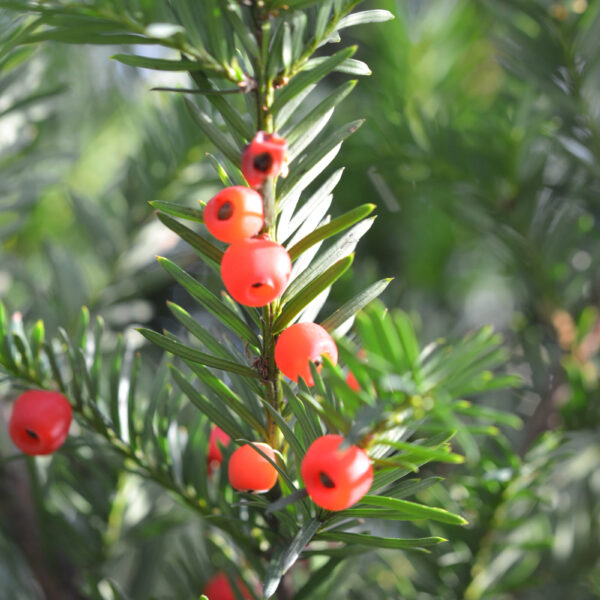
Very small gardens and narrow front boundaries can be difficult places for Leylandii, particularly when there is little room to reach the sides for trimming. English yew is a slower-growing evergreen alternative if frequent clipping would be difficult, although its foliage is dark green rather than golden and it takes longer to reach screening height.
Choosing a size: Castlewellan Gold options
Castlewellan Gold is available in three sizes: 30-60cm plants in 9cm pots, plus 60-90cm and 90-120cm plants in 2 litre pots. All can be planted whenever the ground is workable and conditions are suitable. The smaller plants are useful for longer hedge runs, giving you the chance to shape the sides as they develop. Larger plants provide more height from the outset, although the branches still need time to grow together. Allow a growing season or two for the hedge to begin forming a fuller screen.
All sizes are single plants. The minimum order is 10 plants for the 30-60cm size and 5 plants for the two larger sizes. Prices are per plant.
| Option | Supplied size | Pot type | Best for | Plants per metre |
|---|---|---|---|---|
| 30-60cm | 30-60cm tall | 9cm pot | Long hedge runs, early shaping | 2 to 3 |
| 60-90cm | 60-90cm tall | 2 litre pot | Mid-height starts, quicker fill | 2 to 3 |
| 90-120cm | 90-120cm tall | 2 litre pot | Taller starting hedge, earlier coverage | 2 |
Planting and care
Planting and aftercare
When and how to plant golden Leylandii
Pot-grown Castlewellan Gold can be planted all year round, provided the ground is not frozen or waterlogged. The best times are early autumn or mid-spring, when the soil is warm and moist. Water each pot thoroughly before planting. Dig a trench or individual holes wide enough for the rootball, set the plant at the same depth it was in the pot, backfill with the dug soil and firm gently. Water well after planting.
If you are planting a long hedge, clear a strip at least 60cm wide of weeds and grass first. This removes competition for water and nutrients while the roots establish. A mulch of bark or compost after planting helps hold moisture, but keep it clear of the stems.
Spacing and how many plants you need
For a single row, space Castlewellan Gold plants 50cm apart, allowing 2 plants per metre. To establish a thicker screen sooner, use a staggered double row with 60cm between the rows and 70cm between plants along each row. This takes roughly 3 plants per metre of hedge length. The quantities below are based on a single row at 50cm spacing.
You can space plants up to 75cm apart, although the branches will take longer to meet and form a continuous hedge, potentially an extra year or two. For a dense Leylandii screen, 50cm spacing is the usual choice.
| Hedge length | Plants needed (single row, 2 per metre) |
|---|---|
| 5 metres | 10 plants |
| 10 metres | 20 plants |
| 20 metres | 40 plants |
Watering and feeding
Keep the soil around newly planted Castlewellan Gold consistently moist during its first growing season, paying particular attention during dry spells. A thorough soak once or twice a week is generally more useful than a light daily sprinkle, adjusting the amount to suit the weather and soil. Check moisture around the rootball even after rain, as dense conifer foliage can divert water away from the base. Established hedges cope better with occasional dry periods but may still need a deep watering during prolonged hot weather.
Feed in early spring with a general-purpose granular fertiliser such as Growmore or a controlled-release conifer feed. Scatter it along the root zone and water it in. Avoid high-nitrogen feeds late in the season, as soft late growth can be caught by frost.
Trimming calendar and technique
Golden Leylandii is best trimmed from April to late August, usually with two or three light cuts during the growing season. Once the spring shoots have lengthened, lightly clip the sides to maintain the shape, followed by another cut in mid-summer. A final tidy-up in late August can deal with any uneven growth. Avoid trimming after August, when fresh shoots may be vulnerable to early frosts.
Always cut within the green foliage. If you cut back into bare brown wood, it is unlikely to regrow and you will be left with permanent gaps. Keep the sides slightly tapered so the base is wider than the top: this lets light reach the lower branches and stops the bottom thinning out. Check for nesting birds before every cut, as it is an offence to disturb active nests.
Common concerns with Leylandii hedges
Leylandii can become a source of neighbour disputes when hedges grow too tall or wide, particularly if they block light from adjoining gardens. Keeping Castlewellan Gold at a planned height with two or three light trims each year helps prevent it becoming overgrown. Planting Leylandii is legal, but Part 8 of the Anti-social Behaviour Act 2003 allows councils in England to consider complaints about certain high hedges. A hedge of two or more mostly evergreen or semi-evergreen trees or shrubs, standing over 2m tall and affecting a neighbour's reasonable enjoyment of their home or garden, may fall within these rules. A height above 2m does not automatically mean a hedge must be reduced.
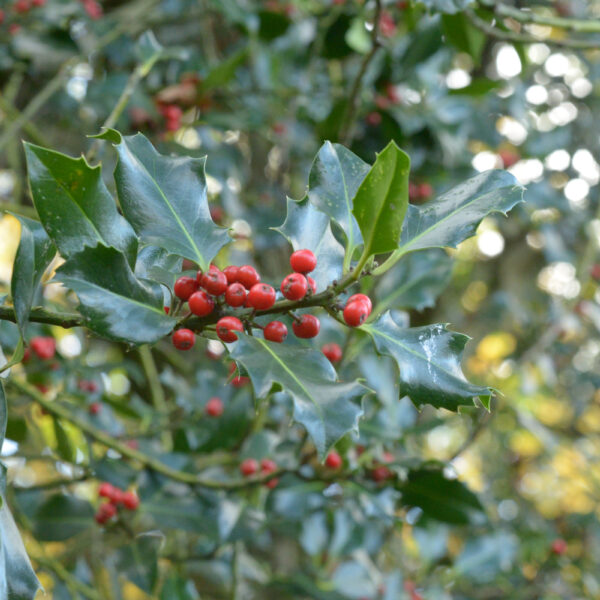
The two main practical concerns are the frequent trimming and the risk of permanent bare patches if you cut into old brown wood. Leave enough room to work safely along both sides and reach the top as the hedge matures. Where access is restricted, slower-growing English yew or English holly hedging may be easier to maintain.
Does golden Leylandii keep its colour in shade?
Castlewellan Gold holds a yellow-green colour in partial shade, but the intensity of the gold is reduced. In full shade the foliage will be closer to lime-green and the growth rate may slow. For the brightest golden display, plant it where it receives at least half a day of direct sun. A north-facing boundary that gets little direct light is better suited to green Leylandii or a shade-tolerant evergreen such as cherry laurel.
Compare green and golden conifers Keep a conifer hedge in shape Planting a new hedge
Read our planting guideFurther growing advice: RHS plant and growing guidance
Sizes and prices
Castlewellan Gold (golden Leylandii) sizes, prices and minimum orders
| Option | Supplied height | Pot or root | Plants | Price | Minimum order | Availability |
|---|---|---|---|---|---|---|
| 30-60cm | 9cm pot | 1 plant | 30-60cm | 9cm pot | 1 | £2.49 per plant | 10 | Available |
| 60-90cm | 2 litre pot | 1 plant | 60-90cm | 2 litre pot | 1 | £7.50 per plant | 5 | Available |
| 90-120cm | 2 litre pot | 1 plant | 90-120cm | 2 litre pot | 1 | £8.50 per plant | 5 | Available |
The price is for the selected plant or pack. Pack size tells you how many plants are included, and the minimum order is the smallest quantity we can send.
Plant sizes and quantities explainedDelivery
Delivery for your plant order
Delivery options and charges are shown in your basket and confirmed before you place your order.
Plants are living products. Unpack promptly after delivery, check moisture around the roots and keep them in a sheltered spot until you can plant.
Delivery informationPlant questions
Before you order
How many 30-60cm Castlewellan Gold plants do I need per metre?
For 30-60cm Castlewellan Gold plants, allow 2 plants per metre in a single row, spaced 50cm apart. This is the usual spacing for a dense Leylandii hedge. If you would like the branches to meet sooner, use roughly 3 plants per metre in a staggered double row. Starting with smaller plants also gives you more control over the hedge's shape as the branches develop.
What are the disadvantages of Leylandii?
Leylandii grows quickly and needs regular trimming to prevent it becoming too tall or wide. Cutting into old brown wood is another concern, as bare branches are unlikely to produce fresh green growth. You will also need room to clip both sides and the top safely, which can be difficult along narrow boundaries. An overgrown hedge may shade neighbouring gardens, so it is sensible to agree on a manageable height and maintain it from the beginning.
Do Leylandii ever stop growing?
No. Castlewellan Gold continues growing beyond normal hedge height and can exceed 15m if left unpruned. Regular light trimming keeps a hedge at a manageable size, although you need to maintain it every growing season. If you stop clipping, the leading shoots will continue growing upwards. Set the height you want early, before the hedge becomes difficult to reach.
Is it illegal to plant a Leylandii hedge?
No, planting Leylandii is legal. In England, Part 8 of the Anti-social Behaviour Act 2003 allows local councils to investigate complaints about certain high hedges. The rules generally concern hedges made up of two or more mostly evergreen or semi-evergreen trees or shrubs, over 2m tall, where the height adversely affects a neighbour's reasonable enjoyment of their home or garden. Neighbours must normally try to resolve the problem before making a formal complaint. If the council upholds a complaint, it can issue a remedial notice requiring action. A hedge over 2m is not automatically unlawful, but planning a manageable height and trimming regularly helps prevent disputes.
Is Castlewellan Gold slower than green Leylandii?
Castlewellan Gold can be slightly slower-growing than green Leylandii, although both are vigorous conifers. Once established, Castlewellan Gold can put on 60cm to 90cm of growth annually in favourable conditions, while green Leylandii may reach up to 1m in ideal conditions. Both need a similar trimming routine, usually two or three light cuts during the growing season to keep the hedge dense and manageable.
Does golden Leylandii keep its colour in shade?
Castlewellan Gold retains its yellow-green foliage in partial shade, but the richest golden tones develop in full sun. With less light, the colour becomes closer to lime-green and growth may slow. For stronger golden colouring, choose a position receiving at least half a day of direct sunlight. On a heavily shaded boundary, a greener evergreen such as cherry laurel may be a more suitable choice, although it also needs suitable growing conditions.
Ask a plant question