Fagus sylvatica
£3.90 per plant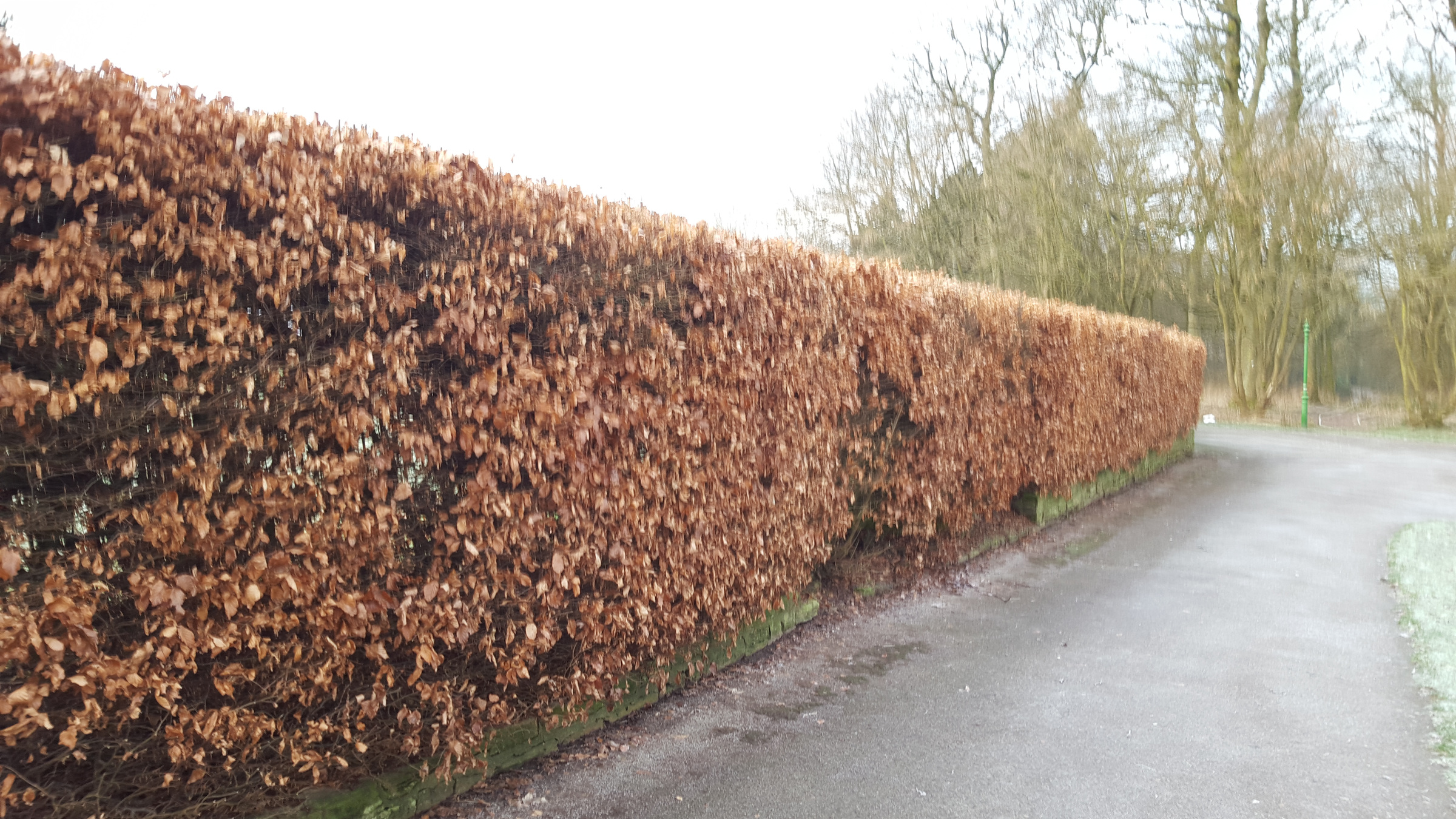
- UK Nursery Grown
- Planting Advice
Green Beech Hedge Plants: Fagus sylvatica Hedging
Fagus sylvatica
£3.90 per plant
Green beech hedging starts the year with fresh, bright green leaves, which darken through summer before turning rich copper and russet in autumn. A regularly trimmed beech hedge often holds its dry leaves through winter, giving seasonal cover. It suits formal boundaries in sun or partial shade on well-drained soil, including chalk. Supplied as 90-120cm plants.
- Native deciduous hedging
- Green leaves turn copper in autumn
- Trimmed hedges often retain winter leaves
Step 1: Choose Your Root Type
Pot-grown plants, supplied in the pot size shown for each option. Plant at any time of year when the ground is workable. Ask about this plant
Understanding root types
- Bare root
- Lifted with little or no soil around the roots. Keep the roots moist and plant during the dormant season.
- Rootball
- Supplied with soil around the roots. Handle the rootball carefully and follow its planting instructions.
- Potted
- Grown in a nursery container. The pot size and supplied height are shown with each plant option.
Step 2: Choose Your Plant
Need help with your planting?Ask about sizes, root types and quantities
Position
Sun or partial shade
Soil
Well-drained soil, including chalk
Supplied size
90-120cm
Ordering
Minimum order 5
Description
Green Beech Hedge Plants: Fagus sylvatica Hedging
What is green beech hedging?
Green beech (Fagus sylvatica) is a native deciduous tree that responds well to clipping, forming a dense garden hedge with distinctive seasonal colour. Fresh, bright green leaves open in spring, deepen to a rich green through summer, then turn warm copper and russet in autumn. Many of these dry leaves stay on the hedge through winter, giving a degree of cover until new growth pushes them off in spring.
Although beech is deciduous, annual summer trimming encourages the hedge to hold its dead leaves. The retained copper-brown foliage provides useful winter screening, particularly on sheltered, regularly clipped hedges. Its changing leaf colour sits comfortably alongside lawns, gravel paths and mixed borders.
Why choose a beech hedge?
Beech clips into a tidy, well-defined hedge, with bright spring foliage, deep green summer leaves and copper autumn colour. As a native species, it provides habitat for local wildlife. It grows well in free-draining soil, including chalk, and established hedges generally need just one main trim each year.
The copper leaves often remain on clipped branches long after neighbouring deciduous plants have shed theirs. A dense beech hedge can also filter wind and provide shelter, while regular cutting keeps its height and width under control. Choose a site with reasonably moisture-retentive, well-drained soil, as beech struggles in waterlogged ground and very dry conditions.
Eventual height, spread and growth rate
Left unpruned, green beech will grow into a large tree reaching over 25 metres. As a hedge, it is usually kept between 1.5 and 4 metres tall. A maintained hedge can be kept around 1 to 2 metres wide, although its finished width depends on the height, planting arrangement and regularity of trimming.
Once established, beech typically puts on around 30 to 60cm of growth a year in favourable conditions, although soil, moisture and exposure affect the rate. Regular trimming keeps the hedge dense and encourages the winter leaf retention that beech is known for. Allow for the finished width and access for cutting when you set out the planting line.
Using beech in your garden
Plant green beech along a boundary, beside a driveway or around a garden seating area where a clipped hedge will give the space definition. A continuous beech hedge creates a uniform finish, while planting it alongside other native hedging species gives a looser, more varied boundary. Its russet autumn leaves stand out particularly well against dark evergreens and old brickwork.
Regular clipping keeps the outline straight and the growth compact. Behind a perennial border, its deep green summer foliage provides a calm background for flowering plants, followed by warm autumn colour. Avoid exposed frost pockets where late spring frosts can scorch newly opened beech leaves.
Choosing a size
Our green beech plants are supplied at 90-120cm tall, giving you a useful starting height for a new boundary. With careful planting, watering and weed control, the plants can begin filling out over their first two growing seasons. The available size is shown below.
Green beech is listed individually, with one plant per option. Measure the full length of your proposed hedge before ordering, allowing for gaps, corners and any openings. The spacing guide below will help you calculate the number of plants needed.
| Option | Supplied size | Root type | Best for | Plants per metre |
|---|---|---|---|---|
| 90-120cm | 1 plant | 90-120cm | Bare root | Quick establishment, immediate impact | 3 to 5 |
Planting and care
Planting and aftercare
When and how to plant beech hedging
Autumn to early spring, roughly November to March, is a good time to establish beech hedging while the plants are dormant. Avoid planting when the ground is frozen or waterlogged, as this makes soil preparation difficult and can damage roots. Clear grass and perennial weeds from the full length of the planting strip before digging.
Dig a trench wide and deep enough to accommodate each plant's root system without crowding or bending the roots. Keep the original soil level at the base of the stem, backfill with the excavated soil and firm gently to remove air pockets. Water thoroughly after planting and keep roots protected from drying out while you work.
Spacing and planting quantities
For a dense beech hedge, plant 3 to 5 plants per metre in a single row. Use closer spacing for a thicker hedge or if you want quicker screening. A double staggered row at 5 to 7 plants per metre gives an even denser result but needs more width.
For example, a 10-metre hedge needs 30 plants at three per metre, or 50 plants at five per metre. The figures below cover three common planting densities, so you can work out quantities for a 5, 10 or 20-metre hedge.
| Spacing | Plants per metre | Plants for 5m | Plants for 10m | Plants for 20m |
|---|---|---|---|---|
| 3 per metre | 3 | 15 | 30 | 60 |
| 4 per metre | 4 | 20 | 40 | 80 |
| 5 per metre | 5 | 25 | 50 | 100 |
Watering and feeding
Water new beech hedges regularly during the first growing season, especially in dry spells. Check the soil moisture below the surface rather than relying on rainfall alone. Water deeply enough to moisten the root zone, then check the soil before watering again. Increase the frequency during hot, dry weather, particularly while the roots are establishing.
Apply a mulch of well-rotted organic matter in spring, keeping it clear of the stems. This helps retain moisture and suppress weeds. Feed with a general-purpose fertiliser in early spring if growth is slow, but established beech hedges on good soil rarely need extra feeding.
Trimming calendar
Trim established beech hedges once a year in August. By August, the main flush of summer growth has usually slowed, making it a practical time to tidy the hedge and encourage winter leaf retention. Check carefully for active birds' nests before cutting, and leave any occupied areas undisturbed.
Keep the base of the hedge slightly wider than the top so light reaches the lower branches. A gentle taper helps prevent bare patches developing near the ground. For an overgrown hedge, spread major renovation work over two or three winters, cutting back sections gradually to encourage fresh growth without removing too much foliage at once.
Evergreen or deciduous hedging? Prepare the hedge planting line Annual hedge trimming
Read our planting guideFurther growing advice: RHS plant and growing guidance
Sizes and prices
Green beech hedging sizes, prices and minimum orders
| Option | Supplied height | Pot or root | Plants | Price | Minimum order | Availability |
|---|---|---|---|---|---|---|
| 90-120cm | 1 plant | 90-120cm | Potted | 1 | £3.90 per plant | 5 | Unavailable |
The price is for the selected plant or pack. Pack size tells you how many plants are included, and the minimum order is the smallest quantity we can send.
Plant sizes and quantities explainedDelivery
Delivery for your plant order
Delivery options and charges are shown in your basket and confirmed before you place your order.
Plants are living products. Unpack promptly after delivery, check moisture around the roots and keep them in a sheltered spot until you can plant.
Delivery informationPlant questions
Before you order
What is the best time of year to plant a beech hedge?
The best time to plant green beech hedging is during the dormant season, generally from November to March. The soil should be workable rather than frozen or waterlogged. Planting in autumn or early winter gives the roots a chance to settle before spring growth begins. Keep the roots protected from drying out during planting, and prepare the ground beforehand so the plants can go straight into their permanent positions. Our listed green beech option is 90-120cm tall; the catalogue does not specify its root type.
How quickly does a beech hedge grow?
Green beech has a moderate growth rate of 30 to 60cm per year once established. The first year after planting is mostly about root development, so top growth may be slower. Good soil preparation, consistent watering and a weed-free planting strip will help a 90-120cm plant establish and begin filling out, although the time needed to form a continuous hedge varies with growing conditions and planting density. Annual trimming from the second year onwards helps build density.
How far apart should a beech hedge be planted?
Space beech hedging plants 3 to 5 per metre in a single row. Three plants per metre allows more room for each plant to develop, while five per metre places the stems closer together and can help the hedge knit into a continuous screen sooner. For a particularly thick hedge, plant a double staggered row with 5 to 7 plants per metre, but allow extra width for the finished hedge.
When to trim a beech hedge?
Trim established beech hedges in August. This is the main annual cut that keeps the hedge neat and encourages the retention of copper-brown leaves through winter. Avoid unnecessary spring trimming, when new foliage is emerging and birds may be nesting. If a second light cut is needed, check carefully for active nests and avoid disturbing them. For most established beech hedges, one well-timed annual trim is sufficient.
Does a beech hedge keep its leaves in winter?
A regularly trimmed beech hedge often retains many of its dead, copper-brown leaves through winter. This natural leaf retention is called marcescence. It is particularly noticeable on younger growth and regularly clipped hedges. The leaves drop when new growth pushes through in spring. The amount of foliage retained varies with age, exposure and growing conditions. A regularly trimmed hedge in a sheltered position generally keeps more of its copper-brown leaves, although some will fall before spring.
Is green beech suitable for wet or dry soil?
Beech needs well-drained soil and does not tolerate waterlogged ground. It grows well on chalk and other free-draining soils. It also struggles on very dry, sandy soils, especially while establishing. On heavy clay that remains saturated through winter, improve drainage before planting or choose a species better suited to persistently wet ground. Once established, beech has moderate drought tolerance but benefits from watering in prolonged dry spells.
Ask a plant question