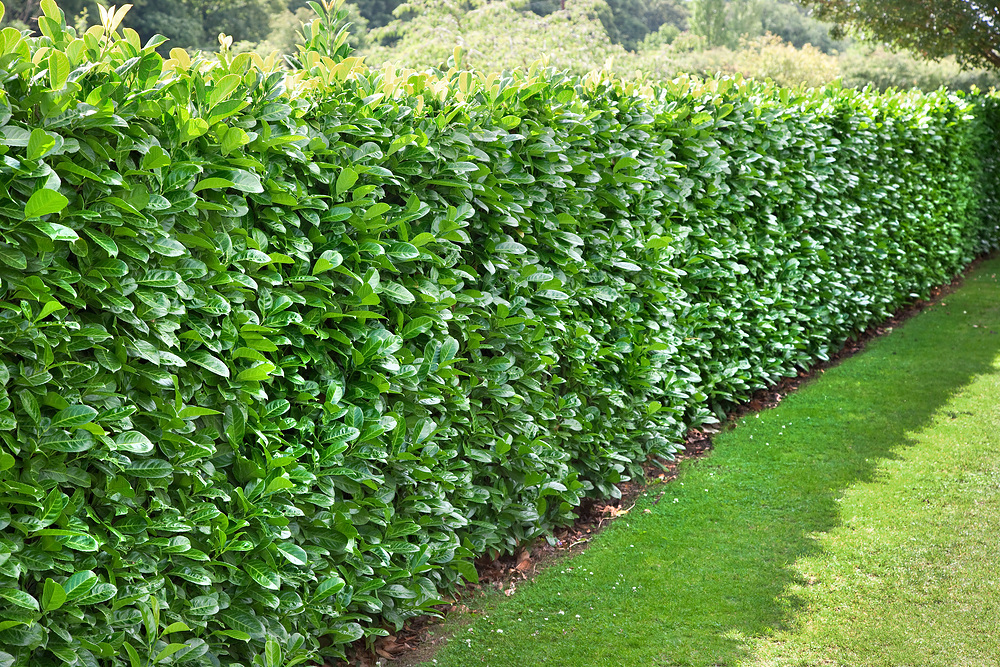
The best time to cut a laurel hedge
The ideal time to prune a laurel hedge is late spring to early summer, typically May to June, once the first flush of new pale green growth has started to darken. A second, lighter trim can be carried out in August or early September to tidy the hedge before winter. Cuts made while the plant is actively growing generally recover well, and a late summer tidy gives the remaining shoots time to mature before cold weather arrives. Avoid cutting between late autumn and mid spring, as soft young shoots produced after an autumn trim are vulnerable to cold damage, and pruning during the main bird nesting season (March to August) requires a careful check for active nests first.
Cherry laurel (Prunus laurocerasus) and Portuguese laurel (Prunus lusitanica) both respond well to pruning. Cherry laurel may grow 30 to 60cm a year once established, while Portuguese laurel is generally slower, often growing around 30 to 45cm. Regular clipping encourages branching and keeps the hedge within its allotted space. Getting the timing right keeps the hedge bushy from top to bottom and avoids the large, unsightly cut leaves that can result from using hedge trimmers at the wrong moment.
When to trim a laurel hedge (month by month)
Laurel pruning depends on the weather, the maturity of the new growth and the presence of nesting birds. Use the monthly guidance below to plan work on established cherry and Portuguese laurel hedges. Check for active nests before cutting, including outside the main nesting season.
| Month | Pruning advice |
|---|---|
| January | Do not prune. The hedge is dormant and frost can damage cut stems. Wait until spring. |
| February | Still too early in most regions. A light tidy of dead or damaged branches is acceptable on mild days if no frost is forecast. |
| March | The main bird nesting season begins. It is illegal to disturb active nests, so inspect carefully. You can do a very light trim if you are certain no birds are nesting. |
| April | Strong new growth appears. Delay major pruning until after the first flush has matured. Check for nests before any cutting. |
| May | The first growth flush starts to harden. This is the prime month for the main annual prune, once the soft pale leaves begin to turn darker green. |
| June | Excellent month for the main prune. Cut back the current season's growth by up to half. Warm weather means cuts heal rapidly. |
| July | You can still do a light trim early in the month if needed, but avoid cutting into old wood during very hot, dry spells. |
| August | A second, lighter trim is fine in early August to neaten the hedge before autumn. Do not cut hard now. |
| September | A very light tidy trim is possible in the first half of the month in sheltered southern gardens. Stop all pruning by the end of September. |
| October | Do not prune. Cuts made now produce soft shoots that winter frosts will blacken and kill. |
| November | No pruning. The hedge is entering dormancy. Focus on clearing fallen leaves from the base to prevent disease. |
| December | No pruning. Wait until late spring next year for the main cut. |
Nesting birds and the law
Under the Wildlife and Countryside Act 1981, it is an offence to intentionally damage or destroy an active bird nest while it is being built or in use. The main nesting season runs from March to August inclusive, though some species nest outside this window. Before you start any trimming during this period, walk the length of the hedge and look carefully for nests. If you find one, delay cutting that section until the chicks have fledged. The dense, evergreen foliage of a laurel hedge makes it a favourite nesting site for blackbirds, thrushes and finches, so a thorough check is essential.
Gardeners and professional contractors must both comply with wildlife protection laws. May or June is often suitable for the plant's growth, but it also falls within the main nesting season. Inspect the hedge thoroughly before cutting and postpone pruning if an active nest is present or you cannot check safely. The dense foliage of laurel can make nests difficult to see. If you must trim later in summer, a quick inspection with binoculars from a few metres away often reveals activity without disturbing the birds.
Secateurs not hedge trimmers: why leaves matter
Cherry laurel has broad, leathery leaves, often around 10 to 15cm long. A powered hedge trimmer can slice straight through them, leaving cut edges that turn brown as they dry. The marks may remain visible until fresh growth covers them. Using secateurs or loppers to cut individual stems just above a leaf or side shoot avoids this problem entirely. The cut is hidden behind the remaining foliage, and the hedge looks clean and green immediately after pruning.
Working stem by stem with secateurs takes longer than using a powered trimmer, but it leaves the broad leaves intact and places most pruning cuts behind the remaining foliage. For a formal hedge, work along the top and sides, cutting back the longest shoots one by one. You can use shears or a trimmer on the very tips of a Portuguese laurel hedge if you are maintaining a tight shape, because its leaves are smaller and less prone to tearing, but secateurs still give the neatest result on both species.
Hard pruning an overgrown laurel
A neglected cherry or Portuguese laurel hedge can be cut back hard into old wood to reduce its height and width. The best time for this renovation pruning is late spring, ideally May, when the sap is rising strongly and the plant has the whole growing season ahead to recover. You can cut stems back to 30 to 60cm from the ground if necessary. Healthy, established laurel can produce new shoots from older wood after substantial pruning, although recovery is not guaranteed. Allow two or three growing seasons for a heavily reduced hedge to regain useful density, with longer possible on poor or exposed sites.
Spread the work over two years if the hedge is very large. In the first year, cut back one side and the top, then tackle the other side the following spring. After a hard prune, the hedge needs extra care: water thoroughly during dry spells, apply a balanced slow release fertiliser in April, and mulch with 5 to 7cm of organic matter to retain moisture. New shoots may begin appearing within four to six weeks in favourable growing conditions, although older, stressed or heavily cut plants can take considerably longer to respond.
Portuguese laurel trimming
Portuguese laurel (Prunus lusitanica) grows a little more slowly than cherry laurel and has smaller, neater leaves on red tinged stems. The pruning calendar is the same: main trim in May or June, with a light tidy in August if necessary. Because the leaves are narrower, you can use sharp hand shears for the final shaping without the same risk of unsightly cut edges that you get with cherry laurel. For the main structural cuts, secateurs or loppers let you remove individual branches cleanly and work back to a healthy side shoot without leaving a row of severed leaves.
Portuguese laurel tolerates hard pruning well and can be trained as a formal hedge or a looser screen. If you are growing it as a specimen shrub rather than a hedge, simply remove any dead, damaged or crossing branches in late spring and lightly shape the canopy to keep it balanced. The same nesting bird checks apply, and you should never prune after September.
Aftercare after a hard cut
A laurel hedge that has been cut back hard needs consistent aftercare to regenerate dense, healthy growth. Water the root zone deeply once a week during dry weather for the first season after renovation. A 5 to 7cm layer of well rotted compost or leaf mould spread along the base (keeping it clear of the stems) feeds the soil and conserves moisture.
In the following spring, apply a general purpose granular fertiliser such as fish, blood and bone at the rate recommended on the packet. This encourages strong new shoots. As the new growth appears, pinch out the tips of the longest shoots to promote branching and help the hedge thicken up. With suitable watering, mulching and follow-up pruning, a healthy laurel hedge may regain a dense outline within two to three years. Recovery will depend on the severity of the cut, the age of the plants and their growing conditions.
Common questions
Can I prune laurel in autumn or winter?
It is best to avoid pruning laurel in autumn and winter. Cuts made from October onwards heal slowly and can stimulate soft new growth that is easily damaged by frost, leading to blackened shoot tips and dieback. The safest window for any trimming is late spring to late summer, with the main prune in May or June and a light tidy no later than early September.
How hard can I cut back an overgrown laurel hedge?
Cherry and Portuguese laurel both tolerate very hard pruning. You can cut stems back to 30 to 60cm above ground level in late spring, and the plant will produce new shoots from the old wood. Recovery takes two or three growing seasons. For a very large hedge, stagger the work over two years, cutting one side and the top first, then the other side the following spring.
Why do laurel leaves turn brown after trimming?
Brown edges on laurel leaves after trimming are usually caused by using powered hedge trimmers that slice through the large leaves. The cut edges die back and turn brown, spoiling the hedge's appearance for weeks. Using secateurs to cut individual stems just above a leaf or side shoot hides the cut behind the remaining foliage and keeps the hedge looking green and healthy.
What is the difference between pruning cherry laurel and Portuguese laurel?
The timing is the same for both species: main prune in May or June, light trim in August if needed. Portuguese laurel has smaller, narrower leaves and a slightly slower growth rate, so you can use sharp hand shears for final shaping with less risk of torn leaves. Cherry laurel's large leaves mean secateurs are strongly recommended for the neatest finish. Both respond well to hard pruning.
Do I need to check for birds' nests before trimming?
Yes, it is a legal requirement under the Wildlife and Countryside Act 1981 to avoid disturbing active nests. The main nesting season runs from March to August. Always inspect the hedge carefully before you start cutting during these months. If you find a nest, leave that section untouched until the young birds have left.
How many times a year should I trim a laurel hedge?
One main trim in late spring (May or June) is usually enough to keep a laurel hedge dense and tidy. A second, lighter trim in August or early September can be useful for a very formal hedge or one that puts on particularly vigorous growth, but avoid cutting after mid September to prevent frost damage to new shoots.