What is the law on boundary hedges: the essentials
There is no single law covering every boundary hedge in the UK. Ownership usually depends on where the hedge stands and what the property documents establish. In England and Wales, Part 8 of the Anti-social Behaviour Act 2003 provides a process for complaints about qualifying high hedges. Separate wildlife legislation protects active birds' nests. Scotland and Northern Ireland have different arrangements, so check the rules that apply where you live. This guide explains each of those rules clearly, so you can manage your hedge with confidence and stay on good terms with those next door.
The law does not set a single maximum hedge height for all gardens. Instead, it provides a complaints system for hedges that block light to a neighbouring property. Other rules cover who can trim what, when cutting is restricted to protect nesting birds, and the specific dates for trimming hedgerows on agricultural land. Before cutting a disputed boundary hedge, check your property documents and the guidance published by your local council. This is particularly important where ownership is unclear or a formal complaint is being considered.
Who owns a boundary hedge
Ownership is the first question to settle. A hedge planted on your side of the boundary line is yours. If a hedge straddles the boundary, ownership and maintenance responsibilities may be shared, but the position depends on the property documents and any existing agreements. Do not assume that both neighbours have equal rights to cut or remove it. The title deeds or Land Registry plan for your property may show T-marks indicating boundary responsibility, but these are not always present or conclusive.
When you buy a property, the seller's property information form (TA6) often states who is responsible for each boundary. If there is no clear record, do not rely on the common belief that each homeowner owns the boundary on their left. There is no general legal rule assigning ownership that way. Check the deeds, look for previous agreements and seek professional advice if the boundary remains disputed. Disputes are best resolved by talking to your neighbour early, before a hedge becomes a problem.
High hedges and the 2 metre rule (Anti-social Behaviour Act 2003 Part 8)
There is no law that says a garden hedge must stop at 2 metres. The figure of 2 metres appears in the legislation as the minimum height a hedge must be before a neighbour can make a formal complaint to the local council. The legislation is Part 8 of the Anti-social Behaviour Act 2003, often called the high hedges law.
In England and Wales, a qualifying high hedge normally consists of two or more mostly evergreen or semi-evergreen trees or shrubs forming a barrier to light or access, with a height exceeding 2 metres. The legislation includes further conditions and exclusions, so the council must assess whether the particular hedge qualifies. The council will assess whether the hedge is blocking reasonable enjoyment of the complainant's property, looking at how much light it cuts out. If the council upholds the complaint, it can issue a remedial notice requiring the hedge owner to cut it to a specified height and keep it there. The council charges a fee for this service, typically several hundred pounds, and expects you to have tried to resolve the matter yourself first.
- The hedge must be mostly evergreen or semi-evergreen.
- It must be formed of two or more trees or shrubs in a line.
- It must be over 2 metres high.
- It must be adversely affecting the complainant's reasonable enjoyment of their home and garden.
- You must have tried to resolve the issue with your neighbour before contacting the council.
What your neighbour can and cannot cut
In England and Wales, a neighbour can generally cut back branches that overhang their land as far as the boundary, provided they do not enter your property without permission or breach protections such as a Tree Preservation Order. They should offer the cut material back to the plant's owner, rather than leaving it on their land without agreement. They cannot keep them without your permission, though in practice most neighbours agree to dispose of the green waste themselves.
The question 'can my neighbour cut the top of my hedge without permission' has a firm answer: no. Your neighbour cannot cut the top of your hedge, because that part of the plant is on your side of the boundary. If they lean over and cut the top, they are trespassing and damaging your property. Equally, your neighbour cannot force you to cut the top of your hedge, unless a council remedial notice is in place under the high hedges law. Any reduction in height must be agreed between you, or ordered by the council.
Nesting birds and the Wildlife and Countryside Act
It is an offence under the Wildlife and Countryside Act 1981 to intentionally take, damage or destroy the nest of any wild bird while that nest is being built or is in use. The nesting season runs broadly from March to August, and during this time you must check your hedge carefully for active nests before you cut. If you find a nest with eggs or chicks, you must leave that section of hedge alone until the young have fledged.
This rule answers the common question 'is it illegal to cut hedges in summer UK'. It is not automatically illegal to cut a hedge in summer, but it becomes an offence if you disturb an active nest. Because nests are common in hedges during those months, the practical advice is to do major hedge trimming outside the main bird nesting season, from September to February. Light trimming of new growth that clearly contains no nests is lower risk, but you still have a legal duty to check.
Farm hedgerow cutting rules (gov.uk)
Farmers and land managers in England must follow the Management of Hedgerows (England) Regulations 2024 where their hedgerows fall within the rules. These prohibit cutting or trimming covered agricultural hedgerows between 1 March and 31 August inclusive, subject to specified exemptions. The regulations also protect a 2 metre buffer strip measured from the hedge's centre, restricting cultivation and the application of fertilisers and pesticides. These requirements apply independently of farm payment schemes. Separate rules apply in Wales, Scotland and Northern Ireland.
There are some exemptions, for example cutting to maintain public rights of way or for road safety. If you own a field with a hedgerow boundary, you should also be aware that removing a hedgerow entirely may require a Hedgerow Removal Notice from the local planning authority, under the Hedgerows Regulations. For garden hedges, these farm rules do not apply, but the Wildlife and Countryside Act still protects nesting birds.
Leylandii problems with neighbours
Leylandii is the plant most often at the centre of hedge disputes. It grows fast, reaching 60 to 75cm a year once established, and can quickly exceed 2 metres. Left unpruned, it eventually becomes a tall, dense screen that casts heavy shade and draws moisture from the soil. This is why 'Leylandii problems with neighbours' is such a common search.
If you have a Leylandii hedge, keeping it at a height both you and your neighbour can live with is the best way to avoid a formal complaint. Trim it at least once a year, ideally twice, to keep it dense and manageable. If you are planting a new screen, consider a slower-growing alternative that is less likely to cause tension. We suggest several options in the next section.
| Problem | How to avoid it |
|---|---|
| Hedge grows too tall | Trim annually; choose a slower species from the start. |
| Shade on neighbour's garden | Keep height below 2m or agree a height with your neighbour. |
| Roots drying out beds | Water and mulch your own border; consider a root barrier in extreme cases. |
| Dispute over trimming costs | Agree a shared maintenance plan in writing. |
Choosing a hedge that stays neighbour friendly
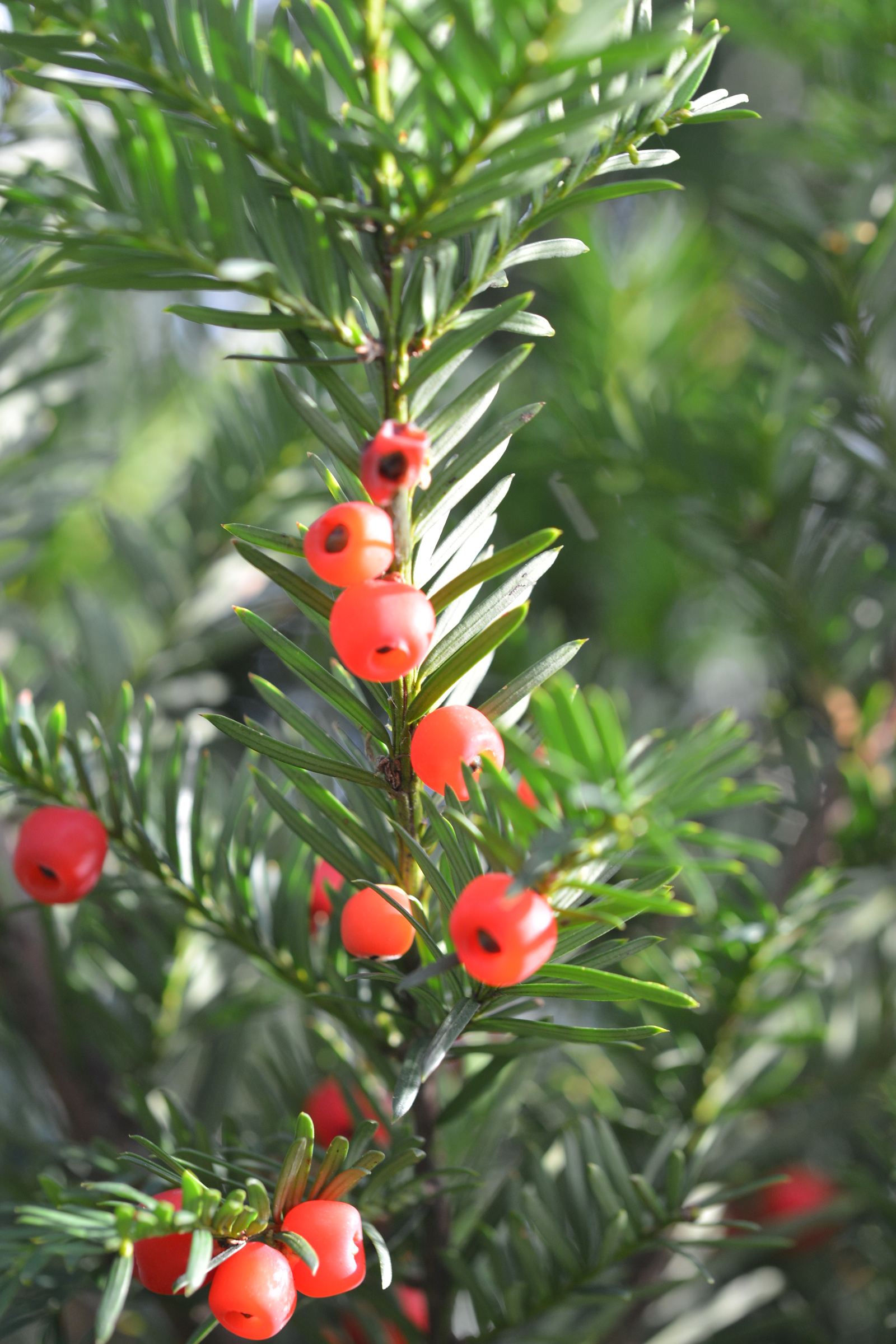
The easiest way to avoid hedge disputes is to plant a species that naturally suits its position. Slow-growing evergreens such as English yew make a dense, formal hedge but put on only 20 to 30cm a year, so annual trimming keeps them exactly where you want them. Yew also regrows reliably from old wood, which gives you control over its size long term.
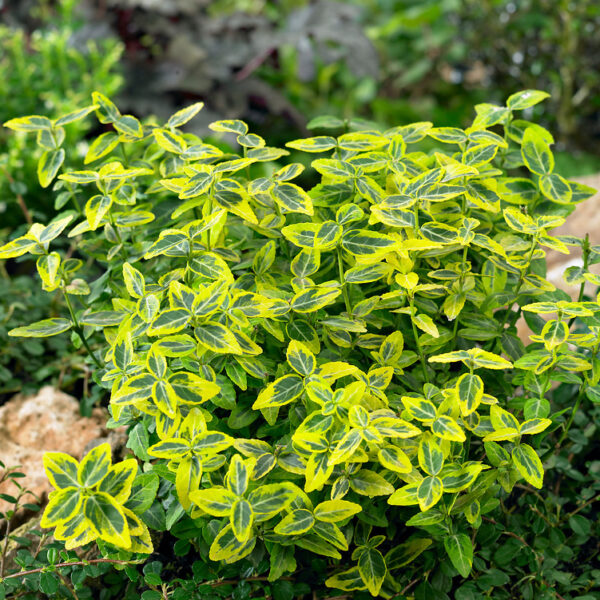
Green beech and common hawthorn are deciduous alternatives for boundaries. In England and Wales, the statutory high hedge complaints process generally concerns predominantly evergreen or semi-evergreen hedges, although other legal issues can still arise with deciduous planting. Beech holds its russet leaves through winter, giving good screening, while hawthorn is tough, native and wildlife friendly. If you need a lower evergreen boundary, consider Euonymus Emerald 'n' Gold or Euonymus Emerald Gaiety, which form neat, colourful hedges that are easy to keep under a metre.
For a flowering boundary that stays compact, mixed hebes or Hebe Red Edge offer year-round leaf cover and summer flowers, reaching only 60 to 90cm with light trimming. French lavender Bandera Purple works as a low, fragrant edging hedge around 40 to 50cm. Whichever you choose, leave enough space inside your boundary for the hedge's mature width and for maintenance access. A setback of 30 to 45cm may suit a low, narrow hedge, but larger species need substantially more room. Planting inside your boundary does not give you permission to enter a neighbour's land to trim it.
Hedge maintenance calendar: key legal and practical dates
This month-by-month table shows when to trim different hedge types, when to check for nests, and when bare root planting is possible. Following these timings helps you stay within the law and keep your hedge healthy.
| Month | Action |
|---|---|
| January | Plant bare root hedges if ground not frozen. Major trimming of deciduous hedges. |
| February | Finish winter trimming before nesting season begins. Plant bare root hedges. |
| March | Nesting season starts. Check for active nests before any cutting. Light trim only if clear. |
| April | Avoid hedge cutting where possible; birds are nesting. Water new plants. |
| May | Light trim of new growth on formal hedges only after thorough nest check. |
| June | Trim fast-growing hedges like Leylandii if essential, after nest check. Water well. |
| July | Light shaping of evergreen hedges possible; check for late nests. |
| August | Last month of main nesting season. Plan major trimming for next month. |
| September | Main hedge trimming month. Cut deciduous and evergreen hedges. Nesting risk low. |
| October | Trim hedges. Start planting pot-grown evergreens. Order bare root plants. |
| November | Bare root planting season opens. Continue trimming if weather allows. |
| December | Plant bare root hedges. Minimal trimming; focus on clearing fallen leaves. |
Common questions
What is the legal height of a hedge between neighbours?
There is no fixed legal height for a garden hedge. A neighbour can make a complaint to the local council under the Anti-social Behaviour Act 2003 Part 8 if an evergreen hedge is over 2 metres tall and blocking reasonable enjoyment of their property. The council decides each case on its merits and can order a height reduction if the complaint is upheld.
Can my neighbour cut the top of my hedge without permission?
No. Your neighbour cannot cut the top of your hedge because it grows on your land. Doing so would be trespass. They can cut back branches that overhang their boundary, up to the boundary line, but must offer the trimmings back. The top of the hedge is your property and your responsibility to maintain.
Is it illegal to cut hedges in summer in the UK?
It is not automatically illegal to cut a hedge in summer, but it becomes an offence under the Wildlife and Countryside Act 1981 if you damage or destroy an active wild bird's nest. The nesting season runs roughly March to August, so the safest approach is to do major trimming between September and February.
What can I do about my neighbour's Leylandii hedge?
Start by talking to your neighbour calmly. Explain how the hedge affects your light or garden. If that fails, you can contact your local council's high hedges team. They will ask for evidence you have tried to resolve the matter yourself and will charge a fee to investigate. The council can order a height reduction if the hedge meets the legal criteria.
Who is responsible for cutting a boundary hedge?
The hedge owner is responsible for cutting it. If the hedge is on your land, you must maintain both sides, though you will need your neighbour's permission to access their property to trim the far side. If the hedge is a party boundary feature, both owners share responsibility and should agree a maintenance plan.
When can farmers cut hedgerows?
In England, the Management of Hedgerows (England) Regulations 2024 prohibit cutting or trimming covered agricultural hedgerows between 1 March and 31 August inclusive, subject to specified exemptions, including certain safety work. The rules are no longer based on cross compliance. Different agricultural requirements apply elsewhere in the UK. Ordinary garden hedges are outside these agricultural rules, but active birds' nests remain legally protected.