Where to plant pieris
Pieris japonica planting succeeds best in a spot with dappled or partial shade, though the shrub will cope with full sun if the soil stays reliably moist. Choose a sheltered position with acidic, well-drained soil, ideally around pH 5.0 to 6.0. Protection from cold, drying winds is particularly helpful while the tender red spring shoots are developing. In full shade the leaf colour fades and flowering drops off, so aim for a balance of morning sun and afternoon shade. Pieris japonica is a woodland shrub that grows well beneath a light tree canopy or beside a building where it receives gentle morning light. Avoid planting directly beneath trees with dense, thirsty roots, as competition for moisture can leave the shrub struggling.
Pieris needs soil that stays moist without becoming waterlogged. Its roots can suffer in heavy, poorly drained ground, particularly through winter. On clay, planting on a raised mound or in a large container is often more effective than adding grit to an individual planting hole. Organic matter can improve the soil structure, provided excess water can still drain away. The shrub is hardy in most of the UK, but late spring frosts can scorch the emerging red shoots, so avoid frost pockets at the bottom of a slope. For a striking display, plant pieris where you can see the new red growth from a kitchen window or patio.
Soil and ericaceous compost
Pieris japonica must have acidic soil, ideally pH 5.0 to 6.0. In neutral or slightly alkaline ground the leaves turn yellow between the veins, a clear sign of lime-induced chlorosis. If your garden soil is chalky or alkaline, the simplest solution is to grow pieris in a large pot filled with ericaceous compost. For planting in the ground, dig a hole at least twice the width of the rootball and fork ericaceous compost through the backfill. On naturally acidic loam, mix some ericaceous compost into the excavated soil if additional organic matter is needed. Avoid replacing too much of the surrounding soil, as roots establish best when they can spread into the existing ground.
Mulching is a key part of long-term pieris care. After planting, spread a 5cm layer of composted bark, leaf mould or pine needles over the root zone, keeping the mulch clear of the stem. This locks in moisture, suppresses weeds and slowly feeds the soil. Avoid mushroom compost or spent mushroom compost, which often contains lime. In hard water areas, watering with tap water can gradually raise the soil pH. Use rainwater from a butt whenever possible, especially for potted shrubs.
- Test soil pH with a simple kit before planting
- Use ericaceous compost as a backfill and mulch
- Water potted pieris with rainwater to maintain acidity
- Never use lime, mushroom compost or alkaline mulches
Pieris in pots
Growing pieris in containers is a practical choice for alkaline gardens and small spaces. Choose a pot at least 40cm wide and deep, with plenty of drainage holes. Fill it with a good ericaceous compost, not a multi-purpose mix. Choose a frost-resistant container with drainage holes and enough room for the roots to develop. Terracotta, glazed ceramic and sturdy plastic can all work, although terracotta may dry out faster and can crack during freezing weather. Stand the pot on feet or pot risers so water never sits in the saucer.
Container-grown pieris needs more attention to watering and feeding than a shrub in the ground. Check the compost every few days in summer; it should feel like a wrung-out sponge, never bone dry or sodden. During active growth from March to August, use a liquid ericaceous feed at the intervals and dilution rate shown on the product label. Avoid feeding dry compost or applying more fertiliser than the plant needs. Repot every two to three years into a slightly larger container, teasing out the roots gently before replanting. Top-dress with fresh ericaceous compost each spring if the shrub is already in a large, permanent pot.
| Pot size (diameter) | Pieris size at planting | Feeding frequency | Repotting interval |
|---|---|---|---|
| 30 to 40cm | Young plant in 2 litre pot | Every 2 weeks, March to August | Every 2 years |
| 40 to 50cm | Established shrub | Every 2 weeks, March to August | Every 3 years |
| 50cm and above | Mature specimen | Every 2 weeks, March to August | Top-dress annually |
Pruning Forest Flame
Pieris Forest Flame needs very little pruning. The shrub naturally forms a neat, rounded shape and the main task is removing dead, damaged or crossing branches. Do this in late spring, after the flowers have faded. If you cut back into older, leafless wood, pieris can be slow to resprout, so keep any shaping cuts to young, leafy stems. Lightly deadheading spent flower clusters stops the plant putting energy into seed production and keeps the foliage display strong.
When a Forest Flame has outgrown its space, you can reduce its size gradually over two or three seasons. Shorten a few of the longest stems by no more than one third each year, cutting just above a healthy leaf whorl. Hard renovation pruning into bare wood often fails, so the gradual approach is safer. Always use clean, sharp secateurs to make clean cuts that heal quickly.
Frost damage to red shoots
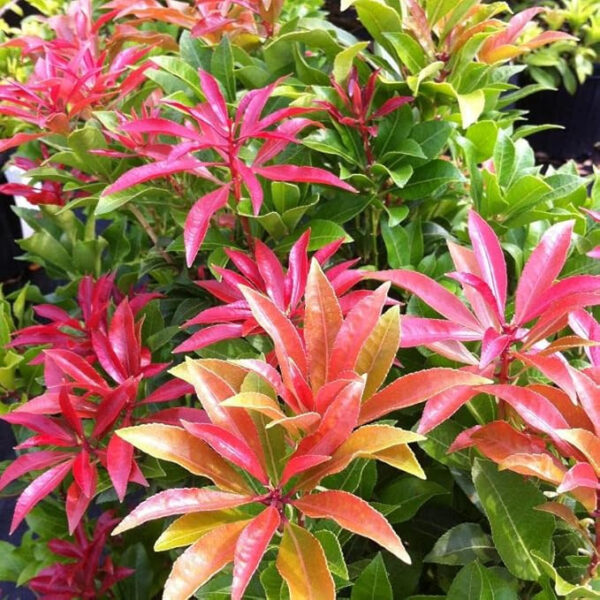
The brilliant red new growth of pieris is one of its best features, but it is also vulnerable to late frosts. A sharp April or May frost can turn the soft tips brown and crisp overnight. The damage looks alarming but is rarely fatal. Leave the affected shoots on the plant until all risk of frost has passed, then snip them back to just above a healthy leaf or bud. If the branches remain healthy, fresh shoots may develop later in spring or summer. Severe frost damage can take longer to recover from, so check for living buds before removing large sections.
To protect pieris from frost damage, position it where morning sun does not strike frozen leaves too quickly. A west-facing spot or one under the light shade of a deciduous tree works well. If a late frost is forecast, throw a double layer of horticultural fleece over the shrub the evening before and remove it once the temperature rises above freezing. Potted plants can be moved temporarily against a house wall.
Forest Flame vs Mountain Fire
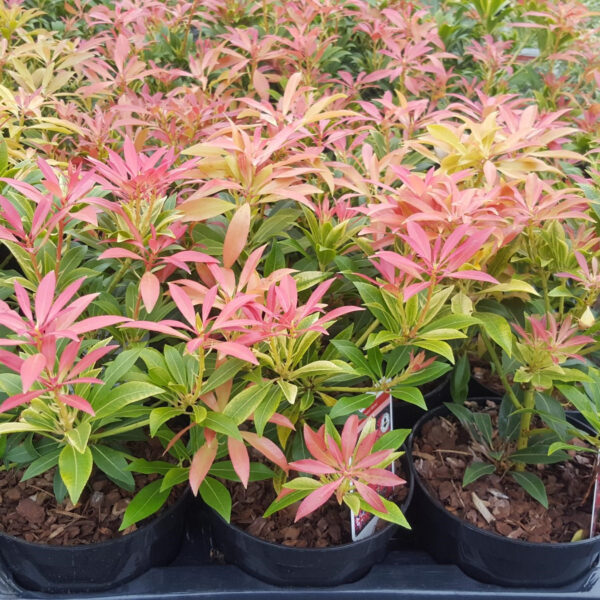
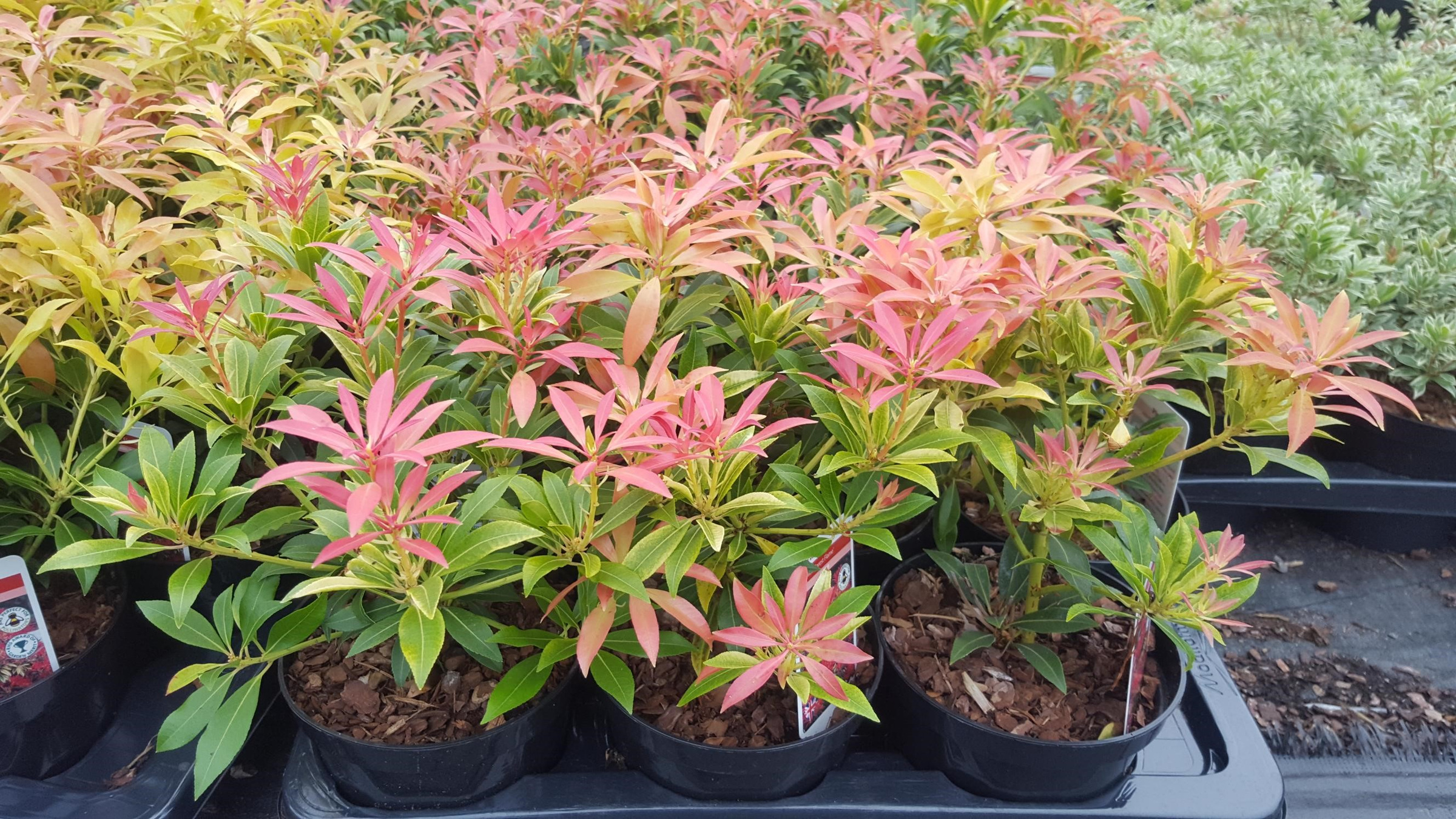
Pieris Forest Flame and Pieris Mountain Fire are both grown for their coloured spring foliage and clusters of white flowers. Their differences are most noticeable in the way the new leaves change colour and in their eventual growth habits. Forest Flame is the larger of the two, eventually reaching 2.5 to 4 metres tall and 1.5 to 2.5 metres wide if left unpruned. Its new leaves emerge bright red, fade to pink, then cream, and finally mature to glossy dark green. The white bell-shaped flowers appear in early spring, held in drooping clusters.
Mountain Fire is a more compact shrub, typically 1.5 to 2 metres tall and wide. Its young foliage is a deeper, fiery red that holds its colour longer than Forest Flame before turning chestnut brown and then green. The overall shape is denser and slightly more rounded. Both need acidic, well-drained soil and protection from cold winds. Mountain Fire is generally more compact, which can make it easier to position in a smaller garden, but its tender new shoots are still vulnerable to late frost.
| Feature | Pieris Forest Flame | Pieris Mountain Fire |
|---|---|---|
| Eventual height | 2.5 to 4m | 1.5 to 2m |
| Eventual spread | 1.5 to 2.5m | 1.5 to 2m |
| New leaf colour | Red, fading to pink and cream | Deep fiery red, holding longer |
| Flower colour | White | White |
| Hardiness | Fully hardy (H5) | Fully hardy (H5), slightly tougher |
| Best for | Larger borders, woodland edge | Smaller gardens, containers |
Common questions
Can pieris grow in full sun?
Yes, pieris can grow in full sun if the soil is consistently moist. In hot, dry spots the leaves may scorch and the shrub will struggle. Partial or dappled shade is safer in most UK gardens, especially in the south and east. Morning sun with afternoon shade gives the best balance of strong leaf colour and healthy growth.
How do I make soil acidic for pieris?
The most reliable method is to dig in plenty of ericaceous compost before planting and use it as an annual mulch. For established plants, you can apply flowers of sulphur at the rate recommended on the packet, but this works slowly. In alkaline gardens, growing pieris in a pot of ericaceous compost is the simplest long-term solution.
When should I plant pieris japonica?
Container-grown pieris can be planted at any time of year when the ground is not frozen or waterlogged. The ideal planting windows are early autumn, when the soil is still warm, or mid-spring. Avoid planting during a summer heatwave or in the middle of a cold, wet winter. Water thoroughly after planting and mulch well.
Why are my pieris leaves turning yellow?
Yellow leaves with green veins usually indicate lime-induced chlorosis, caused by alkaline soil or hard tap water. Switch to watering with rainwater and apply a liquid ericaceous feed containing chelated iron. If the whole leaf is pale and the plant is in deep shade, try moving it to a brighter spot. Overwatering can also cause yellowing, so check the drainage.
Is pieris poisonous to dogs or cats?
Pieris contains grayanotoxins, which are toxic to dogs, cats, horses and people if ingested. The leaves, flowers and nectar are all potentially harmful. Symptoms can include vomiting, drooling and weakness. In practice, cases of serious poisoning are rare because the leaves are bitter, but it is sensible to plant pieris away from areas where pets chew on shrubs.
How fast does pieris grow?
Pieris is a slow to moderate grower, typically adding 10 to 20cm of new growth each year once established. Young plants take a few seasons to settle in and speed up. The eventual size depends on the variety: Forest Flame can reach 4 metres over many years, while Mountain Fire stays more compact at around 2 metres.
Can I cut back a leggy pieris hard?
Hard pruning into old, bare wood is risky with pieris. The shrub often fails to regrow from thick, leafless stems. A better approach is to reduce the height gradually over two or three years, cutting back a few stems each spring by no more than one third. Always cut to a healthy leaf whorl or side shoot.