How to look after a new hedge
For the first two growing seasons, keep the soil around your new hedge moist without leaving it waterlogged. Clear grass and weeds from the planting strip, water thoroughly whenever the root area starts to dry, and avoid cutting established woody growth too soon. Regular checks during this early period help roots spread into the surrounding soil and encourage healthy growth from the base.
The most common mistake is assuming rain will do the job. New roots are still confined to the original rootball or pot shape, so they cannot reach moisture in the wider soil. You need to check the ground right at the base of each plant, even after a wet day.
Watering a new hedge
How often you water depends on your soil, the weather and the size of the plants. Sandy or freely draining soils dry faster than heavy clay, and larger rootballs hold more reserve moisture than small plugs. To judge when watering is needed, pull back the mulch and feel the soil a few centimetres down beside the original rootball. When it is starting to dry, water slowly so the moisture soaks through the rootball and into the surrounding ground.
A thorough soak once or twice a week in dry weather is more useful than a light daily sprinkle. Light watering only wets the surface and encourages roots to stay shallow, where they are vulnerable to drought. After watering, check below the surface to be sure the water has penetrated. On compacted or very dry ground, water can run across the surface without reaching the roots, so check the soil underneath before finishing.
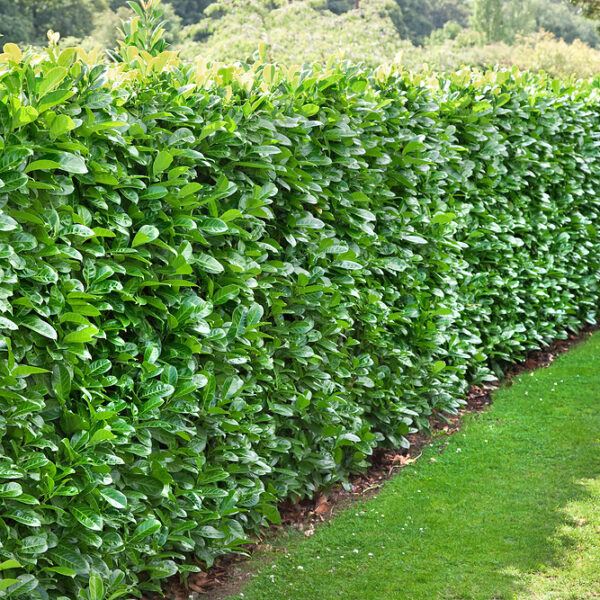
During hot, dry or windy spells you may need to water every two or three days, especially for evergreens like cherry laurel, Portuguese laurel or yew, which lose moisture through their leaves all year. Deciduous hedges such as beech and hawthorn are less demanding once the leaves have dropped, but they still need attention in a dry spring.
If the ground is already saturated, do not add more water. Soggy soil drives out oxygen and roots can rot. Check drainage along the planting line before digging. If water collects in one section, investigate the cause and consider suitable drainage improvements or a slightly raised planting bed before adding plants.
- Check more often during hot, dry or windy spells.
- Do not assume a brief shower has watered beneath dense foliage.
- Water the soil rather than routinely spraying the leaves.
- If the ground is already saturated, investigate drainage instead of adding more water.
Watering guide by season and soil
Use the table below as a starting point for your first year. Adjust for your own conditions: a hedge in full sun on sandy soil in a dry spring will need more frequent checks than one in shade on heavy loam.
| Season | Sandy or free-draining soil | Loam or clay soil | Extra notes |
|---|---|---|---|
| Spring (March to May) | Check twice a week; water deeply if dry below 5cm | Check weekly; water if dry below 5cm | Newly planted bare root hedges need consistent moisture as they break dormancy |
| Summer (June to August) | Check every 2 to 3 days; water deeply when needed | Check twice a week; water deeply when needed | Evergreens may need extra attention in hot spells |
| Autumn (September to November) | Check weekly; reduce as growth slows | Check fortnightly; reduce as growth slows | Newly planted evergreens still need water until the ground cools |
| Winter (December to February) | Check fortnightly in dry spells; water only if soil is dry and not frozen | Check monthly; rarely needs water | Bare root hedges planted in winter need little extra water unless the season is unusually dry |
Weed control and mulching
Grass and weeds steal moisture and nutrients that your new hedge needs. Keep a clear strip at least 30cm wide along the planting line, removing weeds by hand close to the stems. Hoeing or strimming against the bark can wound the plant and let disease in.
A mulch of well-rotted organic matter helps in two ways: it slows evaporation from the soil and smothers annual weeds. Apply it after clearing weeds and wetting dry ground. A layer 5 to 7.5cm deep is about right, but keep it pulled back from the stems. Piling mulch against the bark traps moisture where it can cause rot.
Check the mulch depth each spring and top up only if it has thinned. Weeds can root into the mulch itself, so pull them out before they reach the soil. When you water, make sure the moisture is getting through the mulch layer and into the root zone.
Feeding a young hedge
If your planting soil is reasonably fertile, additional fertiliser is unlikely to be needed in the first season. Before feeding a hedge with pale leaves or poor growth, check for dry rootballs, compacted ground, standing water and competition from nearby grass. Walk the row and check for wet hollows or dry stretches under trees before you reach for a fertiliser.
Where feeding is appropriate, a balanced general-purpose fertiliser applied in spring at the stated rate is usually enough. Keep granules or liquid feed away from the stems, and water it in well. Overfeeding pushes soft, sappy growth that is attractive to pests and vulnerable to frost.
For hedges that are clearly struggling despite good watering and weed control, a soil test can identify a genuine deficiency. Adding the wrong nutrient wastes money and can make the problem worse.
How to prune newly planted hedges
Pruning starts with the type of hedge you have planted. Young hawthorn and privet can benefit from shortening their leading shoots by about a third to encourage branching near the ground. Beech generally needs a gentler approach, particularly when planted as larger stock. Remove damaged shoots and shorten straggly growth where needed, keeping enough healthy foliage to support establishment. This early intervention builds a dense framework from the base.
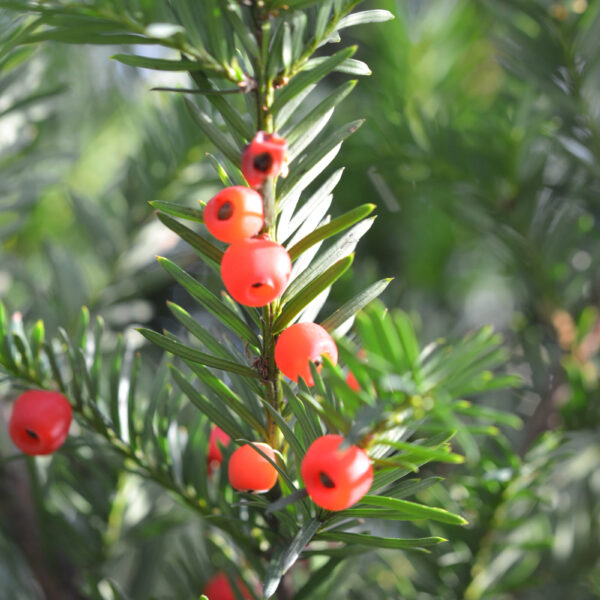
Evergreen hedges like cherry laurel, Portuguese laurel and yew are treated differently. Wait until the plants are established and showing new growth, then trim lightly to shape. Do not cut back into old, bare wood on conifers such as Leylandii, because they rarely regrow from it.
An established hedge that needs substantial renovation is usually best tackled over two or three seasons. For yew and many deciduous species, reducing one side first allows the plants to recover before the other side is cut. Avoid hard renovation of Leylandii into brown, leafless wood, as it will not reliably produce replacement growth. Choose pruning dates to suit the species, check for active bird nests and provide water during dry weather while new shoots develop.
- Trim deciduous whips lightly after planting to promote bushy growth.
- Wait until evergreens show new growth before the first light trim.
- Never cut into old, bare wood on conifers.
- Spread hard renovation cuts over two or three seasons.
When should you not cut back hedges?
Avoid trimming hedges during the main bird nesting season, which runs roughly from March to August. Check for active nests before you start, because it is an offence to damage or destroy them under the Wildlife and Countryside Act 1981.
Do not cut hedges in very hot, dry weather, as the exposed leaves lose more water and the plants can scorch. Similarly, avoid pruning when a hard frost is forecast, because the cut stems are vulnerable to cold damage. Late autumn trimming of evergreens can also leave soft growth that winter weather will burn.
How to grow a hedge quickly
The fastest way to a thick hedge is to get the establishment phase right. Consistent watering, a weed-free strip and a spring mulch do more for early growth than any single product. Plants that are not competing with grass and are never drought-stressed put on more stem and leaf each season.
Choose a species that naturally grows fast if speed is your priority. Green Leylandii can put on 60 to 90cm a year once established, and cherry laurel grows 30 to 60cm annually in good conditions. Even slower species like yew will grow steadily if they are well watered and fed.
Planting at the right spacing also matters. A staggered double row can provide thicker coverage, although it needs more space and plants than a single row. For many smaller hedging plants, 3 to 4 plants per metre in a single row or 5 to 7 per metre across a double row can work well. Check the recommended spacing for your species and supplied plant size before marking out the planting line.
To make laurel grow faster specifically, water it deeply during dry spells in its first two years and apply a balanced fertiliser in early spring. Mulch with well-rotted compost to keep the roots cool and moist. Light trimming of the tips in spring encourages side shoots and a denser habit.
Month-by-month aftercare calendar
Use this calendar as a reminder for the key jobs through the year. Timings shift a little with the weather and your location, but the sequence stays the same.
| Month | Key tasks |
|---|---|
| January | Check for wind rock after storms; firm back any loosened plants. Water only if soil is dry and not frozen. |
| February | Finish any winter planting. Lightly trim deciduous whips if not done at planting. Check mulch depth. |
| March | Start regular moisture checks as growth begins. Apply a balanced fertiliser if needed. Hand-weed the planting line. |
| April | Increase watering frequency in dry spells. Trim evergreen hedges lightly once new growth appears. Check for nesting birds before cutting. |
| May | Keep on top of weeds. Water deeply during dry weather. Watch for aphids on new growth. |
| June | Water consistently; evergreens may need extra attention in hot spells. Lightly trim fast-growing hedges if needed. |
| July | Continue watering and weeding. Avoid heavy pruning in very hot, dry conditions. Check mulch is still effective. |
| August | Water deeply during dry spells. Trim hedges for shape if necessary, but check for late nests first. |
| September | Reduce watering as growth slows. Plant potted evergreens while the soil retains warmth, provided the ground is workable, and water thoroughly after planting. |
| October | Clear fallen leaves from the base of the hedge. Check ties and stakes. Last light trim for deciduous hedges. |
| November | Bare root planting season begins. Water newly planted evergreens if the ground is dry. Clear weeds one last time. |
| December | Check for wind rock. Water only in prolonged dry spells when the ground is not frozen. Plan next year's planting. |
What changes in the foliage can tell you
Evergreens naturally shed old leaves, so some yellowing and leaf drop is normal. Repeated wilting, spreading dieback or a steady decline across the plant needs investigation. Compare affected plants with healthy neighbours and note whether the damage follows a wet, dry or shaded section.
If you need advice, take photographs of the whole plant, the affected foliage and the soil around the stem. Include the planting date, species, watering routine and drainage conditions. These details give a clearer picture than a close-up of one brown leaf.
Common questions
How often do you water a new hedge?
Check the soil around the roots regularly rather than sticking to a fixed schedule. In dry weather, a deep soak once or twice a week is usually enough for the first growing season. Sandy soils and hot spells may need watering every two to three days. Always check below the surface to be sure the water has soaked through the rootball.
How should I prune newly planted hedges?
For deciduous hedges like hawthorn, privet and beech, trim the leading shoots by about a third soon after planting to encourage low, bushy growth. For evergreens such as cherry laurel, Portuguese laurel and yew, wait until the plants show new growth, then trim lightly to shape. Avoid cutting into old, bare wood on conifers.
When should you not cut back hedges?
Avoid trimming during the main bird nesting season, roughly March to August, and always check for active nests first. Do not cut in very hot, dry weather or when a hard frost is forecast, as the exposed cuts are vulnerable to scorch and cold damage. Late autumn pruning of evergreens can also leave soft growth that winter weather will burn.
What should I do when cutting back a hedge hard for the first time?
Spread hard renovation over two or three seasons rather than doing it all at once, especially for overgrown evergreens. Work in early spring and midsummer, keeping the hedge well watered and fed while it recovers. For deciduous hedges, cut one side back hard in the first year and the other side the following year.
How to make laurel grow faster?
Water deeply during dry spells in the first two years and apply a balanced fertiliser in early spring. Mulch with well-rotted compost to keep the roots cool and moist. Light trimming of the tips in spring encourages side shoots and a denser habit. A weed-free strip along the row removes competition for moisture and nutrients.
Why is one plant struggling while the others look healthy?
Local drainage, root competition from nearby trees, planting depth or a missed dry rootball can affect a single plant. Compare the soil moisture and stem level with the healthy neighbours before assuming the whole hedge has a disease. Dig down gently beside the struggling plant to check for compacted soil or a dry pocket.
How long does aftercare last?
Pay close attention through at least the first two growing seasons. Larger stock, difficult sites and exposed positions can need support for longer, especially in dry weather. After that, an established hedge benefits from occasional deep watering during prolonged drought, weed control where needed and a fresh layer of mulch when the previous layer has broken down. Apply spring fertiliser only if the soil or the plants show that additional nutrients are needed.