Conifer trees for hedging: what to expect
Green Leylandii, Castlewellan Gold and English yew all make evergreen hedges, but their growth habits are quite different. Leylandii quickly develops a tall screen of dense, scale-like foliage. Castlewellan Gold has brighter yellow-green growth, particularly in sunny positions. English yew grows more slowly and can be clipped into a closely defined formal hedge. The amount of cutting you can manage each year is an important part of choosing between them.
Before choosing conifer hedge plants, think about the finished height and width you can live with. A fast growing conifer like Leylandii can put on 60 to 75cm of growth a year in good conditions, which means regular summer trims once it reaches the top of your boundary line. Slower conifers need less frequent attention but take longer to form a dense screen.
Soil and light matter too. Most conifers for screening want a spot that drains freely and gets sun for at least half the day. English yew copes with more shade than Leylandii, but it will not tolerate waterlogged ground. Check the planting line for compacted soil or builder's rubble, especially near a house wall or fence, and improve drainage before you plant.
Green Leylandii: the fast growing conifer for screening
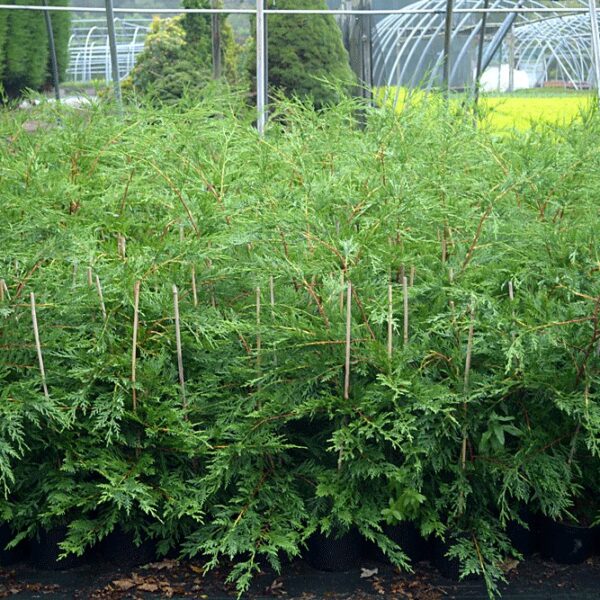
Green Leylandii (Leyland cypress) is the go-to fast growing conifer when you need a tall, evergreen screen quickly. Its overlapping sprays of scale-like foliage form a dense visual screen and can provide shelter from wind, although noise reduction depends on the hedge's thickness and the surrounding conditions. Established plants may add around 60 to 75cm in a favourable growing season. A 40 to 60cm plant could approach 2 metres after three seasons, but growth will vary with soil, moisture, exposure and pruning.
The trade-off is trimming. A Leylandii hedge kept at 2 to 2.5 metres tall needs cutting two or three times between April and August to stay neat. Let it get away from you and you face a difficult problem: Leylandii does not reliably regrow from old, brown wood. If you cut back beyond the green outer layer, those branches stay bare. Keep your cuts within the leafy growth and shape the hedge so the top is slightly narrower than the base, which lets light reach the lower branches.
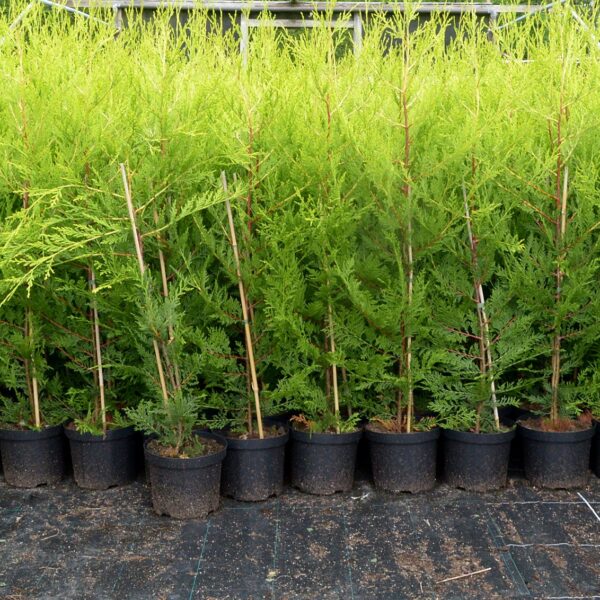
When you buy conifer hedge plants for a Leylandii screen, spacing matters. For a single row, set plants 60 to 90cm apart. A double staggered row at the same spacing gives a thicker screen faster. Bare root Green Leylandii (40 to 60cm, 60 to 90cm or 3 to 4ft) are planted during the dormant season, roughly November to March. Pot grown plants (9cm pots at 40 to 60cm, 2 litre pots at 60 to 90cm or 90 to 120cm, and 5 litre pots at 120 to 150cm or 150cm) can go in at any time the ground is workable, provided you keep them watered.
Grade B Green Leylandii are supplied as 80 to 100cm bare root plants. This is a separate grade from the other bare root sizes, so check the product details before choosing it for a boundary. As with any bare root conifer, keep the roots moist before planting, prepare the soil thoroughly and water during dry spells in the first growing season. The rate at which individual plants establish will depend on their condition and growing conditions.
| Size and type | Plants per metre (single row) | Approx. height after 3 years | Best planting time |
|---|---|---|---|
| 40-60cm bare root | 2 to 3 | 1.8 to 2.2m | Nov to Mar |
| 60-90cm bare root | 2 to 3 | 2.2 to 2.8m | Nov to Mar |
| 3-4ft bare root | 2 to 3 | 2.5 to 3m | Nov to Mar |
| 40-60cm 9cm pot | 2 to 3 | 1.8 to 2.2m | Year round (avoid frost) |
| 60-90cm 2 litre pot | 2 to 3 | 2.2 to 2.8m | Year round (avoid frost) |
| 90-120cm 2 litre pot | 2 | 2.8 to 3.2m | Year round (avoid frost) |
| 120-150cm 5 litre pot | 1.5 to 2 | 3.2 to 3.8m | Year round (avoid frost) |
| 150cm 5 litre pot | 1.5 to 2 | 3.5 to 4m | Year round (avoid frost) |
Castlewellan Gold: a golden Leylandii alternative
Castlewellan Gold is a form of Leyland cypress with yellow-green young shoots that hold their colour best in full sun. It grows almost as fast as the green type, adding 50 to 60cm a year, and makes a striking golden hedge when planted as a uniform line. In shade, the colour softens to a lime green, so site it where it catches plenty of light.
The same trimming rules apply. Cut two or three times a year, always within the green growth, and shape the hedge with a slight taper. Castlewellan Gold is available as 30 to 60cm plants in 9cm pots, or 60 to 90cm and 90 to 120cm plants in 2 litre pots. For a hedge that screens quickly, the larger potted sizes give you a head start. Space them 60 to 90cm apart in a single row.
Do not confuse a named golden conifer with an assorted dwarf conifer collection. A mixed collection gives you a variety of shapes and colours for ornamental planting, not a matching hedge. For a straight, even golden boundary, stick to one named variety and one consistent supplied size.
English yew: a slower, formal hedging conifer
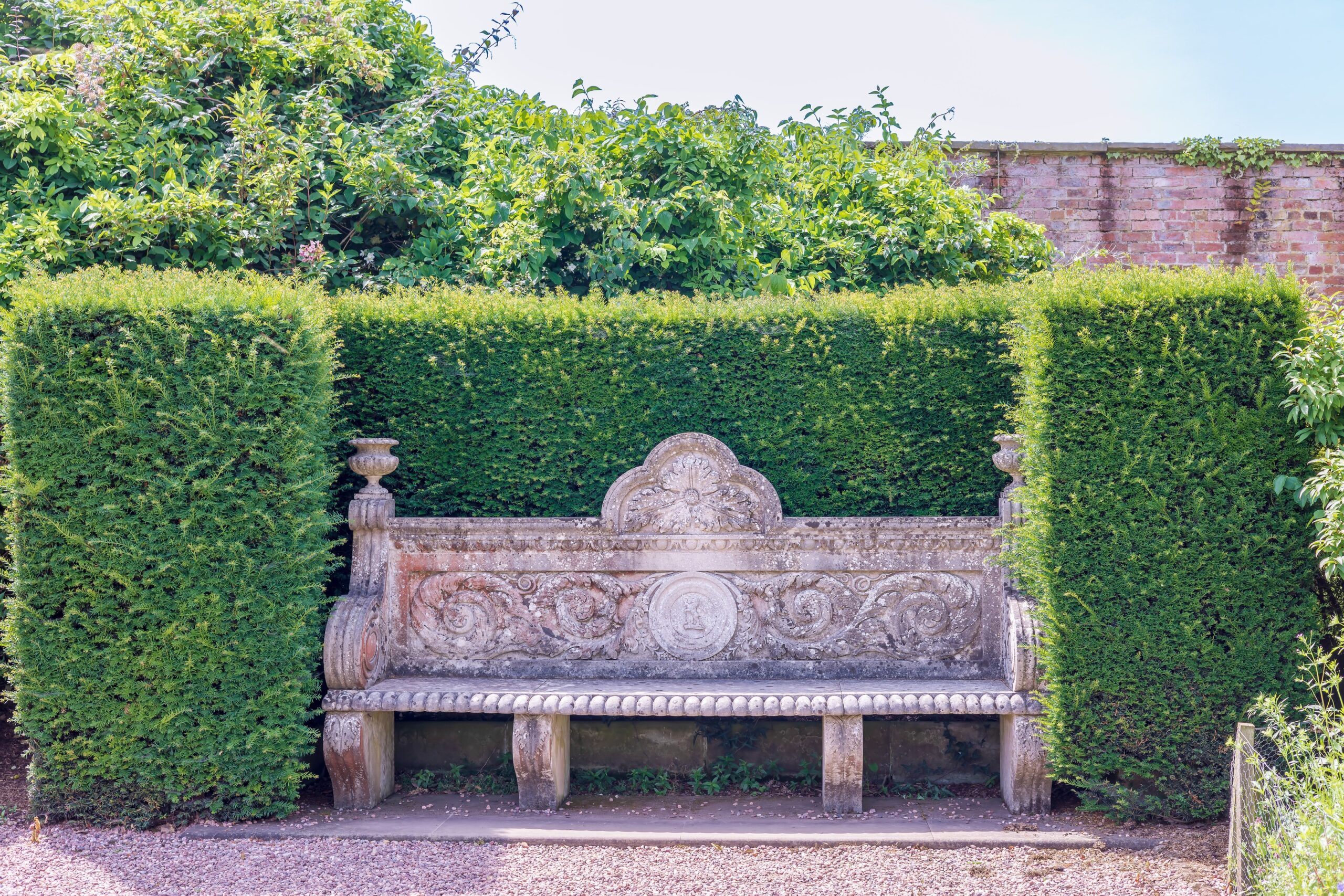
English yew (Taxus baccata) is the classic dark green hedging conifer for a formal look. It grows more slowly than Leylandii, typically 20 to 30cm a year, but clips into an exceptionally dense, smooth surface. Yew lives for centuries and responds well to a single annual trim in late summer or early autumn.
The big advantage over Leylandii is that yew can regenerate from old wood. If a yew hedge has grown too wide, you can cut it back hard in stages over two or three winters and it will produce new shoots from bare branches. This makes renovation possible, though it takes patience. Routine trimming is still best: keep the hedge within its allotted width from the start.
Yew tolerates shade better than most conifers, but it must have well-drained soil. It will not survive sitting in water. All parts of yew are toxic if eaten, so clear away clippings and think carefully about planting it where livestock or young children have access. Our English yew hedging comes as 20 to 40cm potted plants, 40 to 60cm bare root, and 60 to 80cm or 80 to 100cm rootball plants. Bare root yew is planted in the dormant season; rootball and potted plants can go in at other times with careful watering.
For a single row yew hedge, space plants 30 to 45cm apart. The closer spacing compensates for the slower growth and helps the hedge knit together at the base. A double row at 40 to 50cm spacing with plants offset gives an even denser screen, though it costs more and takes up more width.
Hedging conifers compared at a glance
Compare the annual growth, trimming needs and shade tolerance before deciding on quantities. Leylandii and Castlewellan Gold suit boundaries where quick height is important and regular clipping is practical. Yew is better suited to a slower-growing formal hedge, especially where some shade is unavoidable.
| Feature | Green Leylandii | Castlewellan Gold | English yew |
|---|---|---|---|
| Annual growth | 60 to 75cm | 50 to 60cm | 20 to 30cm |
| Trims per year | 2 to 3 | 2 to 3 | 1 |
| Regrows from old wood? | No | No | Yes |
| Shade tolerance | Low to moderate | Low to moderate | Moderate to good |
| Soil | Most well-drained soils | Most well-drained soils | Well-drained; dislikes wet |
| Toxicity | Mild skin irritant (sap) | Mild skin irritant (sap) | Toxic if eaten |
| Best for | Fast screening | Golden screening | Formal, long-lived hedge |
Planting conifer hedge plants: spacing, soil and aftercare
Clear grass and perennial weeds before digging a planting trench approximately 60cm wide, adjusting the depth to accommodate the roots without burying the stems. Loosen compacted soil at the bottom and along the sides so new roots can spread. Well-rotted organic matter can help improve poor soil when incorporated across the planting area. On heavy clay, adding a little grit to an individual trench will not solve persistent waterlogging. Check where water collects and improve drainage before planting.
Set each plant at the same depth it was growing in its pot or at the nursery soil mark on a bare root plant. Firm the soil gently with your heel, water thoroughly, and mulch with 5 to 7cm of bark or compost to hold moisture and suppress weeds. Keep the mulch clear of the stems to avoid rot.
Watering is critical in the first growing season. Give each plant a good soak once or twice a week in dry weather rather than a light daily sprinkle. A thorough drench encourages roots to grow down. Pot grown conifers can be planted year round, but avoid frozen or waterlogged ground. Bare root plants go in from November to March while they are dormant.
A staggered double row gives a deeper screen but takes up more garden space and requires additional plants. At 75cm spacing, the following quantities provide a starting point for common hedge lengths. Mark the positions before planting and allow enough room for the eventual width of the hedge:
Check the calculated quantities against your final planting positions, especially where a hedge ends against a wall, gate or existing tree.
- 5 metre hedge, single row at 75cm spacing: 7 plants
- 5 metre hedge, double row at 75cm spacing: 14 plants
- 10 metre hedge, single row at 75cm spacing: 14 plants
- 10 metre hedge, double row at 75cm spacing: 28 plants
- 20 metre hedge, single row at 75cm spacing: 27 plants
- 20 metre hedge, double row at 75cm spacing: 54 plants
When to trim a conifer hedge: month by month
The right trimming routine keeps your conifer hedge dense and green. The calendar below covers Leylandii and Castlewellan Gold, which need more frequent cuts, and yew, which is trimmed once a year.
| Month | Leylandii and Castlewellan Gold | English yew |
|---|---|---|
| January | No trimming: frost risk | No trimming: frost risk |
| February | No trimming: birds may be nesting soon | No trimming |
| March | Light tidy if mild; check for nests first | No trimming |
| April | First trim of the year possible | No trimming |
| May | Trim if growth is strong | No trimming |
| June | Main trim: shape sides and top | No trimming |
| July | Second trim if needed | No trimming |
| August | Final trim of the year; do not cut later | Trim once, late August to early September |
| September | No trimming: new growth needs to harden | Trim if not done in August |
| October | No trimming | No trimming |
| November | No trimming | No trimming |
| December | No trimming | No trimming |
Why is my Leylandii hedge turning brown?
Brown patches on a Leylandii hedge usually point to one of a few common problems. The most frequent cause is cutting back into old wood. Leylandii holds its green needles only on the outer growth, and a cut that exposes bare brown branches leaves a permanent scar. Keep your shears within the green zone.
Another common issue is conifer aphid (Cinara cupressi). These sap-sucking insects cause yellowing and browning of shoots, often in late spring and summer. You may see the greyish aphids clustered on the stems. A strong jet of water can dislodge light infestations, and natural predators often move in. Severe attacks may need a suitable insecticide, but check the label for use on conifers.
Drought stress also causes browning, especially on shallow chalk soils or in hot summers. A conifer hedge near a large tree or a building foundation can dry out quickly. Water deeply during dry spells, even on established hedges. Poor drainage has a similar effect: roots sitting in wet soil cannot take up water properly, and the foliage browns from the inside out. Check the soil at the base before you assume it is a pest or disease.
Will Leylandii grow back after cutting into brown wood? Generally, no. If only a small section has been cut too hard, surrounding green growth may eventually spread to cover it, but a large bare patch is likely to stay. Prevention is the only reliable cure: trim little and often.
Do Leylandii ever stop growing?
Leylandii does not have a natural ceiling. Left unpruned, a single tree can reach 35 metres or more over several decades. As a hedge, it will keep putting on height and width every year unless you trim it. Regular cutting does not stop the plant from growing; it simply removes the new extension growth before it adds to the overall size.
The key is to establish a trimming routine as soon as the hedge reaches your target height. Trim the top and sides two or three times a growing season, taking off the soft new shoots. Once you stop trimming, the hedge resumes its upward and outward growth. There is no point at which a Leylandii hedge becomes maintenance-free, so factor that into your choice if you are comparing it with slower hedging conifers like yew.
Mixed dwarf conifers: not a hedging choice
Mixed dwarf conifers are a different product for a different purpose. These collections contain conifers with different growth habits, foliage colours and mature sizes. They are better placed in rock gardens, containers or mixed borders, where each plant has room to develop its own shape. Allow for the eventual spread of each conifer rather than planting the assortment at conventional hedge spacing.
They will not form a uniform hedge. The plants in a mixed collection vary in growth rate, eventual size and habit. Some stay rounded, others grow upright, and the colours range from blue-grey to gold to deep green. For a straight, even conifer screening hedge, choose a single named variety such as Green Leylandii, Castlewellan Gold or English yew, and buy plants of a consistent size and root type.
Our mixed dwarf conifer collections come in several pack sizes: 9cm pots in packs of 4, potted plants in packs of 6, 12 or 18, and 2 litre pots in packs of 6. The plants can be grown in suitable garden soil or containers with drainage holes. Check their individual growth habits before positioning them, and remove dead or damaged shoots when necessary rather than clipping the whole collection to a uniform height.
Common questions
When to trim a conifer hedge?
Trim Leylandii and Castlewellan Gold two or three times between April and August, keeping cuts within the green growth. Do not trim after August, as soft new shoots need time to harden before winter. English yew needs only one trim, in late August or early September. Always check for nesting birds before cutting.
How fast do conifers grow?
Green Leylandii grows 60 to 75cm a year in good conditions. Castlewellan Gold adds 50 to 60cm annually. English yew is slower at 20 to 30cm a year. Growth rates depend on soil, light and water. A plant in dry, compacted ground will grow more slowly than one in prepared, well-drained soil.
Why is my Leylandii hedge turning brown?
The most likely causes are cutting into old brown wood, conifer aphid infestation, drought stress or waterlogged roots. Check whether the browning follows a recent trim, look for greyish aphids on the stems, and feel the soil at the base. Leylandii does not regrow from bare wood, so trim carefully to avoid permanent brown patches.
Will Leylandii grow back after cutting?
Leylandii will not regrow from old, brown wood. If you cut back into bare branches, those areas stay bare. Small patches may eventually be hidden by surrounding green growth, but large cut-back areas are permanent. The best approach is to trim lightly and regularly, never cutting beyond the green outer layer.
Do Leylandii ever stop growing?
No. Leylandii keeps growing in height and width every year unless you trim it. Regular trimming controls the size but does not stop the plant's growth. If you stop cutting, the hedge will quickly put on new extension growth. There is no maintenance-free stage, so plan for two to three trims a year for the life of the hedge.