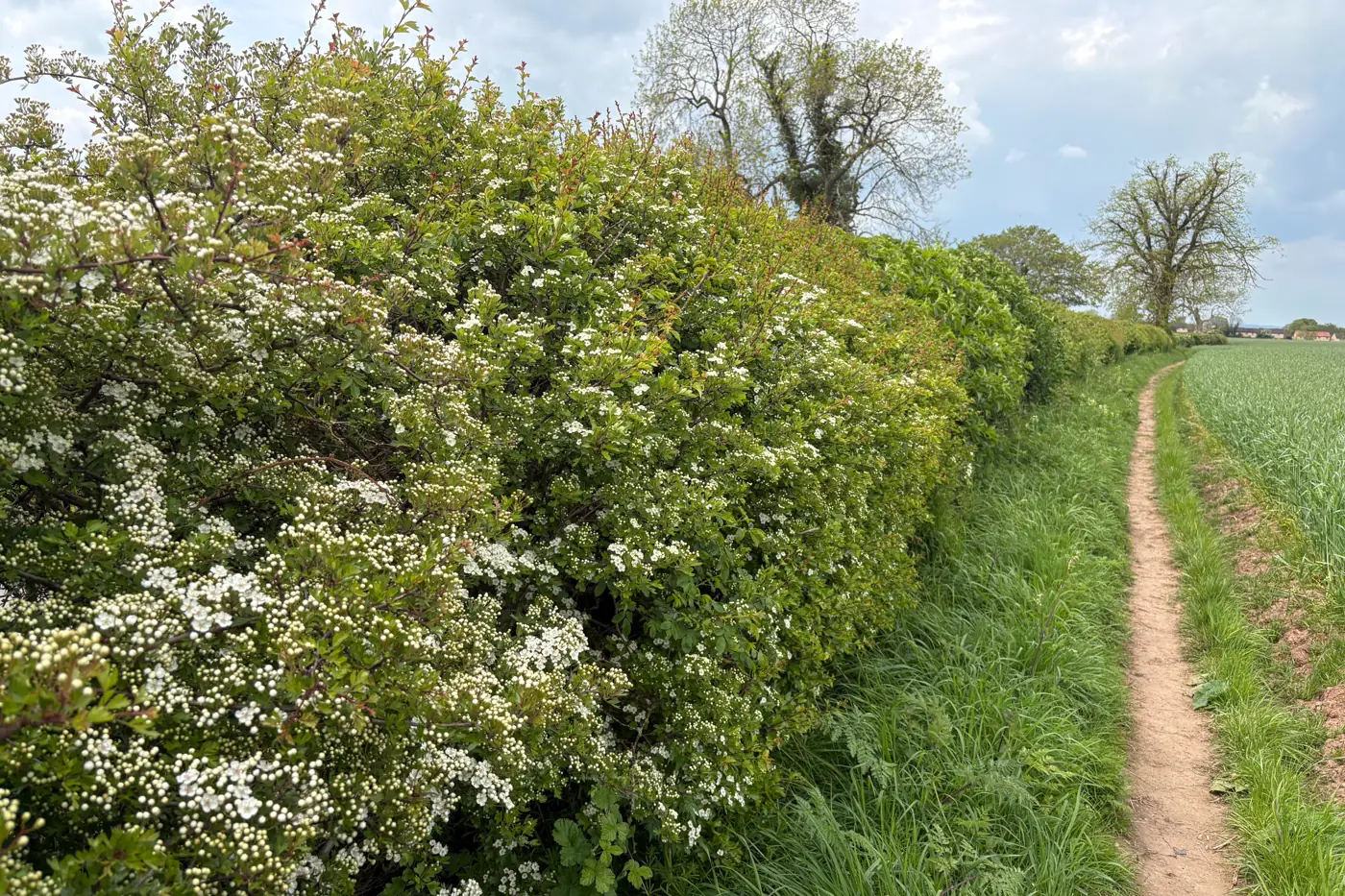
What is a hawthorn tree?
Common hawthorn, Crataegus monogyna, is a small to medium-sized native tree or large shrub found in hedgerows, woodlands and gardens throughout the British Isles. It is also called quickthorn, may, whitethorn or thornapple. The name quickthorn reflects its vigorous growth. Regular cutting encourages the low, closely branched growth needed for a dense boundary, although a newly planted hedge should not be treated as stock-proof without suitable fencing.
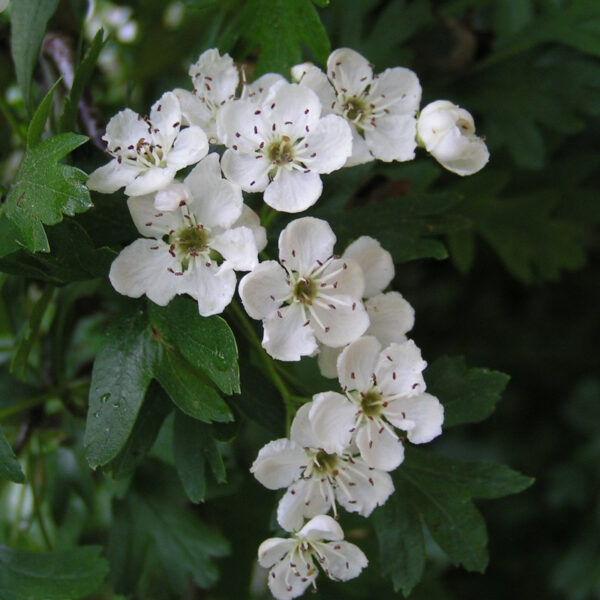
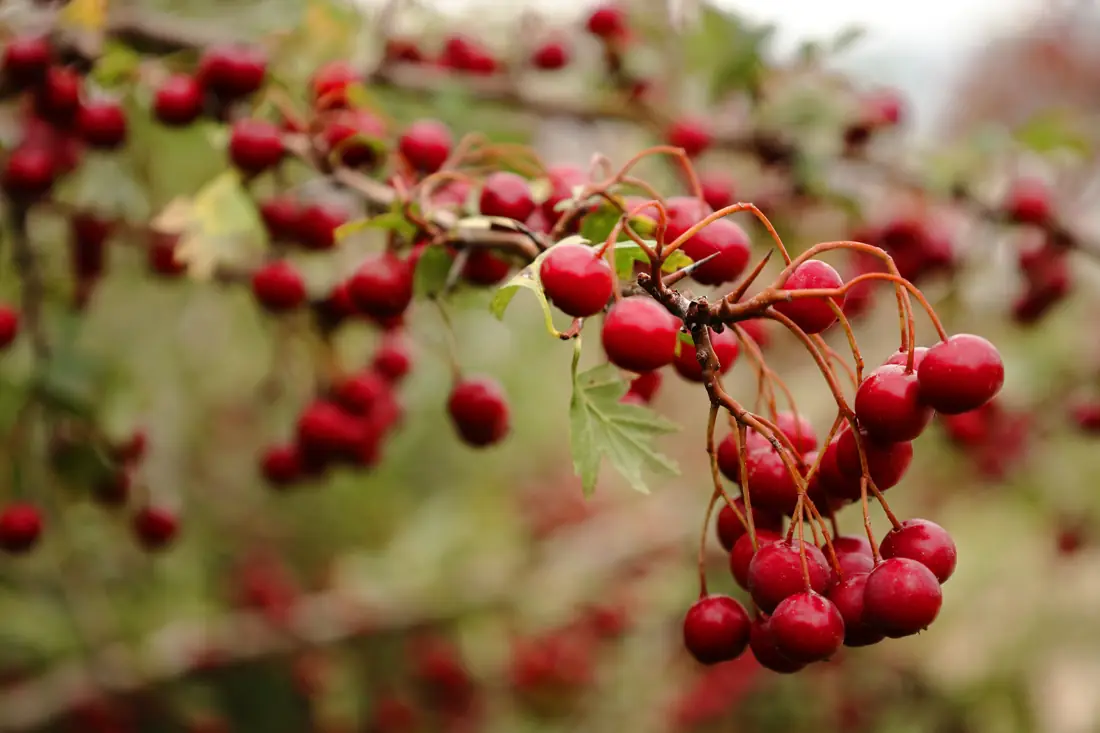
Hawthorn belongs to the rose family, Rosaceae, and is one of several Crataegus plants grown in the UK. Its deeply lobed, glossy green leaves appear in early spring, followed by clusters of creamy white, sometimes pink-tinged, blossom in May. The flowers have a distinctive, slightly musky scent and are pollinated by insects. By autumn, the flowers develop into oval red fruits called haws, each containing a single hard seed. These haws persist well into winter, providing food for thrushes, blackbirds, finches and redwings.
The bark is grey-brown and becomes deeply fissured with age, while the young twigs carry sharp thorns up to 2.5 cm long. These thorns make hawthorn an excellent choice for a security hedge. Left to grow as a tree, Crataegus monogyna can reach 10 to 15 metres tall with a rounded, spreading crown, but it is most commonly seen as a hedge kept between 1.5 and 3 metres.
Hawthorn is exceptionally hardy, tolerating exposed sites, coastal winds, heavy clay and urban pollution. It supports more than 300 species of insect and is one of the most valuable native plants for biodiversity in a UK garden.
What is the difference between blackthorn and hawthorn?
Blackthorn (Prunus spinosa) and hawthorn are both thorny native shrubs often found in mixed hedgerows, but they are easy to separate once you know what to look for. The most reliable difference is flowering time. Blackthorn flowers in early spring, usually March and April, before its leaves open. The small, pure white flowers appear on bare, dark stems. Hawthorn flowers much later, in May, after the glossy green leaves have fully emerged.
The leaves are also distinct. Blackthorn leaves are small, oval and finely toothed, with a dull, slightly wrinkled surface. Hawthorn leaves are deeply lobed, almost like a miniature oak leaf, and are a brighter, shinier green. The fruits differ too: blackthorn produces round, blue-black sloes with a powdery bloom, while hawthorn bears clusters of bright red haws.
Growth habit offers another clue. Blackthorn spreads vigorously by suckering and can form dense thickets if left unchecked. Hawthorn rarely suckers and grows as a single-stemmed tree or multi-stemmed shrub. Both make excellent hedging, but hawthorn is generally faster to establish and easier to manage as a formal clipped hedge.
What are the disadvantages of hawthorn trees?
Hawthorn has two practical drawbacks: sharp thorns and winter leaf loss. Both matter when deciding where to plant it, particularly beside paths, play areas or a boundary that needs privacy throughout the year.
The most obvious disadvantage is the thorns. Mature hawthorn branches carry hard, sharp spines that can make pruning, trimming and even weeding around the base uncomfortable. Thorns can puncture skin, gloves and clothing, so you need stout leather gauntlets and eye protection when handling cut branches. Fallen thorns remain sharp for months and can pierce footwear or bare feet, which is a genuine concern if children or pets use the area.
Hawthorn is deciduous, so a hawthorn hedge will lose its leaves in autumn and remain bare until spring. If you need year-round screening, an evergreen hedge such as yew, holly or laurel may be more suitable. You can mix hawthorn with evergreens in a mixed native hedge to improve winter density, but pure hawthorn hedging will be see-through from November to March.
Leaf drop in autumn can be heavy, and the fallen leaves break down slowly. You may need to clear paths and lawns regularly to prevent a slippery, soggy layer building up. Hawthorn is also susceptible to a few common problems. Fireblight, a bacterial disease, can cause shoots to wilt and die back suddenly. Leaf spot fungi and powdery mildew can affect appearance in wet summers, though they rarely kill the plant. Aphids can colonise young shoots in spring, leading to sticky honeydew and distorted growth.
Finally, hawthorn is not suitable for very small gardens if you want a single specimen tree. Its spreading habit and eventual size demand space. However, it can be kept compact as a clipped hedge or grown as a multi-stem shrub in a larger border.
Shop the plants in this guide
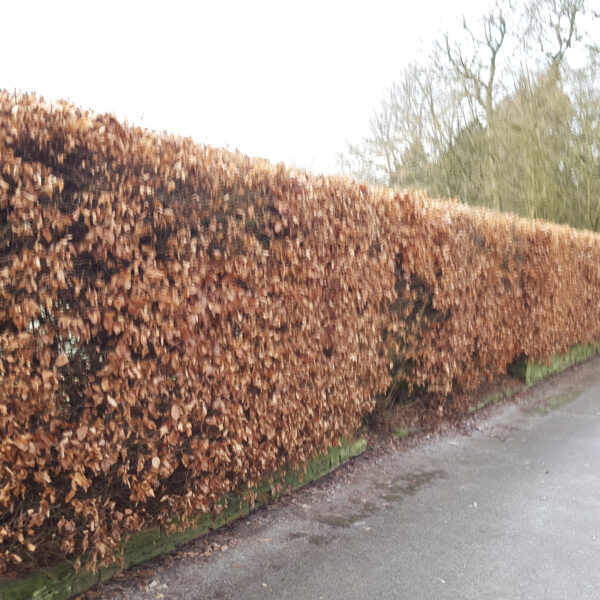
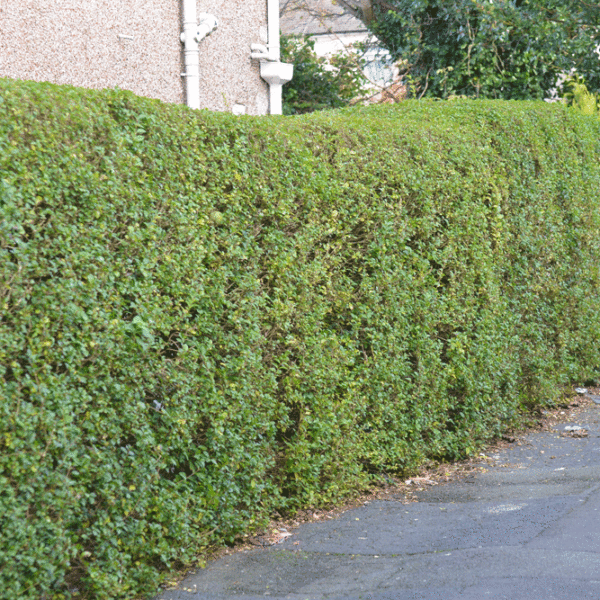
We supply common hawthorn hedging as bare root plants in two size grades: 40/60 cm and 60/90 cm. Both are ideal for establishing a dense, native hedge at low cost during the dormant season.
Is a hawthorn tree suitable for a small garden?
A full-sized hawthorn tree is rarely suitable for a small garden because it can reach 10 metres or more with a broad, domed crown that casts dense shade. However, hawthorn is extremely adaptable and there are several ways to include it in a modest space.
As a hedge, hawthorn is one of the best choices for a small garden. Planted as bare root whips and trimmed once or twice a year, a hawthorn hedge can be kept as narrow as 45 to 60 cm wide and at any height from 1 metre upwards. This gives you a dense, thorny boundary that takes up very little ground space. You can also grow hawthorn as a pleached or stilted hedge, where the lower branches are removed to create a clear stem with a flat, clipped canopy above. This works well along a fence line or to screen an overlooked area without using much width.
For a free-standing tree, allow room for the crown to spread as it matures. A young common hawthorn can be trained with several main stems to give it a shrubby shape, although regular pruning will still be needed to control its size. Long-term container growing is less practical because the roots eventually need more space and the compost dries out quickly in warm weather.
What is special about the hawthorn tree?
Hawthorn occupies a unique place in British culture, ecology and garden design. Its folklore runs deep: the May blossom was traditionally used to celebrate Beltane and decorate maypoles, while lone hawthorn trees were often regarded as fairy trees in Celtic tradition. Cutting one down was considered unlucky, and some old trees still stand on farms and in hedgerows as a result.
Ecologically, few native trees match hawthorn for wildlife value. The blossom provides nectar and pollen for bees, hoverflies, moths and butterflies early in the season when few other sources are available. The dense, thorny branches offer secure nesting sites for blackbirds, song thrushes, dunnocks, finches and wrens. The autumn haws are a critical food source for migrating and resident birds, and the leaves support caterpillars of many moth species including the hawthorn moth, lackey moth and vapourer moth.
In a garden hedge, hawthorn earns its space through the changing seasons. Fresh, lobed leaves appear in spring, followed by white May blossom and red haws in autumn. It tolerates regular clipping and a range of soils, including heavy clay, once established. Bare root plants are an economical way to cover a long boundary, and an established hedge can remain productive for many decades with sensible maintenance. Leave some flowering and fruiting growth each year if wildlife is a priority.
How to plant a hawthorn hedge
Planting a hawthorn hedge is straightforward if you follow a few key steps. The best time to plant is during the dormant season, from November to March, when bare root hawthorn plants are available. Bare root whips establish quickly, are cheaper than potted plants and are the standard way to plant hedging hawthorn in the UK.
Choose a sunny or partially shaded site. Hawthorn tolerates shade but flowers and fruits best in full sun. It grows on almost any soil except waterlogged ground. On heavy clay, loosen compacted ground across the planting strip and incorporate well-rotted organic matter where appropriate. Adding grit to an individual planting hole will not reliably improve drainage, so avoid sites that remain waterlogged. Clear the planting strip of weeds and grass, because competition in the first year slows establishment significantly.
Plant the bare root whips as follows:
- Soak the bare roots in a bucket of water for 1 to 2 hours before planting. Do not leave them submerged overnight.
- Mark out the line of the hedge using a string line. For a single row hedge, dig a trench 30 cm wide and 30 cm deep. For a thicker double row, dig a 50 cm wide trench and stagger the plants in two lines 30 cm apart.
- Fork a little well-rotted compost or leaf mould into the base of the trench, but avoid fresh manure or high-nitrogen fertiliser at planting time.
- Set each plant at the correct depth. Look for the soil mark on the stem; this should be level with the surrounding soil surface. Planting too deep can cause stem rot.
- Space the plants according to your goal. For a dense single row hedge, plant at 30 cm intervals (3 to 4 plants per metre). For a thicker, stock-proof double row, use 5 to 7 plants per metre with 40 cm between rows.
- Backfill the trench, firming the soil gently with your heel as you go to remove air pockets. Water thoroughly after planting, even if the soil is damp.
- Apply a 5 to 7 cm layer of organic mulch, such as wood chip or bark, around the plants. Keep the mulch clear of the stems to prevent rot.
- If rabbits or deer are present, fit spiral tree guards or wire mesh guards to each plant immediately.
Hawthorn hedge spacing and sizing guide
Spacing depends on how quickly you want a dense hedge and on planting a single or a double row. The table below gives recommended spacings for bare root hawthorn whips.
Our common hawthorn hedging plants are available as bare root whips in two size grades, both of which establish well and can be cut back hard after planting to encourage bushy growth.
| Planting style | Plants per metre | Spacing between plants | Time to dense hedge |
|---|---|---|---|
| Single row, standard density | 3 | 33 cm | 3 to 4 years |
| Single row, high density | 4 | 25 cm | 2 to 3 years |
| Double row, staggered | 5 to 7 | 30 to 40 cm within rows | 2 to 3 years |
Watering and feeding hawthorn hedging
Newly planted hawthorn needs consistent moisture during its first growing season. Water deeply once a week in dry weather, applying 5 to 10 litres per metre of hedge. A thorough soak encourages deep rooting; frequent light watering does not. In the second year, water only during prolonged dry spells. Established hawthorn is remarkably drought-tolerant and rarely needs supplementary watering except on very free-draining sandy soils.
Feeding is not essential, but a light annual mulch of well-rotted compost or leaf mould applied in late winter will improve soil structure and provide slow-release nutrients. If growth is weak or leaves look pale, apply a balanced general-purpose fertiliser such as fish, blood and bone in March at 50 to 70 g per square metre. Avoid high-nitrogen feeds late in the season, because soft late growth is vulnerable to frost damage and fireblight.
Pruning and trimming a hawthorn hedge: month-by-month guide
When trimming, use sharp shears or a hedge trimmer and cut to a slight batter, meaning the hedge is wider at the base than the top. This allows light to reach the lower branches, preventing bare legs. Always wear thick gloves and eye protection; the thorns are unforgiving.
For a newly planted hedge, cut back all stems by one-third to one-half immediately after planting. This encourages low branching and a dense base. In the second year, trim lightly in June and again in late winter. By the third year, you can move to the regular schedule above.
| Month | Action | Notes |
|---|---|---|
| January | Light trim if weather mild | Shape the hedge while dormant; avoid heavy frosty days. |
| February | Light trim if not done in January | Complete any winter shaping before birds start nesting. |
| March to May | No cutting | Main nesting season begins. Check for nests if cutting is unavoidable. |
| June | Main post-flowering trim | Cut back new growth by one-third to half. This is the key trim for density. |
| July | Tidy up if needed | Lightly trim any wayward shoots; check again for late nests. |
| August | No cutting | Allow birds to finish nesting. Haws are forming; leave for wildlife. |
| September to October | Light trim if growth is vigorous | Neaten the hedge before winter, but leave some haws for birds. |
| November to December | Renovation pruning if needed | Hard pruning of overgrown hedges is best done when fully dormant. |
Common hawthorn problems and how to fix them
Check hawthorn regularly for wilting shoots, discoloured leaves and insect damage. The symptoms below can help distinguish a minor seasonal problem from one that needs closer attention.
Fireblight is the most serious disease. Caused by the bacterium Erwinia amylovora, it makes shoots wilt, turn brown and die back, often with a characteristic shepherd’s crook tip. The bark may show sunken, oozing cankers. Prune out affected shoots at least 30 cm below visible damage, cutting into healthy wood. Disinfect tools between cuts with a garden disinfectant. Burn or bin the prunings; do not compost them. There is no chemical cure, but good hygiene and avoiding high-nitrogen feeds reduce risk.
Leaf spot, caused by the fungus Diplocarpon mespili, produces small purple-brown spots on leaves, which may yellow and fall early. Severe cases can cause significant defoliation by late summer. Rake up and dispose of fallen leaves in autumn to reduce overwintering spores. The tree usually recovers without treatment. Ensure good air circulation by avoiding overcrowding.
Powdery mildew appears as a white, dusty coating on leaves and young shoots in dry, warm weather. It is rarely damaging, but you can improve airflow by thinning congested branches in winter. Avoid overhead watering.
Aphids, particularly rosy apple aphid, can cluster on shoot tips in spring, causing curled, sticky leaves. Natural predators like ladybirds, hoverfly larvae and blue tits usually control them. If infestations are heavy, blast them off with a jet of water or use a winter wash on dormant plants.
Rabbits and deer will browse young hawthorn stems and can kill newly planted whips. Fit spiral guards or wire mesh at planting time and check them regularly. Mature hawthorn is generally safe once the bark thickens.
Safety and the law when growing hawthorn
Hawthorn thorns demand respect. Always wear thick leather gloves, long sleeves and eye protection when pruning, trimming or handling cut branches. Thorns can cause deep puncture wounds that are slow to heal and prone to infection. Keep a first aid kit handy and clean any wounds thoroughly. Fallen thorns remain sharp for a long time, so rake up prunings promptly and avoid walking barefoot near a recently trimmed hedge.
The haws are not poisonous to humans, but the seeds contain small amounts of cyanogenic compounds and should not be eaten in quantity. The flesh is edible and can be used to make jelly, ketchup or fruit leather, but always strain out the seeds. Hawthorn poses low risk to dogs and cats, though eating large quantities of any plant material can cause mild stomach upset.
Under the Wildlife and Countryside Act 1981, it is illegal to damage or destroy an active bird’s nest. Always inspect the hedge carefully before cutting between March and August, and ideally delay major trimming until after the nesting season. If you discover an active nest, stop work and leave a generous buffer around it until the young have fledged.
If your hawthorn hedge forms a boundary with a neighbour, the usual rules on boundary hedges apply. You have the right to trim growth on your side, but you must not cut beyond the boundary line without permission. Offer any trimmings that belong to the neighbour, as they remain their property under common law.
Design ideas: using hawthorn in your garden
Hawthorn is far more versatile than its reputation as a farm hedge suggests. Here are several ways to use it in a garden setting.
A classic native mixed hedge combines hawthorn with blackthorn, field maple, hazel, dog rose and holly. This creates a wildlife-rich boundary with a long season of interest: catkins in late winter, blossom in spring, fruits and nuts in autumn, and evergreen holly for winter structure. Plant at the same spacing as a pure hawthorn hedge, mixing species randomly or in small groups.
For a formal garden, a single-species hawthorn hedge clipped to a crisp rectangle or dome shape brings structure and seasonal change. The fresh green leaves in spring, white flowers in May and red berries in autumn give three distinct looks across the year. Keep the hedge between 1.2 and 1.8 metres tall for the best balance of formality and ease of trimming.
A hawthorn tree makes a fine specimen for a medium to large lawn or meadow area. Choose a strong single leader when the plant is young and remove lower branches gradually over several years to create a clear trunk. Underplant with spring bulbs such as bluebells, wild garlic or wood anemones for a naturalistic woodland edge feel.
Hawthorn can also be used as part of a security hedge. The thorns are a genuine deterrent to intruders, and a dense, well-maintained hawthorn hedge is extremely difficult to push through. For maximum security, plant a double row at high density and trim to a flat, wide profile.
Buying hawthorn hedge plants: what to look for
When you buy hawthorn hedge plants, you will almost always be offered bare root stock. Bare root plants are field-grown, lifted during the dormant season and delivered without soil on the roots. They are lightweight, affordable and establish quickly when planted between November and March. Look for plants with a strong, fibrous root system and straight, undamaged stems. The stem should be at least 40 cm tall for a good start; 60 to 90 cm whips give a more immediate effect and are easier to protect from rabbits.
Avoid plants with dry, shrivelled roots or signs of mould. On delivery, check that the roots are still moist. If you cannot plant immediately, heel the plants into a temporary trench or store them in a cool, frost-free place with the roots wrapped in damp sacking.
For hawthorn hedging, bare root whips are a practical and economical choice. They are planted while dormant, usually between November and March, when cool conditions reduce moisture loss from the roots. Plan your planting for this period and prepare the ground beforehand so the roots can be covered promptly.
Common hawthorn hedging is available as bare root plants in two size grades: 40/60 cm and 60/90 cm. Both are suited to dormant-season planting from November to March. Choose the smaller grade for economical planting over a long boundary, or the taller whips where you want more initial height. Cutting back after planting encourages branching close to the ground.
Frequently asked questions about hawthorn trees and hedging
Common questions
Hawthorn tree
The hawthorn tree, Crataegus monogyna, is a native British deciduous tree or large shrub valued for its white May blossom, red autumn haws and dense, thorny growth. It is widely used for hedging and as a wildlife-friendly specimen tree.
What are the disadvantages of hawthorn trees?
The main disadvantages are sharp thorns that make pruning difficult, deciduous leaves that leave the hedge bare in winter, heavy leaf fall in autumn, and susceptibility to fireblight, leaf spot and aphids. It can also grow too large for very small gardens if left unpruned.
Is a hawthorn tree suitable for a small garden?
A full-sized tree is not suitable for a small garden, but hawthorn makes an excellent hedge that can be kept narrow and at any height. It can also be trained as a pleached hedge or kept compact as a multi-stem shrub with regular pruning.
What is special about the hawthorn tree?
Hawthorn is special for its rich folklore, outstanding wildlife value, beautiful May blossom and incredible toughness. It supports hundreds of insect species, provides nesting sites and winter food for birds, and thrives on poor soils and exposed sites.
What is the difference between blackthorn and hawthorn?
Blackthorn flowers in early spring before its leaves appear, while hawthorn flowers in May after the leaves open. Blackthorn has small, oval leaves and blue-black sloes; hawthorn has lobed leaves and red haws. Blackthorn also suckers freely, unlike hawthorn.
How to plant a hawthorn hedge
Plant bare root whips between November and March in a weed-free trench. Soak roots first, set plants 25 to 40 cm apart, backfill firmly and water well. Mulch and fit rabbit guards if needed. Cut back stems by one-third after planting to encourage bushy growth.
When should I trim a hawthorn hedge?
Trim after flowering in June as the main cut, with a lighter tidy in late winter. Avoid cutting during the main bird nesting season from March to August unless you have checked for active nests. Hard renovation pruning is best done in winter dormancy.
Do hawthorn thorns cause injury?
Yes, the thorns are sharp and can cause deep puncture wounds. Always wear thick leather gloves, long sleeves and eye protection when handling hawthorn. Clean any wounds promptly and keep your tetanus vaccination up to date.
Are hawthorn berries poisonous to humans or pets?
The flesh of the haws is edible and can be cooked into jelly or ketchup, but the seeds contain compounds that should not be eaten in quantity. Hawthorn is low risk for dogs and cats, though eating large amounts may cause mild stomach upset.