Why people are replacing box (blight and caterpillar)
If box blight or box tree caterpillar has damaged your edging, English yew is a strong replacement for a formal clipped hedge. Holly, euonymus and compact hebes offer other possibilities, depending on the shape and height you want. Box blight (Cylindrocladium buxicola and Volutella buxi) and the box tree caterpillar (Cydalima perspectalis) have made traditional Buxus sempervirens a high-maintenance choice. Blight causes black spots, dieback and bare patches. Caterpillars can strip a plant of leaves in days, leaving webbing and greenish frass behind.
For low edging, the important details are how densely a plant branches, how it responds to clipping and how much space it needs once established. The right choice depends on your garden style, soil and how much trimming you are willing to do. Below we look at four plants that work as an alternative to box hedging, from classic English yew to bright variegated euonymus and compact hebes.
Yew as a box alternative
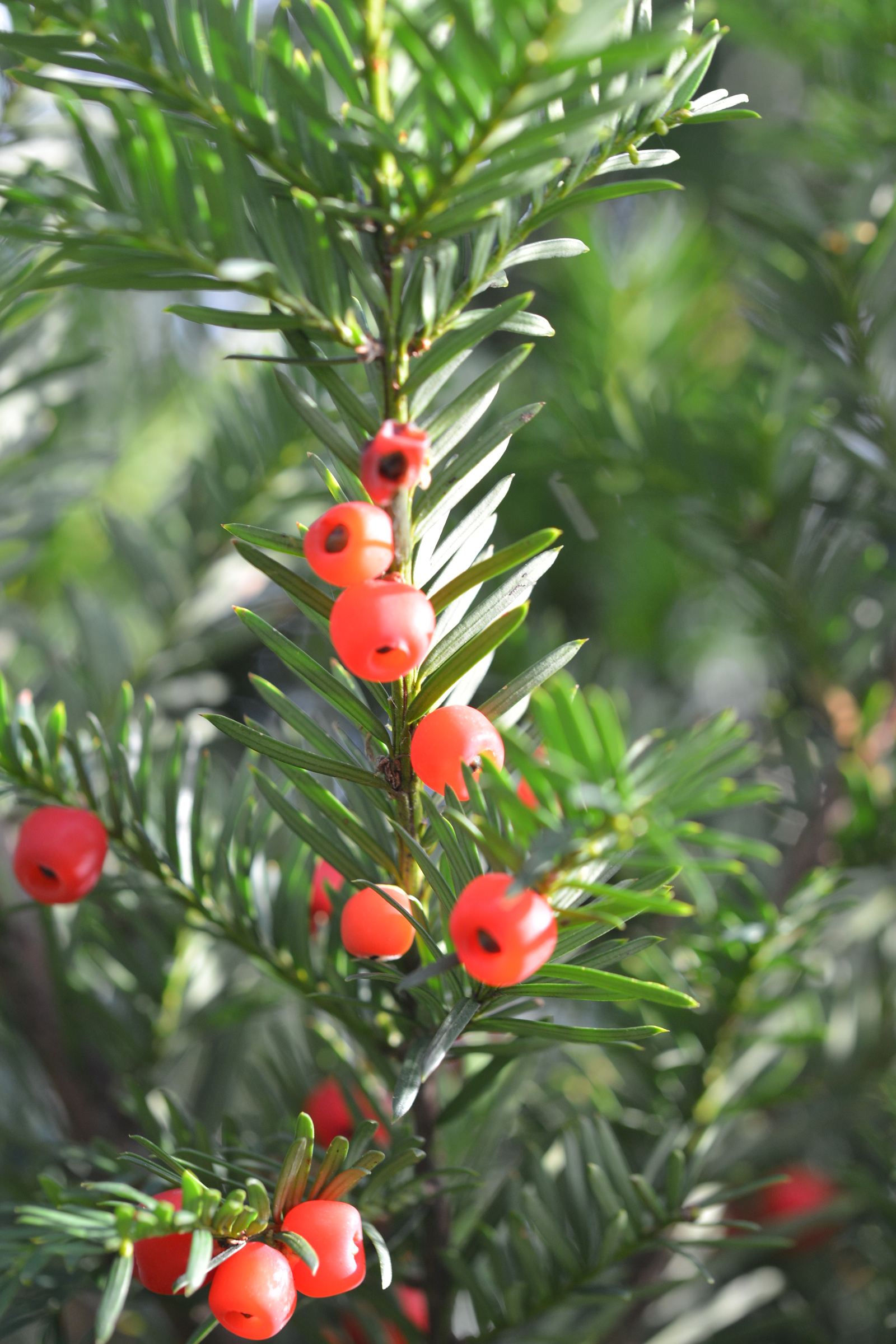
English yew (Taxus baccata) is the closest match to box for a formal, long-lived low hedge. It has small, very dark green needles, a dense habit and the ability to regenerate from old wood after hard pruning. Unlike box, yew is not affected by box blight or box caterpillar. It grows slowly at 15 to 30cm a year once established, so it holds its shape well and needs trimming only once or twice a year.
Yew suits a hedge height from 30cm up to several metres, but for a box replacement you would keep it clipped at 30 to 60cm. Plant bare root yew during the dormant season, roughly November to March. Our bare root English yew is supplied at 40 to 60cm, while the smaller 20 to 40cm plants are potted. For a low formal hedge, allow approximately 4 to 5 plants per metre in a single row. For a thicker hedge, use a double row with plants 35cm apart in the row and 30cm between rows. Prepare the soil well and avoid waterlogged ground; yew hates wet feet. All parts of yew are toxic to people and livestock, so wear gloves and keep clippings away from animals.
- Grows 15 to 30cm per year once established
- Trim once or twice a year, in summer and early autumn
- Tolerates shade and a range of soils if well-drained
- Toxic to people and animals: handle with care
Holly and dwarf options
English holly (Ilex aquifolium) makes a sturdy, glossy alternative to box hedge, especially where you want a prickly barrier. It is evergreen, slow-growing and clips into a dense formal shape. Young holly plants can be a little slower to knit together than yew, so patience is needed. Our English holly is supplied in 9cm pots, including 30 to 40cm plants. For a closely planted single row, allow 4 to 5 plants per metre, adjusting the spacing if you want a wider, less formal hedge. Trim holly once in late summer to keep it neat.
For a lower, naturally compact edge, dwarf evergreen azaleas and mixed dwarf conifers offer a different look. Dwarf evergreen azaleas have small leaves and colourful spring flowers, although their eventual size varies by variety and some can grow beyond 60cm. They need acidic, well-drained soil. On alkaline ground, a large container with ericaceous compost is generally more suitable than adding compost to a planting hole. Dwarf conifers give a textured, year-round structure but clip less formally. Both can provide low evergreen planting around small borders, although neither gives the same sharply clipped outline as box. Dwarf azaleas are particularly useful where spring flowers are wanted, while conifers contribute contrasting foliage shapes.
- Holly: prickly, glossy, slow-growing, trim in late summer
- Dwarf azaleas: under 60cm, spring flowers, needs acid soil
- Dwarf conifers: varied textures, low maintenance, clip lightly
Euonymus and hebe for low edging
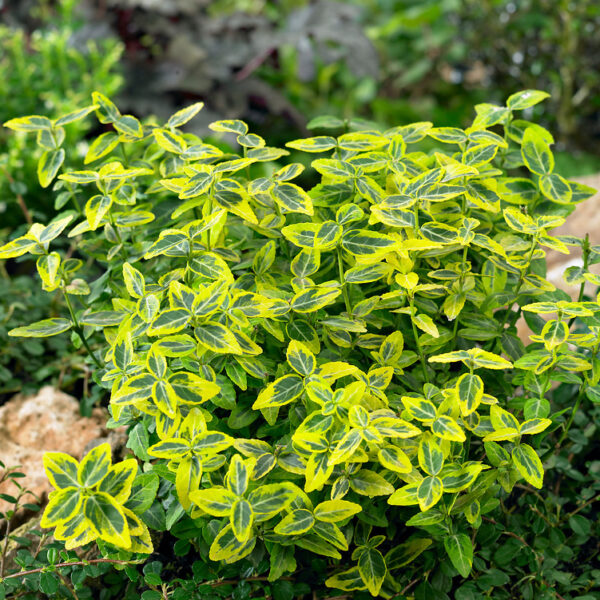
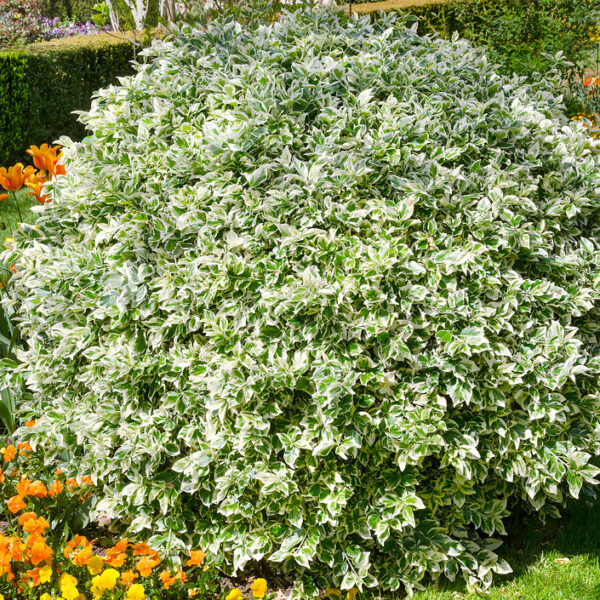
Euonymus fortunei varieties like Emerald 'n' Gold and Emerald Gaiety are popular low-maintenance alternatives to box hedging. They have small, variegated evergreen leaves and a naturally bushy habit. Emerald 'n' Gold has bright gold-edged foliage; Emerald Gaiety has white-edged leaves that take on a pink tinge in winter. Both grow slowly, to around 50 to 100cm if left unpruned, but are easily kept at 30 to 40cm with a light trim in spring and again in late summer.
Hebe Red Edge and mixed hebes offer a different texture, with small, grey-green or purple-tinged leaves and summer flowers that attract bees. Hebe Red Edge develops a rounded habit, often reaching around 60cm in favourable conditions. Its small grey-green leaves have reddish margins, particularly noticeable in cooler weather, and its summer flowers are pale lilac. It is hardy in most UK gardens but can suffer in very cold, wet winters. Plant hebes 30 to 40cm apart for a low informal hedge or edging. Trim lightly after flowering to keep plants compact.
- Euonymus Emerald 'n' Gold: gold and green, 50 to 100cm, trim twice a year
- Euonymus Emerald Gaiety: white and green, pink winter tints, 50 to 100cm
- Hebe Red Edge: grey-green leaves, lilac flowers, 60cm, trim after flowering
- Mixed hebes: varied colours, bee-friendly, 30 to 40cm spacing
Spacing for low hedges
Spacing matters when replacing a narrow box border. The table gives starting quantities for a single row intended to form a hedge around 30 to 60cm tall. Allow for each plant's natural width and the amount of pruning needed to hold that height. For a thicker hedge, plant a staggered double row with the same within-row spacing and 25 to 30cm between rows.
| Plant | Supplied height (example) | Plants per metre (single row) |
|---|---|---|
| English yew | 20-40cm potted | 4 to 5 |
| English holly | 30-40cm 9cm pot | 4 to 5 |
| Euonymus Emerald 'n' Gold | 9cm pot | 4 to 5 |
| Euonymus Emerald Gaiety | 2 litre pot | 3 to 4 |
| Hebe Red Edge | 9cm pot | 3 to 4 |
| Mixed hebes | 9cm pot | 3 to 4 |
When to trim box hedge (and its alternatives)
Knowing when to trim box hedge helps you time cuts for your new plants too. Traditional box is trimmed on Derby Day, around early June, with a second light trim in early September. These dates are traditional trimming guides, not an exemption from protecting nesting birds. Birds may still have active nests in June or September, so inspect the hedge before cutting and postpone work wherever an active nest could be disturbed.
For box alternatives, the trimming calendar shifts a little. Yew is best trimmed once in summer (June to August) and again in early autumn. Holly needs one trim in late summer. Euonymus responds well to a spring tidy and a late summer clip. Hebes should be trimmed lightly after flowering, usually in late summer. Avoid cutting any evergreen hedge in very hot, dry weather or when frost is forecast.
| Plant | First trim | Second trim (if needed) |
|---|---|---|
| Box (Buxus) | Early June | Early September |
| English yew | June to August | Early autumn |
| English holly | Late summer | Not usually needed |
| Euonymus fortunei | Spring | Late summer |
| Hebe | After flowering (late summer) | Not usually needed |
Common questions
What is the best alternative to box hedge for a formal look?
English yew is the best match for a formal, low hedge. It has small dark green needles, clips very sharply and regenerates from old wood. It is not affected by box blight or box caterpillar. Yew grows slowly and needs trimming only once or twice a year. All parts are toxic, so wear gloves when handling.
Can I plant a box hedge alternative in shade?
Yes. English yew is one of the best evergreens for shade and will grow happily against a north wall or under trees, as long as the soil is well-drained. Euonymus fortunei varieties also tolerate partial shade, though their variegation may be less bright. Holly copes with light shade. Hebes and dwarf azaleas need sun to flower well.
How far apart should I plant a low alternative to box hedging?
For a low hedge kept at 30 to 60cm, allow approximately 4 to 5 plants per metre for smaller yew or holly plants, giving a spacing of roughly 20 to 25cm. This is close planting, so allow enough soil moisture and room for the roots to establish. Euonymus and hebes can be spaced 25 to 33cm apart (3 to 4 per metre). For a thicker hedge, use a staggered double row with 25 to 30cm between rows. Always check the specific plant label.
When should I trim a box hedge alternative?
Trim yew once in summer (June to August) and again in early autumn. Holly needs one trim in late summer. Euonymus benefits from a light clip in spring and late summer. Hebes should be trimmed lightly after flowering. Always check for nesting birds before cutting between March and August.
Are box hedge alternatives safe for pets?
Some are not. English yew is highly toxic to dogs, cats, horses and livestock; all parts except the red fleshy aril around the seed are poisonous. Holly berries can cause stomach upset if eaten. Euonymus is mildly toxic. Hebes are generally considered safe. Always check toxicity and keep pets away from clippings.
Do I need to feed a new alternative to box hedge?
A light feed in spring helps young plants establish. Use a general-purpose slow-release fertiliser or a mulch of well-rotted compost around the base, keeping it clear of the stems. Avoid high-nitrogen feeds late in the season, which produce soft growth that is vulnerable to frost. Yew and holly need little feeding once established.