Rhododendron care: what you need to know
Rhododendrons have shallow roots that need moisture, good drainage and acidic soil. Most grow well in dappled shade, sheltered from drying winds and strong afternoon sun. Keep the top of the root ball level with the soil surface when planting, then mulch with leaf mould or composted bark to protect the roots. With suitable conditions, these evergreen shrubs produce clusters of spring flowers among their dark green leaves.
- Plant in acid to neutral soil (pH 4.5 to 6.0)
- Choose a spot with dappled shade and shelter from cold winds
- Never plant too deep: the root ball top should sit level with the soil surface
- Water with rainwater if your tap water is hard
- Mulch annually with leaf mould, composted bark or pine needles
When rhododendrons flower
Most rhododendrons flower between April and June in the UK. The timing depends on the variety and local weather, with sheltered gardens in milder areas often seeing flowers earlier than colder or exposed sites. Early-flowering species such as Rhododendron dauricum can open buds as early as March in mild gardens, while many of the popular hybrid cultivars peak in May. Late-flowering types, including some dwarf yakushimanum hybrids, may still be showing colour into early July.
A young rhododendron may produce only a few flower trusses while it establishes, particularly if it has been planted from a small pot. Flowering often improves over the following two to three years as the roots develop. If a healthy-looking shrub produces plenty of leaves but no buds, check the light levels, feeding and pruning before assuming it simply needs more time.
| Flowering period | Typical rhododendron types | What to expect |
|---|---|---|
| March to April | Early species (R. dauricum, R. praecox) | Smaller, delicate flowers; may need frost protection |
| May | Most hybrids and classic garden varieties | Peak flowering month; large trusses in full colour |
| June to early July | Late hybrids and yakushimanum types | Extends the display; often compact growers |
Where to plant rhododendrons: shade, shelter and soil
Most rhododendrons prefer dappled or partial shade, particularly where strong midday sun would dry out their shallow roots or scorch their leaves. Full sun can work in cooler, moist regions such as western Scotland or Cornwall, but in much of the UK the leaves will scorch and the flowers fade faster without some overhead cover. Deep shade, on the other hand, reduces flowering and leads to leggy growth.
Shelter is just as important as light. Rhododendrons dislike exposed, windy sites that dry out their shallow roots and damage large leaves. Plant them on the east or north side of a building, under a high canopy of deciduous trees, or in a woodland border where taller shrubs break the wind. Avoid frost pockets: emerging flower buds can be killed by late spring frosts.
Soil acidity is particularly important. Most rhododendrons grow best at a pH between 4.5 and 6.0, where iron and other essential nutrients remain available to their roots. On neutral or slightly alkaline ground, you can grow them in raised beds or containers filled with ericaceous compost. Never add lime or mushroom compost. If your garden soil is chalky or heavy clay, growing dwarf rhododendrons in pots is a far simpler route to success.
Growing dwarf rhododendrons in pots
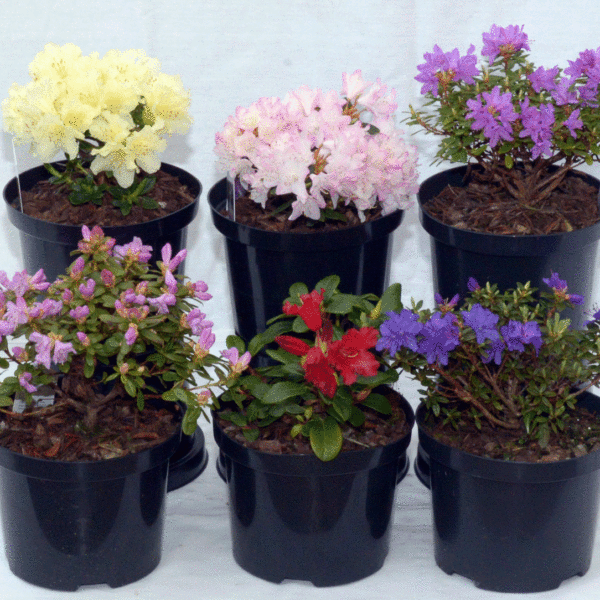
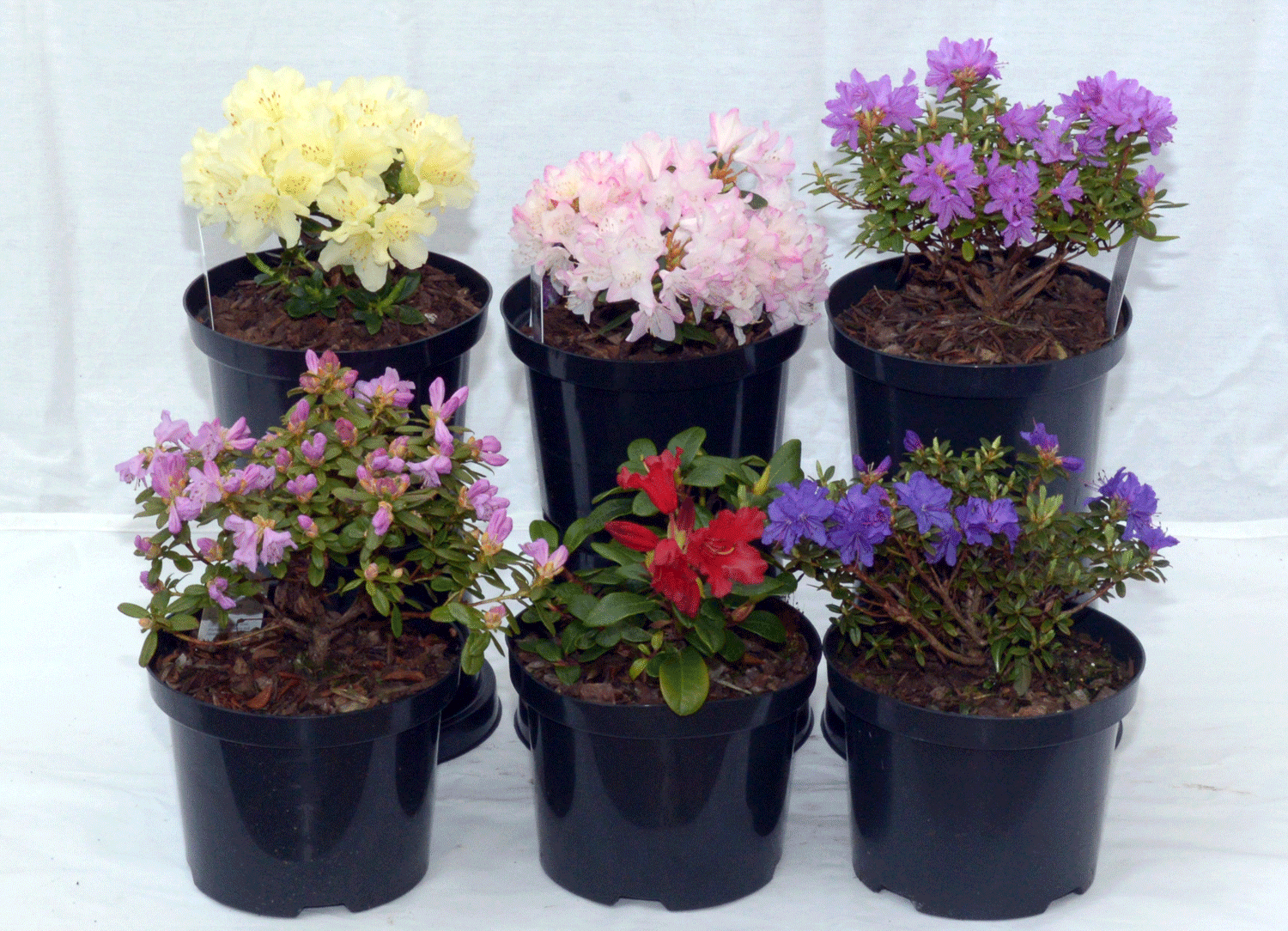
Rhododendrons in pots are a practical solution if your garden soil is alkaline or heavy, and dwarf varieties are perfectly suited to container life. Many compact rhododendron varieties remain around a metre tall or grow only slowly beyond that size, making them suitable for large containers. Check the mature spread of the particular variety, as dwarf rhododendrons are not all the same size.
Start with a pot at least 40 to 50cm wide and deep, with plenty of drainage holes. Use a good-quality ericaceous compost and place a layer of crocks or gravel at the base. Plant the rhododendron so the top of the root ball is level with the compost surface, firm gently, and water thoroughly with rainwater. Container-grown plants dry out faster than those in the ground, so check compost moisture every few days from spring to autumn.
Feed potted rhododendrons sparingly. A liquid ericaceous feed applied once a month during the growing season (April to August) is enough. Overfeeding, especially with high-nitrogen fertilisers, encourages soft growth at the expense of flowers. Repot every three to four years into a slightly larger container, teasing out any circling roots before replanting.
Our Mixed dwarf rhododendrons collection includes compact varieties in 2 litre pots, available in packs of 3, 4 or 6 plants, and in 9cm pots in packs of 6, 12 or 18. These smaller sizes establish quickly and are ideal for starting a container display or a low border in acid soil.
Deadheading and pruning rhododendrons
The right time to prune a rhododendron depends on how much growth you need to remove. For routine deadheading, the right time is immediately after flowering, typically in late May or June. For harder pruning to reduce size or rejuvenate an old shrub, early spring (March to April) is best, though you will sacrifice that year's flowers.
How do you deadhead a rhododendron? The technique is simple but requires care. Wait until the flower truss has faded and the petals are brown. Grasp the old flower head between your thumb and forefinger, then snap it off with a sideways movement, being careful not to damage the new leaf buds that sit just below the truss. The developing buds below the old flower head will form new shoots, some of which may carry flower buds for the following season. You can also use secateurs for a cleaner break on thicker stems. Deadheading stops the plant putting energy into seed production and promotes a tidier shape.
Rhododendron pruning beyond deadheading is rarely needed on young, well-shaped plants. If you do need to cut back an overgrown shrub, do it in stages over two to three years to avoid shock. Cut one or two of the oldest branches back to a side shoot or to about 30cm from the ground in early spring. Healthy plants may produce new shoots from dormant buds on older stems, but regrowth is not guaranteed after a severe cut. Water during dry weather, apply a suitable mulch and feed only if the soil or plant condition indicates a need.
Common rhododendron problems and solutions
Yellow leaves on a rhododendron can signal several issues, but the most likely cause on alkaline soil is lime-induced chlorosis. The leaves turn yellow between the veins while the veins stay green, because the plant cannot take up iron. The fix is to apply chelated iron and, for container plants, repot into fresh ericaceous compost. On acid soil, yellowing leaves may simply be a sign of drought stress or poor drainage: check that the root zone is moist but not waterlogged.
No flowers is another frequent complaint. The causes include planting in too much shade, removing flower buds by pruning at the wrong time, frost damage to buds, or overfeeding with nitrogen. If your rhododendron is growing strongly but producing only leaves, reduce any lawn fertiliser drifting onto the bed and switch to a low-nitrogen, high-potash feed. Bud blast, a fungal disease that turns flower buds brown and prevents them opening, is spread by leafhoppers; pick off and bin affected buds as soon as you see them.
- Yellow leaves with green veins: treat with chelated iron; check soil pH
- Yellow leaves overall: improve drainage or increase watering
- No flowers: move to brighter dappled light; stop high-nitrogen feeds
- Brown, unopened buds: remove and destroy; control leafhoppers
- Leaf scorch (brown edges): provide more shade or shelter from wind
Common questions
When does the rhododendron bloom in the UK?
Most rhododendrons bloom between April and June, with the peak in May. Early types start in March in mild areas, while late varieties can flower into early July. The exact timing depends on the cultivar and your local climate.
Does rhododendron like full shade?
Rhododendrons prefer dappled or partial shade. Deep shade reduces flowering and causes leggy growth. In cooler, moist parts of the UK they can tolerate full sun, but in most gardens they do best with protection from hot midday sun.
How do you deadhead a rhododendron without damaging new buds?
Wait until the flowers fade, then snap off the old truss with a sideways movement of your thumb and forefinger. The new leaf buds sit just below the flower head and are easily knocked off, so work gently. Secateurs can give a cleaner break on thicker stems.
When should I prune a rhododendron?
Deadhead immediately after flowering in late spring. For harder pruning to reduce size, cut back in early spring (March to April) before new growth starts. Hard pruning in early spring will remove many of the current season's flower buds and can also reduce flowering the following year while the shrub regrows.
Can I grow rhododendrons in pots if I have alkaline soil?
Yes, growing dwarf rhododendrons in pots is the best solution for alkaline or chalky gardens. Use a large container with ericaceous compost, water with rainwater, and feed monthly during the growing season with a liquid ericaceous fertiliser.
Why are my rhododendron leaves turning yellow?
Yellow leaves with green veins usually indicate lime-induced chlorosis, common on alkaline soil. Apply chelated iron and, for potted plants, repot into fresh ericaceous compost. On acid soil, yellowing may be due to drought or waterlogging.
Why is my rhododendron not flowering?
Common reasons include too much shade, pruning at the wrong time, frost damage to buds, or overfeeding with nitrogen. Move the plant to brighter dappled light, protect buds from late frosts, and use a low-nitrogen, high-potash feed.
What is the best feed for rhododendrons?
Use a fertiliser formulated for ericaceous plants, applied in early spring. A low-nitrogen, high-potash liquid feed during the growing season supports flower bud formation. Avoid general garden fertilisers, which often contain too much nitrogen.